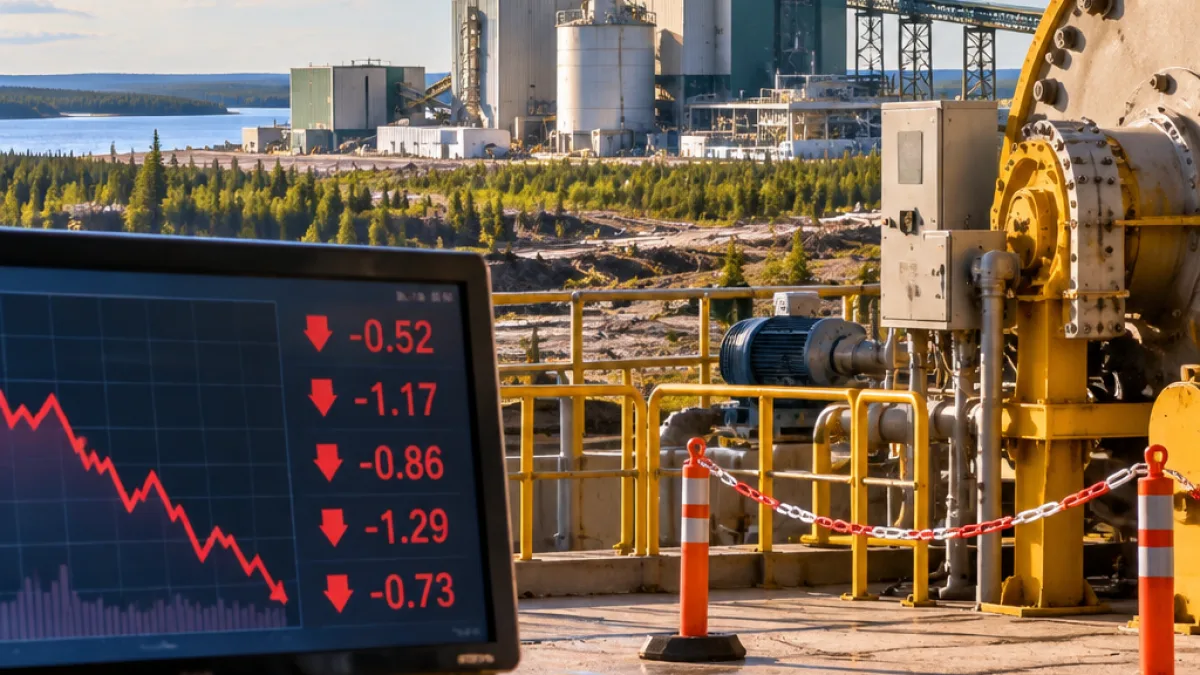
Cameco shares fell 10.2 per cent on Oct. 30 after the Canadian uranium producer reported lower quarterly output, higher expected production costs and a reduced top end for its 2026 guidance.
The market reaction centred on an extended, planned maintenance shutdown at the company's Key Lake mill. The work reduced third-quarter uranium production by 20 per cent from a year earlier, to 3.5 million pounds, according to an analysis published by The Motley Fool Canada.
The decline has intensified questions about Cameco's near-term operating performance, but the analysis argues that the setback reflects temporary operational pressure rather than a breakdown in the company's underlying business. The distinction matters for investors weighing a sharp share-price decline against the longer-term prospects for uranium and nuclear power.
Maintenance weighs on production and guidance
Cameco narrowed its full-year 2026 production outlook to between 19.5 million and 20.5 million pounds. The top of that range is below the company's earlier target of 21.5 million pounds.
The company also raised its expected average unit production cost to between $67 and $70 per pound. The combination of reduced production and increased costs put pressure on the quarter's financial results, even as revenue remained essentially unchanged from the same period a year earlier.
| Measure | Latest information |
|---|---|
| Share-price move | Down 10.2 per cent on Oct. 30 |
| Third-quarter production | 3.5 million pounds |
| Year-over-year production change | Down 20 per cent |
| 2026 production guidance | 19.5 million–20.5 million pounds |
| Expected unit cost | $67–$70 per pound |
Higher costs of goods sold and increased depreciation squeezed gross earnings. The result was an adjusted net loss of $2 million, which came in below market expectations and contributed to the selloff.
Why the longer-term case remains under review
The investment argument for Cameco is tied not only to its latest production figures, but also to expectations for electricity demand and the role of nuclear generation in the global energy system. The analysis says nuclear power is increasingly viewed as a source of stable baseload electricity, supporting the possibility of sustained demand for uranium and nuclear services over the next five to 10 years.
That outlook does not eliminate the company's immediate operating risks. A maintenance shutdown can affect the timing of production, while higher costs can reduce earnings even when revenue is broadly stable. The revised guidance therefore gives investors a clearer indication that 2026 results will face more pressure than previously expected.
At the same time, the analysis identifies several factors it considers supportive of Cameco's longer-term position:
- Long-term contracting that can provide greater visibility for future sales;
- Demand for uranium and nuclear services as nuclear power remains part of the global electricity mix; and
- A liquidity profile that supports the company's ability to manage near-term operational pressure.
The central issue for investors is consequently whether the maintenance-related production decline is temporary or evidence of a more persistent deterioration in the business. The published analysis takes the former view, describing Cameco's competitive position, balance sheet and longer-term earnings potential as intact despite the latest results.
A setback, not a change in the thesis
The share-price decline shows how quickly markets can revalue a large-cap energy stock when production, costs and earnings expectations move in the wrong direction. Cameco's latest update did not leave revenue materially changed, but the combination of reduced output, higher unit costs and an adjusted loss was enough to unsettle investors.
For long-term shareholders, the decision therefore turns on the balance between short-term execution and the broader nuclear-power outlook. Cameco's 2026 guidance is weaker at the top end, and its cost expectations are higher. However, the available analysis concludes that the company's longer-term business model remains supported by contracting, uranium demand, nuclear services and liquidity rather than being fundamentally broken.