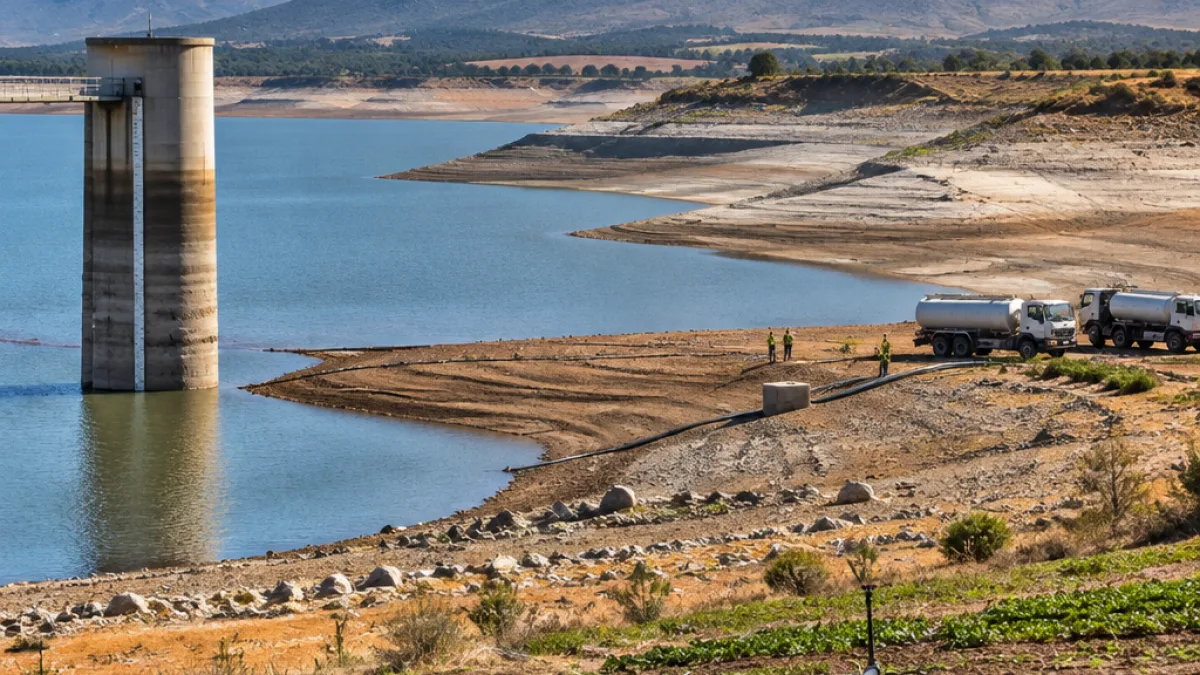
Water allocations across the Western Cape are being reduced after the province’s main supply system fell below its preferred operating level, with farmers facing a deeper cut than domestic and industrial users.
Water and Sanitation Minister Pemmy Majodina announced the precautionary measures on Monday, 16 November, following an assessment of the Western Cape Water Supply System for the 2026/27 hydrological year. The decision comes as the region enters another period of uncertainty over rainfall and dam inflows.
Domestic and industrial allocations will be reduced by 7%, while agricultural irrigation allocations will be cut by 15%. Together, the measures are expected to save about 56.8 million cubic metres of water a year.
Households will not immediately face fixed limits
The announcement does not mean that every household in the Western Cape will immediately be placed under a set daily or monthly consumption limit. Instead, municipalities will have to manage the smaller allocations available to them and communicate any specific restrictions or measures after the changes have been formally gazetted.
That distinction is important for residents in Cape Town and surrounding municipalities. The allocation decision sets a province-wide reduction in the water available to authorities and other users, but the practical effect on households will depend on how municipalities implement the change.
- Domestic and industrial users: allocation reduction of 7%.
- Agricultural irrigation users: allocation reduction of 15%.
- Estimated annual saving: 56.8 million cubic metres.
- Household position: no immediate blanket fixed-use limit was announced.
Dam storage falls below preferred level
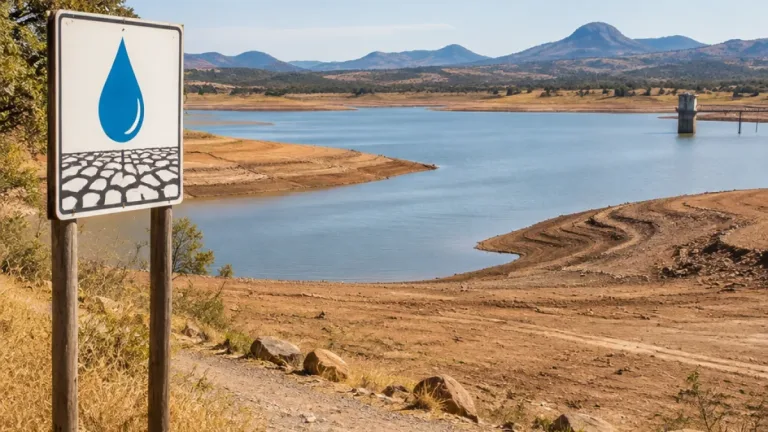
The department reported that the combined storage level in the Western Cape Water Supply System stood at 71.3% on 12 November 2026. At the same time last year, storage was recorded at 85.4%. The latest figure is also below the system’s preferred operational threshold of 80%.
The interconnected system supplies Cape Town, parts of the West Coast, Stellenbosch, Paarl, Franschhoek and Wellington, as well as agricultural users. Its condition therefore has consequences beyond the city’s municipal boundary, linking household supply, business activity and irrigation-dependent farming in a single regional network.
| Measure | Latest position |
|---|---|
| Combined dam storage | 71.3% on 12 November 2026 |
| Storage in the same period last year | 85.4% |
| Preferred operating threshold | 80% |
| Long-term average annual rainfall | 964 mm |
Two seasons of below-average rainfall
The department attributed the decline mainly to rainfall that has remained below the long-term average over two consecutive seasons. Rainfall measured 722.7 mm in 2024/25 and 752.8 mm in 2025/26, compared with the long-term average of 964 mm.
Those figures help explain why the system has weakened even though it remains operationally stable for now. The department said current demand can still be met, but the latest assessment showed that intervention was necessary to reduce the risk of the system deteriorating further.
For agricultural users, the 15% reduction is likely to be the most immediate and substantial change announced so far. Irrigation allocations are tied to production in several important farming areas, while the broader system also supports towns and economic activity across the province. The available source does not provide details of individual crops, farms or municipalities’ implementation plans.
Shortage risks could rise from 2027
Authorities are not presenting the current reductions as a response to an immediate failure of supply. Rather, they are intended to protect the system against a more serious deterioration. The department warned that the risk of water shortages could increase significantly from 2027 if users continued drawing their full allocations.
This forward-looking warning places the current decision within a longer planning horizon. Lower use now is intended to preserve storage and reduce the likelihood that more severe restrictions will be needed later. Municipalities will still have to explain how the new allocation position affects local users once the measures are gazetted.
El Niño adds to uncertainty
The department also warned that a strong-to-extreme El Niño could bring higher temperatures, greater evaporation and reduced runoff into dams. El Niño is a naturally occurring climate pattern and is not directly caused by fossil-fuel-driven climate change, although scientists have said warmer ocean temperatures associated with a heating planet can intensify its effects.
For the Western Cape, the combination of reduced storage, weaker rainfall and possible increases in evaporation adds pressure to a system shared by urban users, industry and farming. Residents have not yet been given a universal household limit through this announcement, but municipalities are expected to set out the practical measures that will follow the formal gazetting of the allocation reductions.