Businesses in Nelson Mandela Bay could be in line for electricity tariff relief after the National Energy Regulator of South Africa (Nersa) acknowledged in the Pretoria High Court that it had unlawfully approved municipal charges containing significant errors.
The case concerns tariffs applied during the 2025/26 financial year and has placed the regulator’s decision-making under scrutiny. The court is considering what remedy should be available to businesses and other electricity users who may have paid more than they should have under the disputed approvals.
Five municipalities affected
The legal challenge involves five municipalities: Nelson Mandela Bay, Johannesburg, Ekurhuleni, Emfuleni and Madibeng. For the Eastern Cape, the consequences are particularly important because Nelson Mandela Bay is the province’s manufacturing heartland and a centre of automotive production.
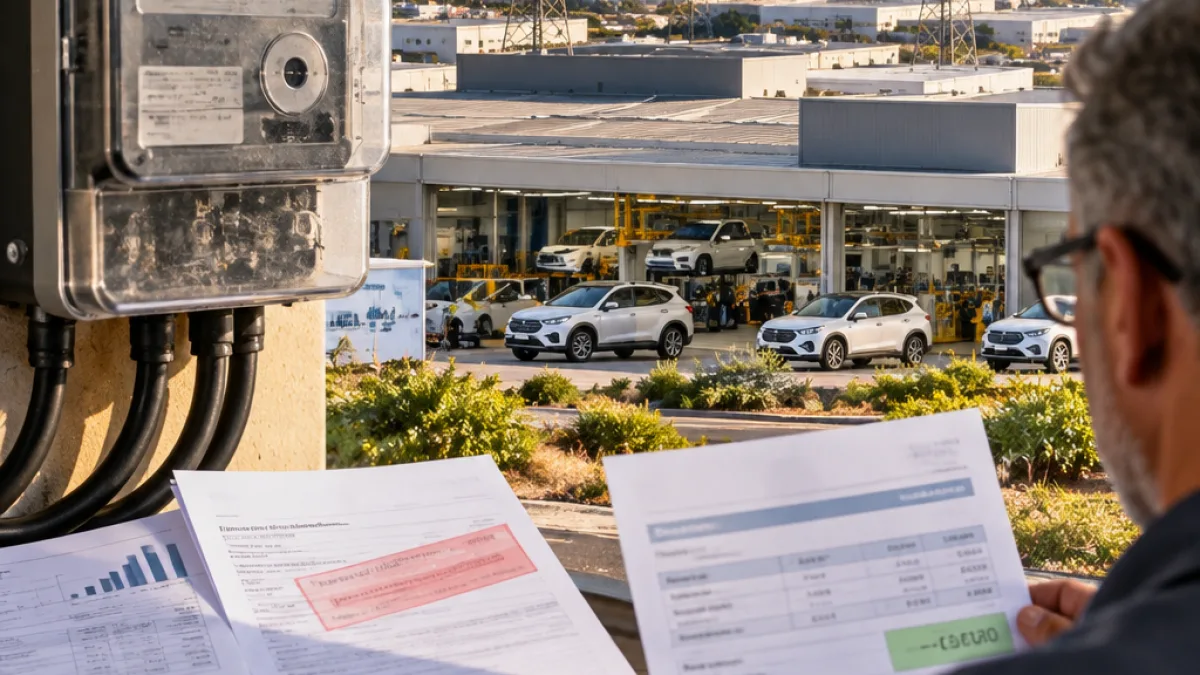
High electricity costs are a direct concern for companies operating in energy-intensive sectors. They affect the cost of production, the ability of businesses to compete with firms elsewhere and the attractiveness of a region to potential investors. In Nelson Mandela Bay, the dispute therefore extends beyond the question of a municipal invoice: it touches on the metro’s wider economic prospects.
According to reporting on the case, businesses in the metro paid electricity charges that were 76% higher than the municipality’s cost of supplying the power during the financial year. That figure is central to the concern over whether users were made to carry an unreasonable burden while Nersa approved the tariffs.
What the applicants want
The applicants are seeking to have the unlawful tariff approvals set aside. They are also asking for affected users to receive retrospective credits, with interest if repayment is delayed, or for temporary alternative tariffs to be introduced while Nersa recalculates the charges.
Those remedies are not yet a final outcome. The court still has to determine how the dispute should be resolved and what form any compensation or adjustment should take. Until that process is concluded, businesses cannot assume that a credit or reduced tariff will automatically follow.
- Disputed period: the 2025/26 municipal tariff year.
- Eastern Cape municipality involved: Nelson Mandela Bay.
- Remedies being sought: retrospective credits, possible interest, or temporary replacement tariffs.
Why the dispute matters locally
Electricity is a basic input for factories, workshops, offices and small businesses. When charges rise sharply, the pressure can be felt through operating costs, production decisions and the ability of firms to retain or create jobs. The source material does not indicate how many businesses in Nelson Mandela Bay may qualify for relief, nor does it provide a value for possible credits.
That uncertainty is likely to be frustrating for companies that have already paid the contested amounts. It also makes the court’s eventual remedy important. A repayment process, a credit against future bills or a revised tariff would each affect businesses differently, particularly those managing tight cash flows.
The matter also raises questions about the relationship between municipalities and the national regulator. Municipalities need revenue from electricity services, while Nersa is responsible for approving tariffs within the regulatory framework. When an approval is found to be unlawful, the dispute can leave users, local government and the regulator facing competing financial pressures.
A separate Buffalo City legal battle
The Nelson Mandela Bay case comes after a separate electricity-related legal challenge in Buffalo City. In November 2025, acting Bhisho High Court judge Ntsikelelo Mtshabe found that a council resolution introducing network and service charges was unconstitutional and ordered that it be reviewed and set aside.
The charges in that matter had been introduced in July 2024 and included a monthly fee of R376. Residents and ratepayers in Buffalo City have nevertheless waited for the practical benefits of that judgment, according to the reporting on the dispute.
The two matters involve different municipalities and legal challenges, but together they illustrate the uncertainty that can follow disputes over electricity billing. A court finding does not necessarily translate immediately into a lower bill. The relevant municipality or regulator may still need to review the charges, calculate what is owed and decide how any adjustment will be implemented.
What users should watch
Businesses and other electricity users affected by the Nelson Mandela Bay tariff dispute will need to follow the court process and any subsequent directions from Nersa or the municipality. The key questions will be whether the approvals are formally set aside, which users qualify for relief, how the amounts are calculated and whether adjustments are made through credits, refunds or new tariffs.
For Nelson Mandela Bay, the outcome will be watched closely by a business community already concerned about the cost of operating in the metro. Any relief could ease pressure on electricity users, but the case also highlights the need for accurate tariff calculations and effective regulatory oversight before charges reach customers.