
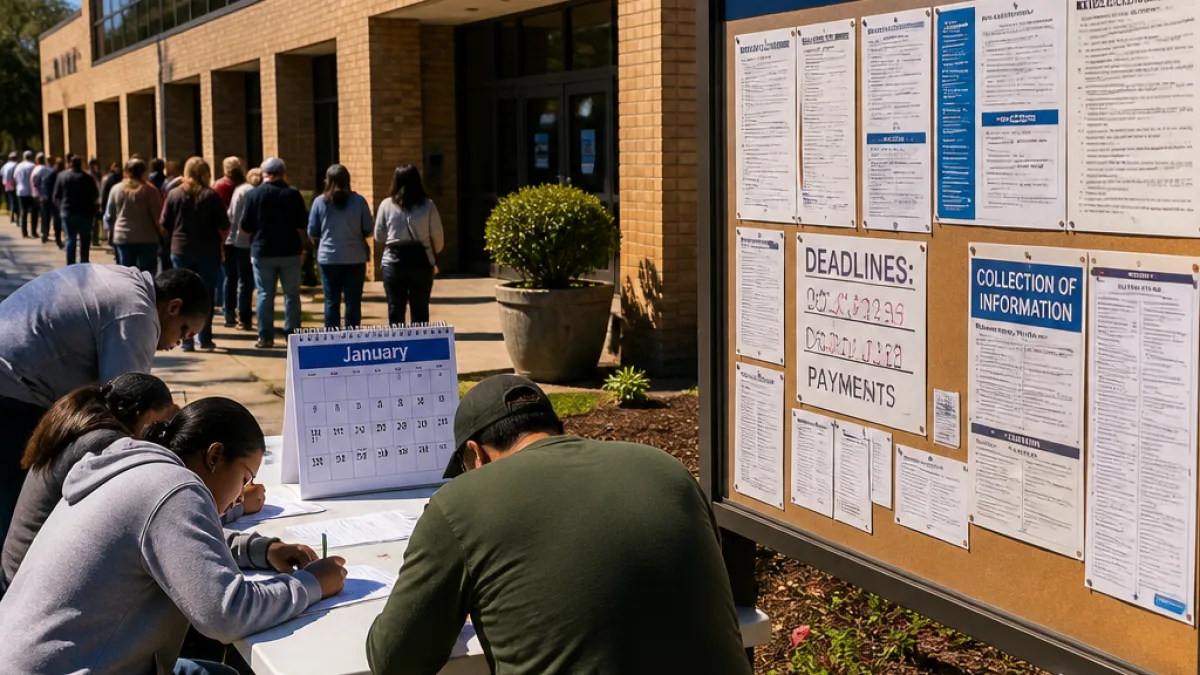
Residents who receive Medicaid coverage and are between the ages of 19 and 64 will confront new administrative and eligibility requirements starting in 2027, officials with Blessing Health System said. The changes include mandatory attestations about participation in work, community service or education programs for some beneficiaries and more frequent eligibility renewals.
What’s changing
Under the updated policy the health system referenced, enrollees in that age group will in certain circumstances be required to confirm they meet specified activity thresholds — typically an average of 80 hours per month of employment, community service or participation in an educational program — or attest that they qualify for an exemption.
“They will be required, may be required, based off their circumstances, to attest to work requirements,”
The health system also said states will shift Medicaid redeterminations from once a year to every six months, increasing the frequency of paperwork and verification for beneficiaries.
Local help but wider implications
Blessing Health System is holding free informational sessions in early November to help patients understand how the new obligations may affect them. The sessions are scheduled Nov. 5 at 4 p.m. at Blessing Health Hannibal, and Nov. 10 at 4 p.m. and 6 p.m. at the Adams County Health Department, officials announced.
Health systems and community organizations are likely to play a growing role as intermediaries that explain new rules, assist with documentation, and connect people with supportive services. Advocates and clinic administrators say such outreach can reduce the risk of coverage disruption when rules change, but the expanded administrative load also creates operational strain for providers and state agencies.
Immediate effects on beneficiaries
The combination of attestation requirements and more frequent renewals raises the bar for maintaining continuous coverage. People who fail to provide timely attestations or necessary documentation may risk temporary loss of benefits while their case is reviewed.
Potential consequences include delayed access to prescriptions, primary care and specialty services. For patients with chronic conditions, interruptions in coverage can lead to gaps in medication and follow-up care, with downstream health and financial impacts.
- Work attestation: Some beneficiaries aged 19–64 must confirm participation in work, community service, or education.
- Hours expected: Typically about 80 hours per month for those subject to the requirement.
- Renewals: Eligibility checks shift from annually to every six months.
| Item | Prior rule | New rule (2027) |
|---|---|---|
| Renewal frequency | Once per year | Every six months |
| Work expectation (when applied) | Varies by state/policy | ~80 hours per month, or equivalent community/educational activities |
Health systems that serve rural and low-income populations have flagged concerns that more frequent renewals will increase administrative burdens and could produce higher churn — the repeated loss and regain of coverage — which complicates care continuity and billing.
What patients should do now
Officials recommend that current Medicaid enrollees monitor communications from state Medicaid programs and local providers for details on how the changes will be implemented. Those who think they may be subject to work or training requirements should gather documentation of employment, volunteer hours or enrollment in educational programs and attend community sessions offered by their health system to get help with forms and attestations.
The sessions organized by Blessing Health System are free and intended to help patients understand eligibility shifts and requirements ahead of the 2027 changes.
As states roll out new procedures, health systems and advocacy groups will likely be critical sources of assistance for beneficiaries navigating the altered landscape of Medicaid eligibility and enrollment.