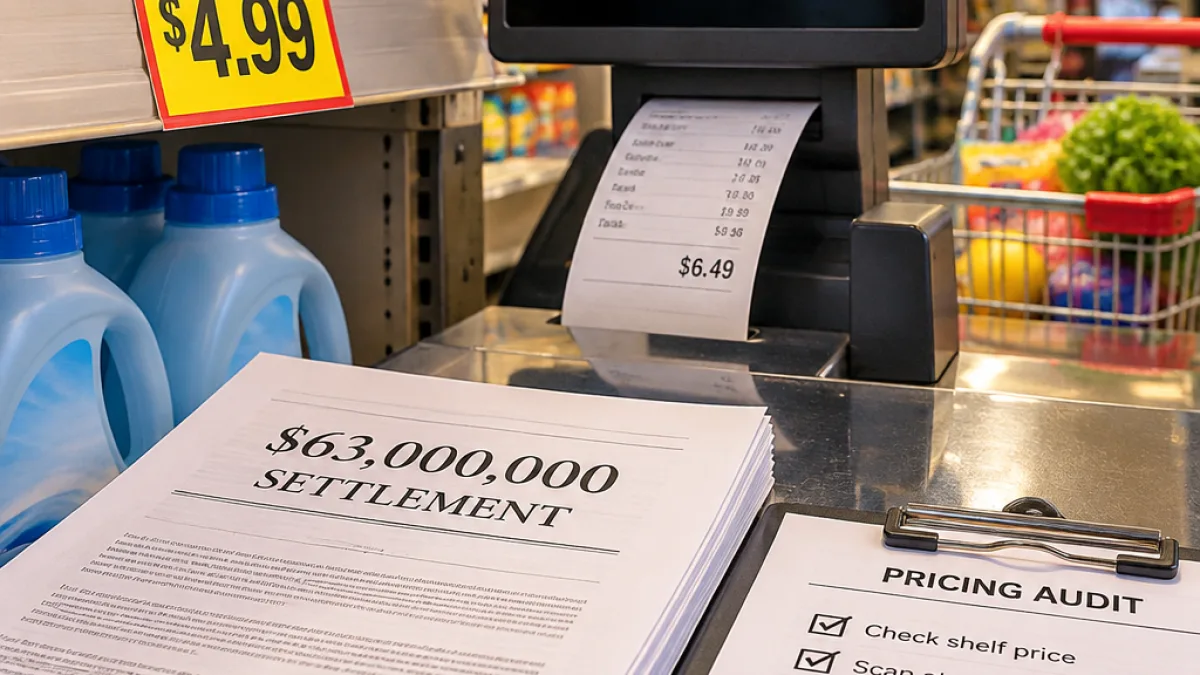
Family Dollar has agreed to pay $63 million to resolve allegations that it charged customers more at checkout than the prices advertised in store materials and displayed on shelves, according to a settlement announced by the Federal Trade Commission. The case involves a federal complaint joined by 17 states and a proposed court order intended to stop the conduct and impose new controls on the retailer.
The action represents a broad consumer-protection challenge to pricing practices at a national discount chain, where shoppers may rely heavily on advertised prices when deciding what they can afford. Regulators said the alleged overcharges began in January 2023 and amounted to “millions of dollars” paid by consumers. The complaint and settlement were announced Thursday, while the order was filed in the U.S. District Court for the Eastern District of Virginia.
A settlement tied to pricing controls
Under the order, Family Dollar would be required to establish a pricing accuracy program. The system would also have to receive independent certification each year, creating an outside review mechanism for the retailer’s compliance. The order is designed not only to address past transactions but also to prevent the company from continuing practices regulators characterize as deceptive.
“Today’s order will ensure Family Dollar stops deceiving consumers about its prices and returns money to consumers harmed by these practices,” Christopher Mufarrige, the FTC’s director of the Bureau of Consumer Protection, said in the agency’s announcement.
The agreement does not settle every factual question through an admission by the company. In the court order, Family Dollar said it neither admitted nor denied the allegations in the complaint. That language is typical of a negotiated resolution in which the business agrees to financial and operational terms without conceding liability.
What the action would require
| Element | Details |
|---|---|
| Financial settlement | $63 million |
| Government participants | Federal regulators and 17 states |
| Alleged period | Beginning in January 2023 |
| Compliance measure | Pricing-accuracy program with annual independent certification |
The allegations center on a gap between the price communicated to shoppers and the amount charged at the register. For customers, that kind of discrepancy can be difficult to detect, particularly when purchases involve many low-cost items or when a discount is presented in a mailer or on a shelf label. The government’s complaint says the cumulative effect reached millions of dollars, making the issue broader than an isolated checkout error.
- Advertised prices: Regulators alleged that some customers were charged more than amounts shown in mailers and on store shelves.
- Consumer remedy: The settlement is intended to return money to shoppers harmed by the practices, according to the FTC.
- Future oversight: Annual independent certification would test whether the retailer’s pricing controls are operating as required.
Why the compliance requirement matters
The monitoring provision is the operational core of the settlement. A financial payment addresses the alleged harm already identified, while recurring certification is meant to reduce the risk that similar discrepancies continue across the chain. For Family Dollar, the requirement could mean more formal processes for matching shelf and promotional prices with point-of-sale systems and for documenting that those systems remain accurate. The source material does not specify how the program will work in individual stores or how payments to affected shoppers will be distributed.
The settlement also highlights the enforcement exposure created when retailers’ advertised prices do not match checkout charges. Discount stores compete partly on the promise of lower prices, so pricing accuracy is central to the value proposition presented to customers. A government-mandated control program can add continuing administrative obligations beyond the headline settlement amount, particularly when an outside party must review compliance each year.
The FTC and Family Dollar had not immediately responded to requests for comment Saturday, according to the source material. The proposed order now stands as the central mechanism for resolving the allegations and setting the retailer’s obligations. Its significance extends beyond the payment: The case puts the accuracy of promotional and shelf pricing, and the systems used to validate it, at the center of the company’s continuing relationship with consumers and regulators.