
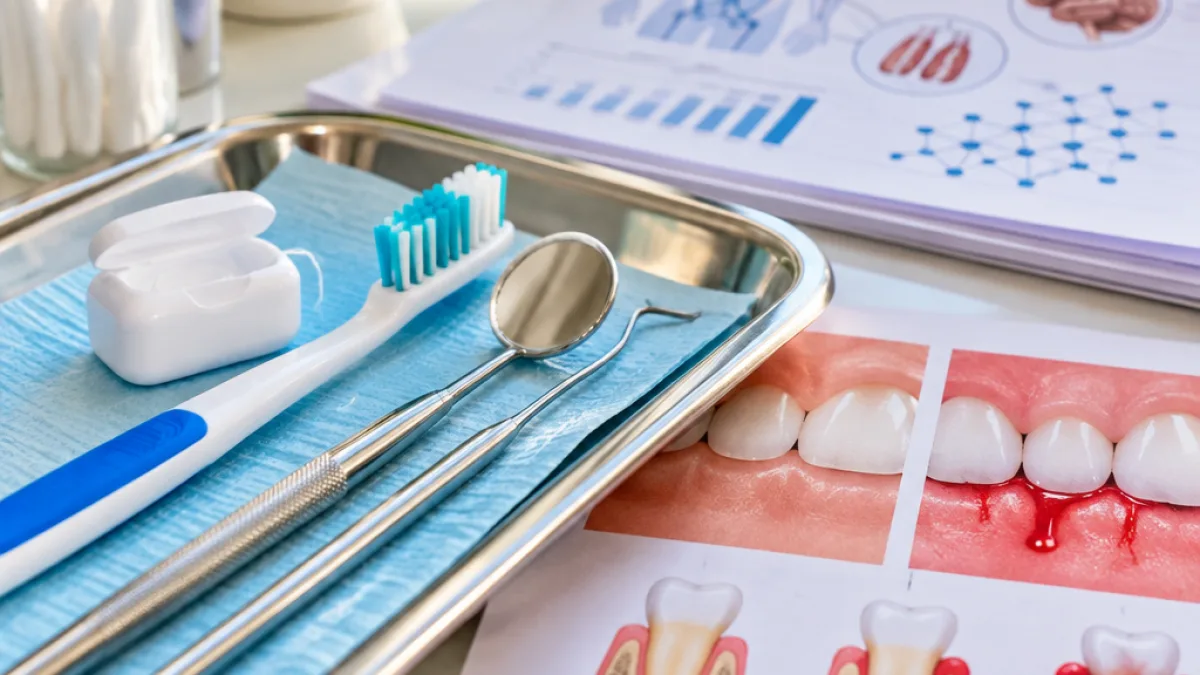
Gum health can offer clues about a person’s overall well-being, but connections between periodontal disease and serious medical conditions should be interpreted carefully, dental professionals say. Research has identified associations involving gum disease, chronic inflammation, diabetes, cardiovascular health and Alzheimer’s disease, while scientists continue to study whether oral bacteria play a direct role in those illnesses.
Dr. Brooke Houston, a general dentist at Cornerstone Dental Health, said dental examinations are not limited to checking for cavities or other problems with the teeth. Dentists also assess the gums, where signs such as persistent bleeding, swelling or changes in color may indicate a need for evaluation.
“Gum disease has been seen to be correlated with diabetes, chronic inflammation, Alzheimer’s and dementia, and cardiovascular health,” Houston said.
Why periodontal disease matters
Periodontal disease develops when bacteria remain around the teeth and gums without adequate daily care or professional cleaning. As the condition progresses, the buildup can contribute to chronic inflammation, gum recession and the loss of teeth. The process may begin with symptoms that are easy to overlook, particularly if a person considers bleeding during brushing or flossing to be routine.
A 2019 study examined Porphyromonas gingivalis, commonly referred to as P. gingivalis, a bacterium associated with periodontal disease. The source report said the organism has been shown to travel from the mouth through the body. The American Academy of Periodontology has reported that animal testing found the bacterium could reach the brain, where toxic enzymes known as gingipains may damage neurons.
Those findings have contributed to continuing research into a possible relationship between oral health and Alzheimer’s disease or dementia. Houston emphasized, however, that the evidence does not establish that gum disease causes either condition.
“Although, association doesn’t mean causation,” Houston said.
That distinction is important. Finding periodontal bacteria in the brains of some patients with Alzheimer’s disease or dementia does not, by itself, show that the bacteria triggered the disease. It also does not demonstrate that treating gum disease would prevent dementia. The research instead points to an area scientists are still investigating, while reinforcing the importance of maintaining oral health for more established reasons, including avoiding inflammation, gum damage and tooth loss.
Signs that warrant attention
Monitoring the gums at home can help people recognize changes before they become more advanced. Houston said discoloration, swelling and bleeding that continues for more than two weeks should prompt a dental visit. A professional examination can determine whether the problem is related to periodontal disease or another issue.
| Finding | Recommended response |
|---|---|
| Color changes in the gums | Monitor the area and discuss it with a dental professional. |
| Swelling | Arrange an evaluation, especially if it persists. |
| Bleeding lasting more than two weeks | See a dentist for an examination. |
Daily brushing and flossing, along with regular professional cleanings, remain central to preventing the bacterial buildup that can damage the gums. Dental checkups also provide an opportunity to identify changes that may not be obvious at home. The broader health research adds context to those routine practices, but it does not replace a clinical diagnosis.
- Persistent symptoms matter: bleeding, swelling or color changes should not be ignored.
- Oral and general health may be connected: studies have reported associations with inflammation, diabetes, cardiovascular health and cognitive disorders.
- The evidence is still developing: an association between periodontal bacteria and disease is not proof of cause and effect.
For patients, the practical message is straightforward: protect the gums through consistent home care, keep scheduled dental appointments and seek an evaluation when symptoms persist. Better oral hygiene may help prevent direct dental damage, while ongoing research will determine how much periodontal disease contributes to health conditions beyond the mouth.