A local response to a statewide health concern
A new program launching this month at two Connecticut community health centers will work with children and their families to address obesity through changes in nutrition, physical activity and daily routines. The initiative is being developed by Luro Health with Connecticut Institute for Communities in Danbury and Optimus Healthcare in Bridgeport.
The effort comes as health providers report that 15.3% of Connecticut children ages 10 to 17 have obesity. Among children ages 2 to 4, the rate is 14.5%, according to Connecticut Children’s Medical Center. The figures place the focus on both school-age children and very young children, while the program’s design emphasizes the household and community environments that shape a child’s habits.
Families will help set the goals
Rather than prescribing one identical eating plan for every participant, the program will work with families to identify changes that can be maintained within their existing lives. That may include guidance on meal planning, exercise and routines, along with access to nutrition information and exercise videos.
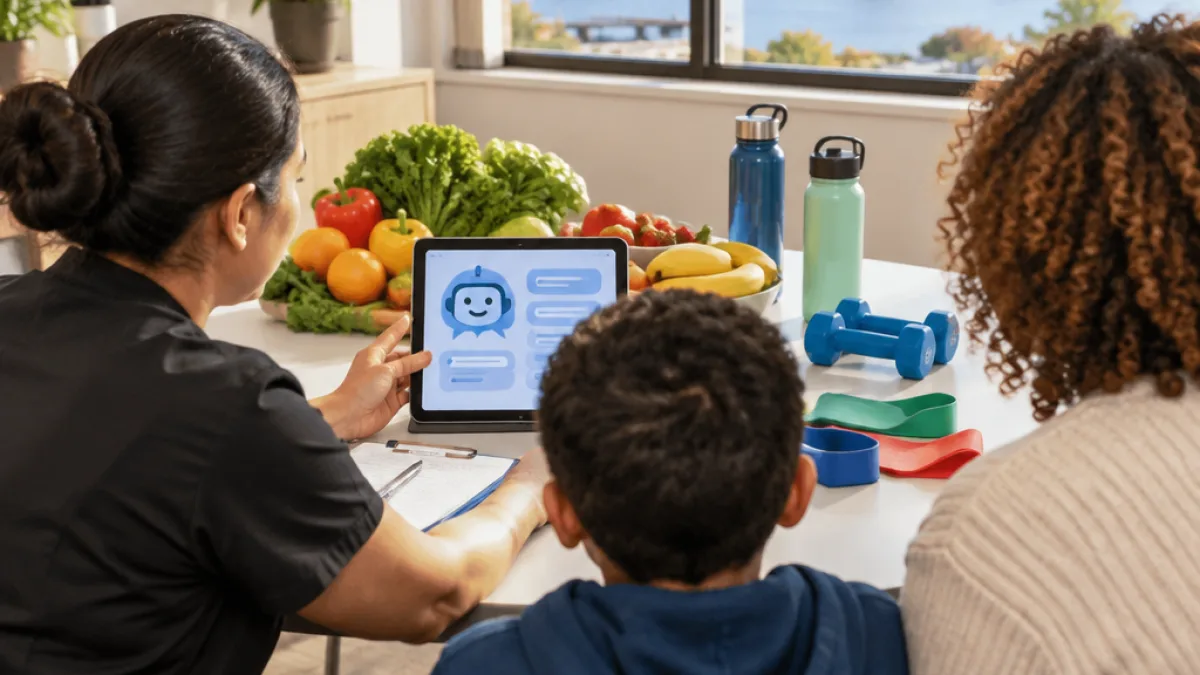
Families will also be able to communicate with health coaches and use an artificial-intelligence chatbot between appointments. The tools are intended to provide support outside the clinical setting, although the source material does not specify how often families will meet with clinicians or how the program’s results will be measured.
“It’s a complex chronic disease that unfortunately affects way too many Americans and way too many children,” said Jamie Kane, Luro’s co-founder and chief medical officer. “The idea behind this program is that there is hope.”
Doctors say a child’s growth is more complicated than one number
For children and teenagers, obesity is generally classified using body mass index, or BMI. A BMI at or above the 95th percentile for a child’s age and sex is considered obesity, while the 85th percentile marks the threshold for overweight.
Clinicians involved in the program said BMI is only one factor in evaluating a child’s health. They also consider growth over time and family medical history. That broader review is especially important as children move through puberty, when growth patterns and physical development change.
Kavitha Selvaraj, Luro’s pediatric medical director, said the approach will take into account family history and the way a child’s body has developed rather than treating the BMI result as a complete diagnosis.
“We’re trying to look at the previous patterns, understand family history, to say what is the way your body is programmed to grow, and how do we just keep those balanced throughout the lifespan,” Selvaraj said.
What the program is expected to offer
| Program element | How it will be used |
|---|---|
| Family counseling | Set goals that fit household routines and circumstances |
| Nutrition guidance | Support meal planning and healthier eating habits |
| Exercise resources | Provide videos and activity guidance |
| Between-visit support | Connect families with health coaches and an AI chatbot |
Community health centers are the delivery point
The program will be offered through community health centers in Danbury and Bridgeport. Those centers are positioned as places where children and families can receive care in a community setting, and the initiative is intended to make the family’s circumstances part of the health discussion.
The source material says about three in four patients at Connecticut community health centers meet criteria for obesity, while comparatively few are diagnosed. It does not provide the total number of patients represented by that estimate or explain the reasons for the gap between meeting the criteria and receiving a diagnosis.
That distinction underscores one challenge the new program may face: identifying children who could benefit from help while creating a setting where families can discuss weight, diet and health without being reduced to a single measurement. Selvaraj said families know their own children and should have an active role in deciding what changes are realistic.
“You’re the authority of your family,” Selvaraj said. “You know your child the best, you know yourselves the best as a family unit.”
A focus on sustainable changes
The program’s stated objective is not to place every child on the same diet. Instead, clinicians will consider family history, routines and cultural backgrounds when helping families choose goals. The approach recognizes that recommendations must work beyond the doctor’s office if they are to become part of a child’s daily life.
The initiative is expected to begin this month, but the source does not list enrollment requirements, costs, operating hours or a specific start date. It also does not describe how families can sign up. Those details may be important to residents in Danbury, Bridgeport and surrounding communities as the program becomes available.
For now, the planned launch represents a Connecticut-based effort to address childhood obesity through family participation and continuing support. Its central message is that care should account for how children grow, the health history of their families and the routines they can realistically sustain.