
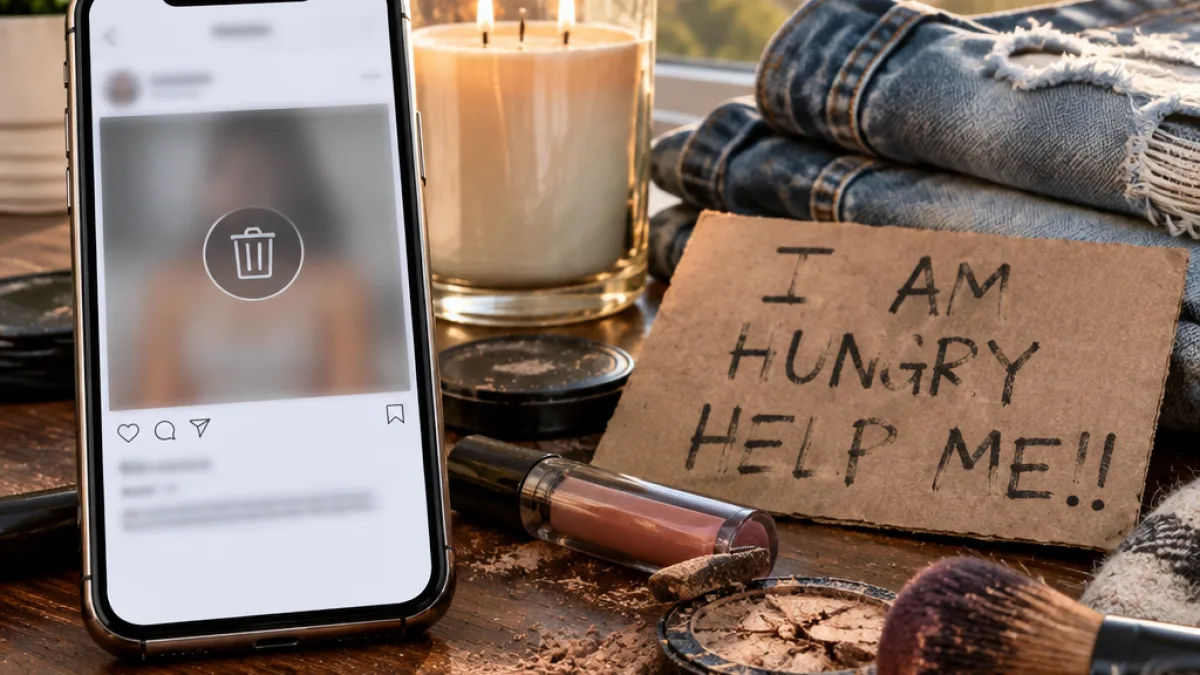
Martha Stewart apologized Sunday after criticism over a Halloween costume that portrayed a person experiencing homelessness, saying she now recognizes that the outfit was insensitive and not humorous. The 85-year-old lifestyle entrepreneur had shared a photo of herself in ripped jeans, dirt-like makeup and a sign asking for help.
The image appeared Saturday in a now-deleted Instagram carousel promoting Stewart’s QVC candle line. Her original caption connected the products with Halloween, but the costume quickly became the focus of public reaction. The sign she held read, “I AM HUNGRY HELP ME!!”
Stewart first addressed the reaction in a statement to People, explaining that the costume was meant to draw attention to homelessness. She also said she was distressed that the image had offended people. On Sunday, however, she returned to the issue on Instagram with a more direct apology, acknowledging that her initial response had not fully addressed the criticism.
“It’s hard to admit when you’ve really screwed up. My earlier statement didn’t go far enough.”
She continued by recognizing the financial pressure facing many people and accepting responsibility for the decision. “Wearing a costume like I did was insensitive and not funny,” Stewart wrote, adding that she was very sorry.
Why the image drew criticism
The backlash centers on the gap between a real social crisis and the way the costume presented it as seasonal entertainment. Homelessness is not an abstract costume theme for people living without stable housing, and the use of hunger as a visual prop made the post especially vulnerable to criticism. The commercial setting added another layer: the image was part of a carousel designed to promote candles, placing a serious subject alongside a product message.
Stewart’s explanation also shows how quickly an intended message can be overtaken by its presentation. She said she hoped to bring more awareness to homelessness, but the styling relied on familiar visual cues — distressed clothing, dirt on the face and a plea for food — rather than an explanation of the issue or support for people affected by it. Once the post circulated, viewers encountered the image first as a costume and advertisement, not as a charitable campaign or educational effort.
A public correction from a familiar holiday voice
Halloween has long been part of Stewart’s public identity. In her earlier statement, she described it as one of her favorite holidays and pointed to decades spent sharing recipes, crafts and entertaining advice connected to the occasion. That history helps explain why a Halloween post appeared on her account, but it did not shield the image from criticism when viewers considered the subject inappropriate.
The controversy offers a practical reminder for anyone planning a costume or themed social post: real hardship is not a costume category, and good intentions do not erase the effect of a careless image. Before publishing, creators and brands can ask whether a vulnerable group is being represented as a joke, a visual shortcut or a sales device. They can also consider whether their message includes meaningful support rather than simply borrowing the appearance of suffering.
- Saturday: Stewart posted the costume image in an Instagram carousel tied to her QVC candle line.
- Sunday: She issued a fuller apology and called the costume insensitive.
- Her explanation: Stewart said she had intended to raise awareness about homelessness.
The post has since been removed, but Stewart’s second statement leaves little ambiguity about her position. She did not defend the costume as successful satire or dismiss the reaction. Instead, she accepted that the image had crossed a line and apologized while acknowledging that many people are struggling economically. For a lifestyle brand built around presentation, celebration and home entertaining, the episode is a reminder that even a familiar holiday format can carry serious social consequences when it turns another person’s hardship into decoration.