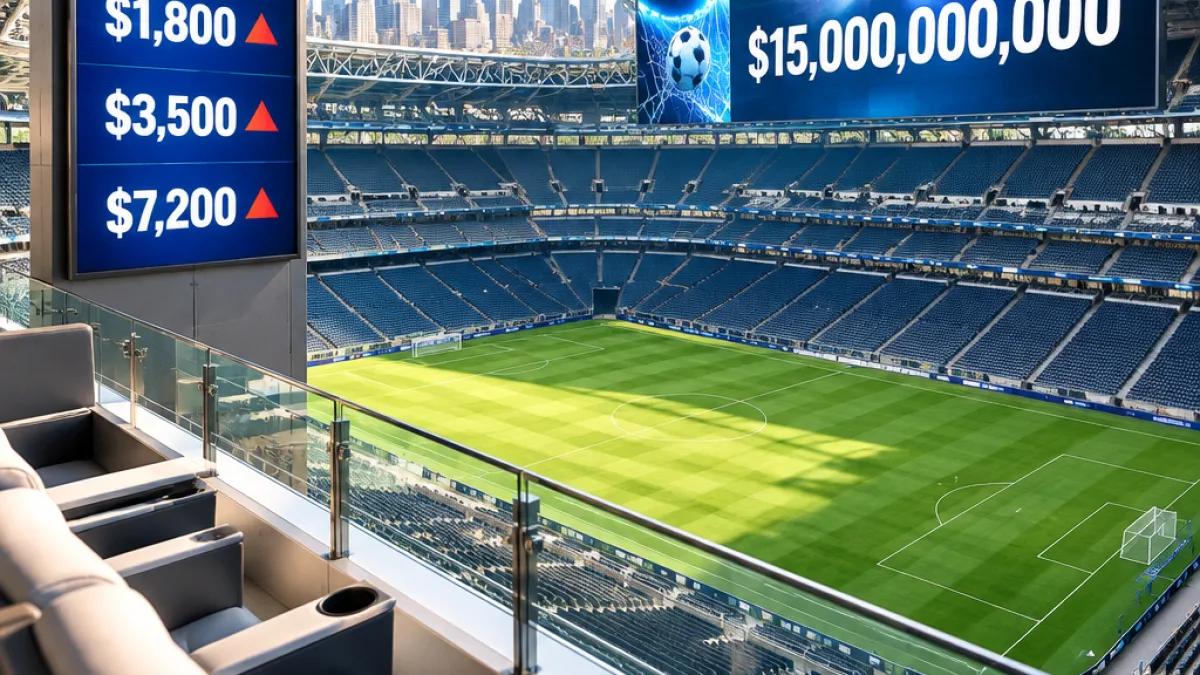
FIFA says the 2026 World Cup has already generated $15 billion in revenue, surpassing the organization’s own projections even before the final total is complete. The figure confirms the financial power of the expanded tournament across the United States, Canada and Mexico, while also sharpening questions about who was able to participate as a spectator and what FIFA was willing to accept in pursuit of that return.
According to reporting cited by the source, roughly $5 billion came from ticket sales and hospitality. That would represent a dramatic increase from the $929 million recorded from those categories at the 2022 World Cup in Qatar. The comparison is especially striking because the 2026 tournament included 40 additional matches. Even with that expansion, the average revenue per game rose from about $14.5 million in Qatar to approximately $48 million in the North American tournament.
A commercial model built around scarcity
The figures suggest that FIFA’s most consequential decisions were not necessarily the ones that shaped the entertainment surrounding the matches. They were the choices that turned access to the tournament into a highly valuable financial product. Ticketing, hospitality and resale arrangements allowed the organization to capture more money from spectators while placing the event further beyond the reach of many ordinary supporters.
FIFA embraced dynamic pricing, allowing ticket costs to respond to demand rather than remain fixed at a single level. It also brought the secondary ticket market into its commercial structure, taking a share from resales. Those moves carried an obvious risk: a tournament traditionally presented as a gathering for national teams and their supporters could become increasingly defined by premium access and high prices.
| Measure | 2022 World Cup | 2026 World Cup |
|---|---|---|
| Total FIFA revenue | Not specified in the source | $15 billion projected to rise further |
| Ticket and hospitality revenue | $929 million | About $5 billion |
| Average revenue per match | About $14.5 million | About $48 million |
| Tournament format | 40 fewer games | Expanded by 40 games |
Success measured in revenue
The financial result also validates the leadership of FIFA President Gianni Infantino on the narrow terms the organization appears to prioritize. The tournament’s expanded schedule created more opportunities to sell tickets, hospitality and related commercial rights. The higher average return per match indicates that the additional games did not simply dilute the value of the event; they became part of a larger system for generating income.
That system came with costs beyond the ticket office. The tournament’s relationship with the Trump administration created political and reputational challenges. The source points to the treatment of the Iranian team, public discussion of possible ICE activity around stadiums, and visa denials affecting fans and journalists who hoped to attend. FIFA’s willingness to operate within that environment demonstrated that political controversy did not prevent the event from reaching its financial targets.
- $15 billion: revenue FIFA says the 2026 World Cup has generated so far.
- $5 billion: reported income from ticket sales and hospitality.
- Fivefold increase: the reported rise in direct fan income compared with Qatar 2022.
- $48 million per match: the approximate 2026 average, compared with $14.5 million four years earlier.
The contrast is central to the story of this World Cup. FIFA’s financial forecasts proved accurate, while decisions about presentation and tournament experience drew criticism in the source, including the use of major entertainment figures, a 27-minute halftime show, mandatory hydration breaks and changes involving red cards. Those choices may have shaped the spectacle, but they were not the measures by which the organization ultimately judged success.
For FIFA, the clearest message is that the tournament’s commercial architecture worked. For supporters, the record raises a different question: whether a World Cup can remain a shared public celebration when the people closest to the event are treated primarily as customers with varying levels of purchasing power. The final revenue tally may climb further, but the larger legacy of the 2026 tournament will also be defined by how much access was reserved for those able to pay the most.