Florida A&M University and Sandia National Laboratories have renewed a five-year research partnership that will expand work in artificial intelligence, quantum science and advanced materials while creating additional pathways for students and faculty to engage with a national laboratory.
The memorandum of understanding took effect Oct. 21, 2026, building on an agreement first signed in 2020. It outlines cooperation in joint research, student internships, faculty exchanges and access to specialized research facilities. The collaboration also connects FAMU’s research ambitions with preparation for careers in science, technology and national security.
A broader research bridge
The renewed arrangement brings together Sandia, a national laboratory, and research programs at FAMU, including the FAMU-FSU College of Engineering and the university’s College of Science and Technology. FAMU said the partnership is part of its effort to advance its pursuit of Carnegie R1 research status, a designation associated with universities that maintain very high levels of research activity.
Robert E. Nobles II, FAMU’s senior vice president for Health Science Enterprise and Research Innovation, said the relationship gives students a clearer view of possible futures in research and technology. He described access to those opportunities as important to attracting highly qualified students.
“This partnership is part of that equation.”
Nobles also said the university wants to extend its research connections beyond Tallahassee through stronger relationships with national laboratories. The agreement is intended to involve disciplines outside engineering as researchers address national challenges, while giving students more opportunities for hands-on learning.
Fields covered by the agreement
The memorandum identifies a wide range of shared interests. These areas include:
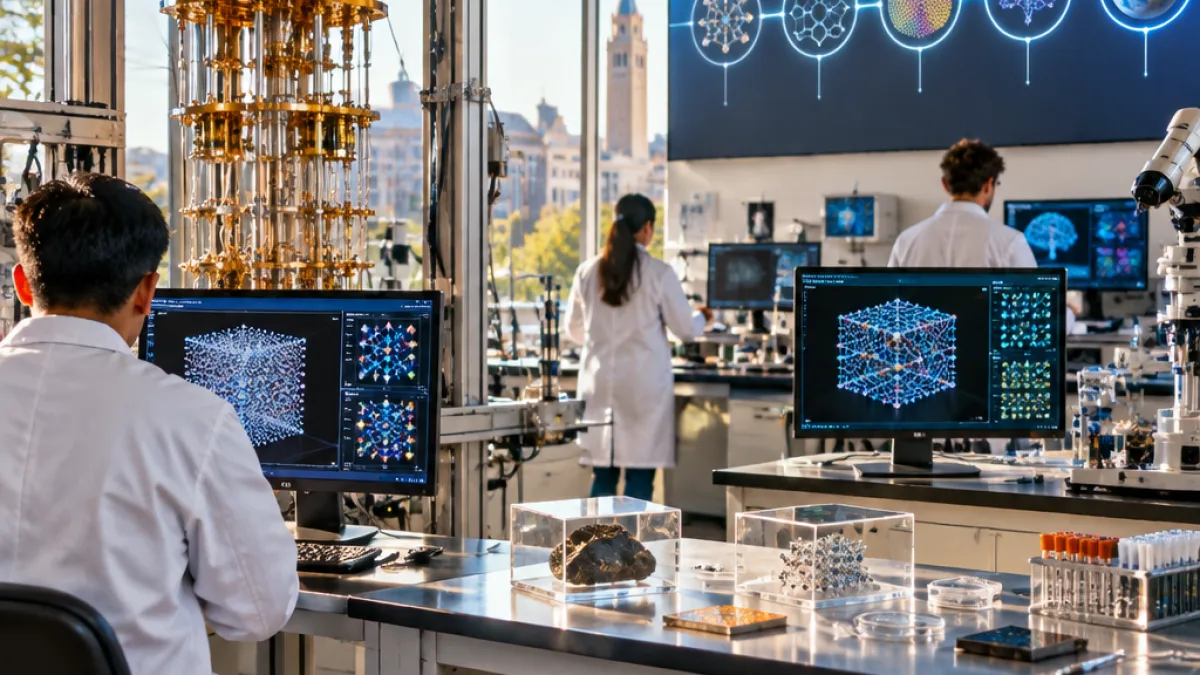
- Artificial intelligence and machine learning
- Quantum science and computing
- Advanced materials
- Pulsed power and high-energy-density science
- Numerical approaches to complex systems
That list spans both rapidly developing technologies and research areas tied to demanding scientific and engineering problems. Quantum computing and machine learning, for example, require specialized expertise and facilities, while advanced materials and high-energy-density science involve the behavior and performance of matter under challenging conditions. The agreement does not announce a single project; instead, it establishes a framework for collaboration across several fields.
Opportunities for students and faculty
For students, the practical elements of the partnership are internships, exposure to laboratory research and preparation for technical careers. Faculty exchanges and access to Sandia facilities can also help researchers develop projects that draw on expertise and equipment not available through a university alone. The university said the collaboration is meant to strengthen both research and workforce preparation.
| Partnership element | Purpose identified by FAMU |
|---|---|
| Joint research | Advance work in shared scientific fields |
| Student internships | Provide research and career preparation |
| Faculty exchanges | Build connections between researchers |
| Specialized facilities | Expand access to research capabilities |
The renewal gives the two institutions another five years to develop those connections. For FAMU, the agreement supports a long-term effort to expand its research reach and strengthen opportunities for students. For Sandia, it provides a continuing partnership with a university whose programs can contribute to research and to the preparation of future scientists and engineers. The scope of the pact reflects how universities and national laboratories increasingly connect research goals with the development of the technical workforce needed to pursue them.