Michael Bloomberg has donated $155 million to the Museum of Science in Boston to establish a new public science hub named for his parents, museum officials announced as the space opened earlier this month.
Big gift, public purpose
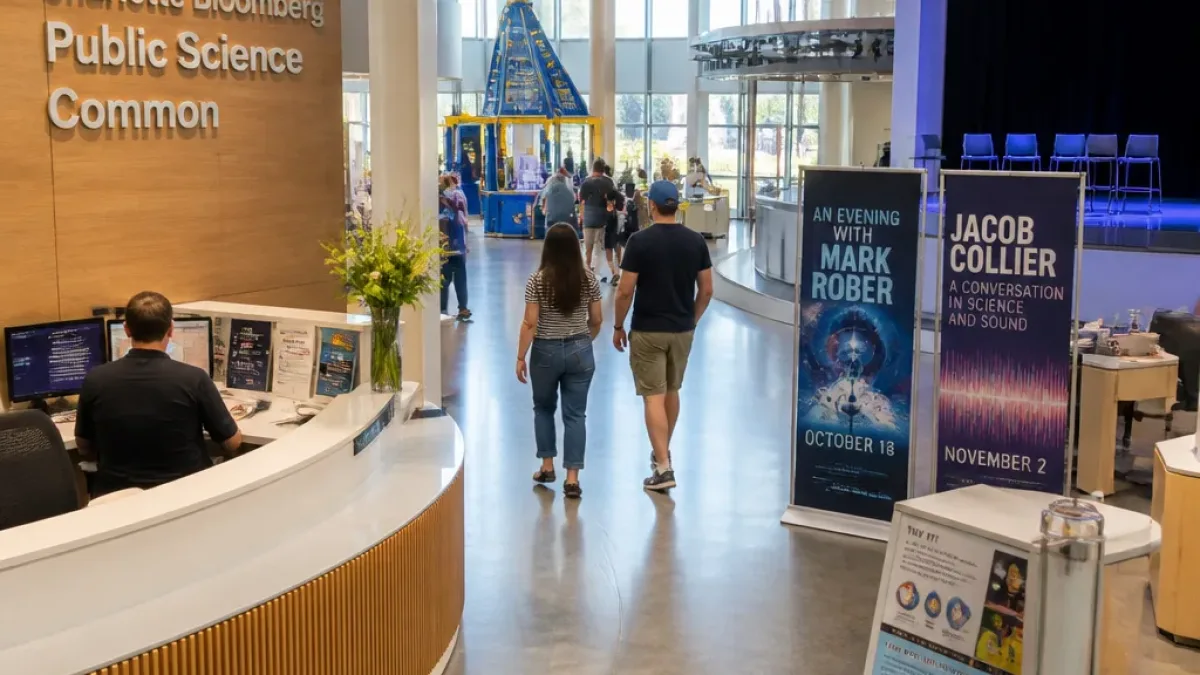
The William and Charlotte Bloomberg Public Science Common, which opened Oct. 10 with a celebration planned later in the month, is designed to bring scientists, communicators and the public together in a single visible forum. Museum leaders say the space will host conversations, conferences and symposia intended to bridge research and community audiences.
"The Public Science Common captures the spirit of openness and dialogue that has always fueled progress – and it means a lot to have it named for the most important teachers my sister Marjorie and I had: our parents, William and Charlotte," Bloomberg said.
Design and reach
The new facility features prominent floor-to-ceiling glass that overlooks the Charles River and offers sweeping views of the Boston skyline. Its built-in technology is intended to let the museum extend programs far beyond the region by streaming and sharing content with wider audiences.
Museum of Science officials describe the Public Science Common as a space to "connect trusted scientific voices with local and global audiences," positioning it as a platform for public-facing science communication and civic engagement on scientific topics.
How the gift fits Bloomberg's history
The donation reflects a lifelong interest in learning that Bloomberg says began with weekly childhood visits to the museum while growing up in nearby Medford, Massachusetts. Bloomberg, born Feb. 14, 1942, later pursued engineering and business studies at Johns Hopkins and Harvard, and built a career in finance and public service before establishing a major philanthropic presence.
The museum’s naming honors Bloomberg’s parents, William and Charlotte, whose encouragement he cites as formative for his interest in learning and curiosity about science and the world.
What the space will offer
- Live and recorded talks by scientists and science communicators
- Conferences and symposia aimed at public and professional audiences
- Digital outreach to distribute programming beyond Boston
The museum says the Public Science Common is intended to foster open dialogue about scientific issues and to serve as a gathering place where the public can engage directly with experts.
| Item | Detail |
|---|---|
| Donation | $155 million |
| Name | William and Charlotte Bloomberg Public Science Common |
| Opening date | Oct. 10 (with a celebration planned Oct. 28) |
| Location | Museum of Science, Boston — overlooking the Charles River |
Implications for public science
The gift joins a pattern of large-scale donations that have reshaped cultural and scientific institutions in recent decades. By coupling a major endowment with a visible, technologically enabled venue, the museum is betting that investing in a flagship public space will expand its ability to convene experts and reach broader audiences.
Officials say the space will host programming that both serves local visitors and broadcasts conversations to viewers elsewhere, an approach that aims to blend place-based experiences with scalable digital engagement.
As the institution rolls out events and initiatives from the Bloomberg Common, observers will watch for how effectively the museum translates high-profile philanthropic support into sustained public dialogue and measurable increases in science literacy and civic engagement.
For now, the new facility stands as a prominent example of how private philanthropy can shape the infrastructure for public science communication in major American cities.