Ground transportation feels the disruption
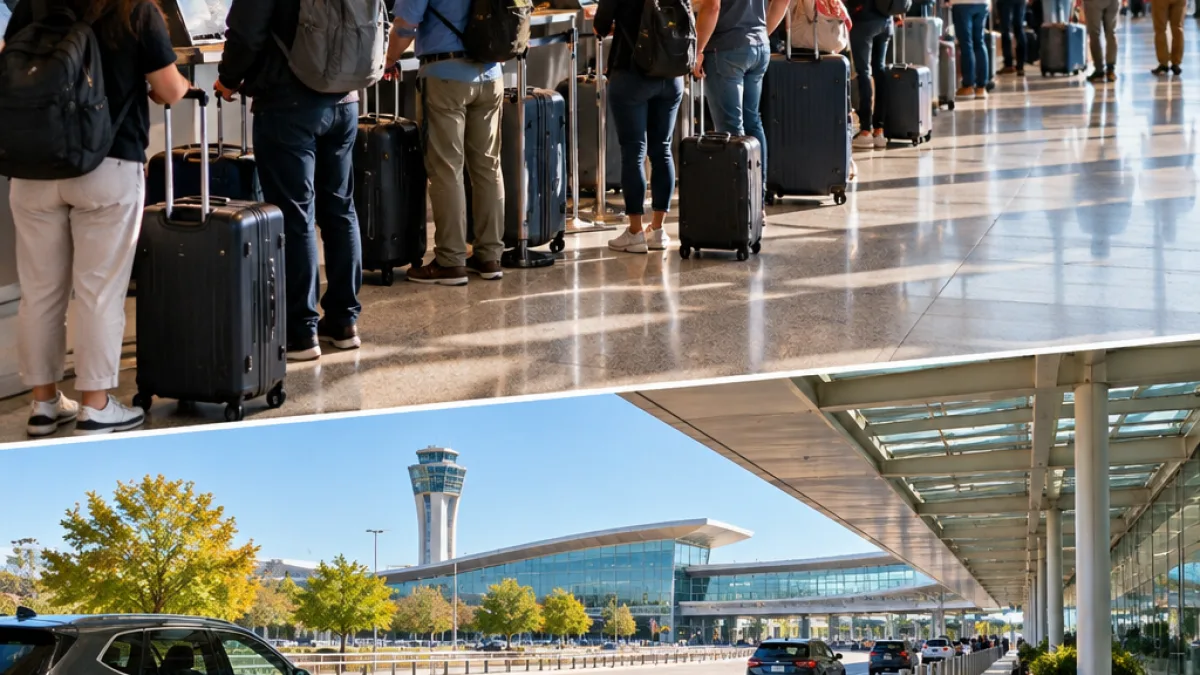
A five-hour nationwide flight ground stop reshaped travel plans at Sacramento International Airport over the weekend, sending passengers toward rental cars while sharply reducing business for rideshare drivers. Although flights were beginning to return to normal, the interruption continued to affect the airport’s ground transportation operations as travelers searched for alternatives to canceled, delayed or uncertain air travel.
The disruption illustrated how quickly an aviation interruption can move beyond airline schedules and into the local transportation economy. Rental companies serving Sacramento International Airport reported a rush of calls and customer requests on Friday and Saturday. At the same time, drivers who depend on arriving passengers saw demand fall because fewer people were coming through the terminals.
Travelers switch from planes to cars
Shawn Jarriett was among those who changed course. He had planned to fly Saturday to Utah to visit his mother and sister, but after watching developments surrounding the stoppage, he canceled the flight and chose to make the trip by car. He rented a vehicle for the 10-hour drive, saying the alternative was less expensive and offered greater peace of mind.
“I’d rather just stay away from all that … renting a car is a whole lot easier. I’d rather not deal with that,” Jarriett said.
Jarriett’s decision reflected a broader shift among travelers. Hundreds of people turned to rental vehicles Friday and Saturday either to continue toward their destinations or to move around Sacramento after their air travel plans changed. The airport’s rental agencies are based at a centralized facility on McNair Circle, south of the passenger terminals, where employees at Budget, Enterprise and Avis said they handled a continuous stream of calls during the stoppage.
Rental agencies loosen one-way limits
The rental companies adjusted their normal practices as customers looked for ways to leave the region or complete trips without flying. Restrictions on one-way rentals were temporarily removed, allowing vehicles to be used more flexibly during the disruption. That response tied the airport’s travel recovery to the capacity of a separate transportation network: the cars, staff and reservations needed to carry passengers beyond the airport.
| Part of airport transportation | Effect reported during stoppage |
|---|---|
| Rental car companies | Surge in demand and nonstop calls |
| One-way rentals | Restrictions temporarily removed |
| Rideshare drivers | Fewer trips because arrivals declined |
Lawson Williams, the airport’s operations manager, said the goal was to give travelers room to make alternate arrangements and return home. The temporary flexibility was aimed at accommodating customers facing an unusually difficult travel period, rather than preserving ordinary rental procedures.
Rideshare demand moves in the opposite direction
For rideshare drivers, the same event produced the reverse result. Sammy Asad, an Uber driver, said his work nearly disappeared while the ground stop was in effect. With no aircraft arriving at Sacramento International Airport, there were few passengers seeking rides from the terminals. Asad completed only two trips Friday, a sharp contrast with his normal level of activity, according to the report.
- Air travelers: Some canceled flights and chose lengthy road trips instead.
- Rental agencies: They absorbed increased demand and temporarily relaxed one-way policies.
- Rideshare drivers: They lost airport-related trips as incoming flights stopped.
The contrasting experiences show the uneven effects of a transportation interruption. A disruption that strands travelers in one part of the system can create sudden business for another, while workers whose income depends on regular passenger flows may lose opportunities immediately. In Sacramento, the ground stop therefore became not only an airline problem but also a short-term test of how the airport’s surrounding transportation services respond when normal air traffic breaks down.
As flight operations resumed, the immediate pressure on rental agencies and rideshare drivers was expected to change again with the return of passengers. The weekend’s events nonetheless left local travelers and businesses managing the consequences of a national aviation interruption, with rental companies working to put people on the road and rideshare drivers waiting for airport demand to recover.