Combining physical activity with volunteering is associated with better mental health, greater life satisfaction and lower loneliness, according to research involving 2,856 respondents in the UK.
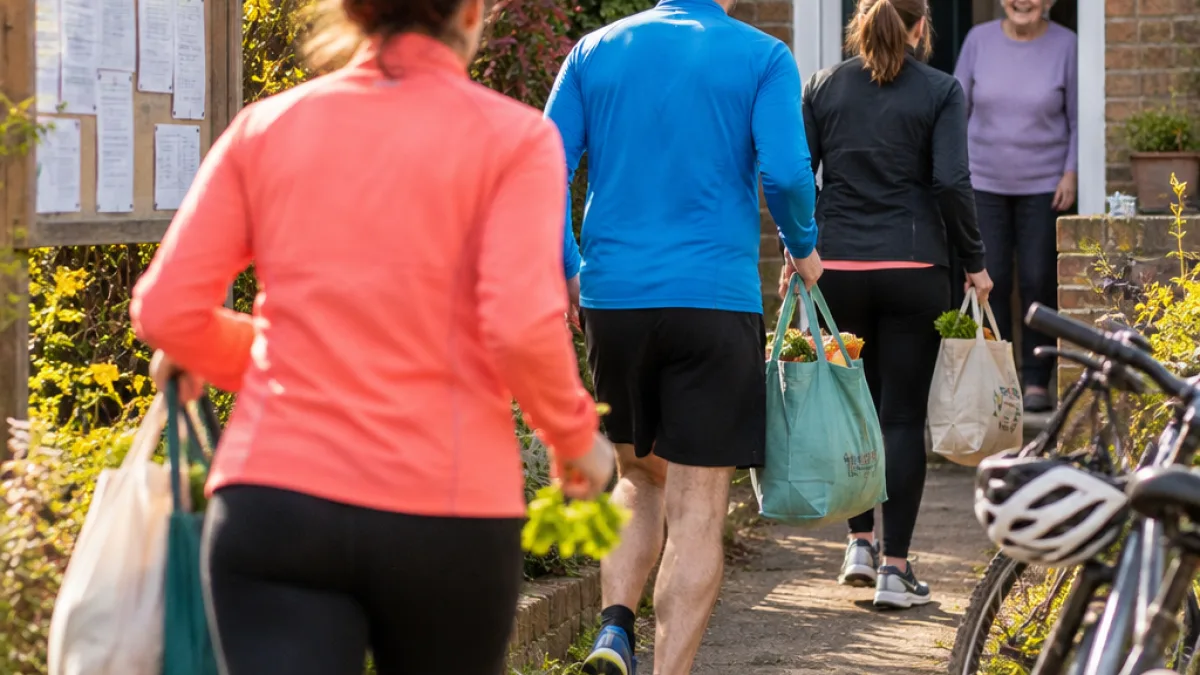
The study, carried out by researchers from King’s College London and the London School of Economics, examined participation in GoodGym, a charity whose members run, walk or cycle while supporting isolated older people and helping with community projects. Its findings suggest that programmes bringing together exercise and a social purpose could have a role in improving wellbeing and strengthening connections between people.
Activity with a community purpose
Researchers compared people who took part in GoodGym with individuals who had registered with the organisation but had not participated. Those who were active participants reported lower levels of mental ill health and loneliness. They also described stronger feelings of belonging, trust and social connection.
The results indicate that the potential benefit may extend beyond the period immediately following an activity. Participation was linked to an average 0.43-point rise in life satisfaction, with positive associations still evident more than six months after a participant’s most recent volunteering activity.
| Finding | Reported result |
|---|---|
| People included in the research | 2,856 |
| Association with life satisfaction | 0.43-point improvement |
| Persistence of wellbeing association | More than six months |
| Estimated wellbeing return compared with operating costs | At least 40 to one |
Potential implications for preventative care
The researchers estimated that the wellbeing benefits generated by the programme exceeded its operating costs by at least 40 to one. That calculation adds an economic dimension to the findings, although it relates to the programme examined and does not establish that every exercise or volunteering scheme would produce the same result.
Dr Christian Krekel of the LSE said such initiatives could provide a practical way to support wellbeing while helping communities build stronger social ties.
“At scale, programmes like this could offer a simple and practical way to improve wellbeing.”
The findings may strengthen the case for using community-based exercise schemes as part of preventative healthcare and social prescribing. Social prescribing allows people to be directed towards activities and sources of support in their communities, rather than relying only on clinical treatment. The study suggests that an activity combining movement with contact and purpose could help address some barriers to participation, while also supporting mental wellbeing.
Evidence and its limits
GoodGym’s model brings together two forms of engagement: regular physical activity and practical help for other people. Members may assist isolated older residents or contribute to local projects, creating repeated opportunities for exercise and interaction. The researchers said the combination was linked with improved outcomes across several measures, including life satisfaction, belonging and loneliness.
However, the research was observational. It identified associations between participation and reported wellbeing, rather than proving that taking part directly caused the improvements. This distinction matters because people who choose to join and participate in a volunteering programme may differ from those who register but do not take part. The study therefore supports further consideration of the model, but does not establish a clinical treatment effect.
For fitness and leisure organisations, the results point to the possible value of linking physical activity to a wider social purpose. For health services and policymakers, they offer evidence that community programmes could complement existing efforts to prevent poor mental health and reduce isolation. The central finding is that exercise and volunteering together were associated with benefits that persisted beyond the immediate activity, while the observational design leaves the scale and cause of those benefits requiring further investigation.