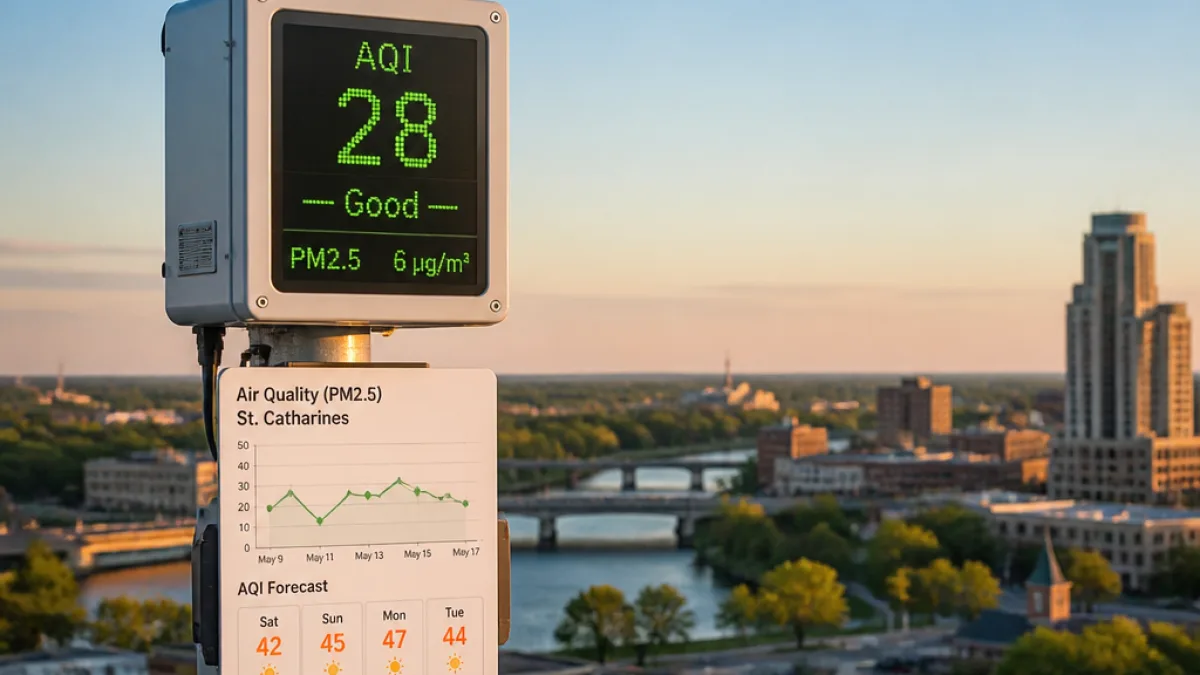
On an autumn afternoon in Gateshead, digital monitors are reporting what many locals will welcome: air quality in the borough is currently in the “Good” range. Real‑time figures from international monitoring service IQAir show an air quality index (AQI) of 6 for Gateshead at 15:00–16:00 on 26 October, and state that the borough’s fine particulate matter levels meet the World Health Organization’s annual guideline.
What the figures mean for residents
For people walking along the riverside, parents with pushchairs and those with respiratory conditions, an AQI in the single digits represents a period of relatively low pollution. Local GPs and community groups have long advised that lower PM2.5 levels reduce the risk of exacerbations in asthma and chronic obstructive pulmonary disease, and make outdoor activities safer for vulnerable groups. The available dataset also points to stability over the recent hour, with the AQI recorded as 6 (Good).
"PM2.5 concentration currently meets the WHO annual PM2.5 guideline."
That conclusion — drawn from monitoring data — is significant because PM2.5 (particles smaller than 2.5 micrometres) is implicated in long‑term health risks including heart and lung disease. Meeting the WHO annual guideline suggests the borough is not currently experiencing elevated persistent particulate levels.
Short-term outlook
IQAir’s forecast data for Gateshead suggests mild variations in conditions across the coming days. The service’s daily snapshot gives a sense of temperature, wind and humidity patterns accompanying the air quality readings. A condensed view of the short-term forecast is shown below.
| Day | Reported AQI (approx.) | Temperature | Wind | Humidity |
|---|---|---|---|---|
| Today (26 Oct) | 8 | 15° / 7° | 24 km/h | 87% |
| Tuesday | 12 | 12° / 8° | 27 km/h | 69% |
| Wednesday | 18 | 14° / 9° | 23 km/h | 81% |
These short‑range numbers indicate a gentle shift in conditions rather than any stark deterioration. Wind speeds of around 20–27 km/h can help disperse local emissions, while relative humidity will vary through the week.
How Gateshead compares across the UK
National city rankings published alongside the data show a number of UK locations with higher AQI values at the time of measurement. Ports, central London neighbourhoods and other towns appeared above Gateshead in the real‑time listing; for example, Portsmouth and Poplar were among the higher ranked areas. The dataset did not list specific locations within Gateshead as having the cleanest or poorest air at the time sampled.
- Current AQI: 6 (Good) at 15:00–16:00, 26 October
- PM2.5: meeting the WHO annual guideline according to the monitoring service
- Forecast: mild variation expected across the next two days
For Gateshead residents, the data provides reassurance in the short term but also underlines the importance of ongoing monitoring. Air quality can change with traffic patterns, domestic heating and broader regional weather systems, so periodic checks remain advisable for those with specific health concerns.
Local authorities and health services typically use such monitoring to help frame public guidance. Community groups and campaigners who press for cleaner air will monitor whether favourable readings are sustained over months and years — the timescale on which public‑health benefits from reduced particulate pollution become most evident.
While the snapshot today is positive, experts continue to stress that long‑term reductions in emissions are needed to protect health across the North East and the UK.