Quebec asserts its own position
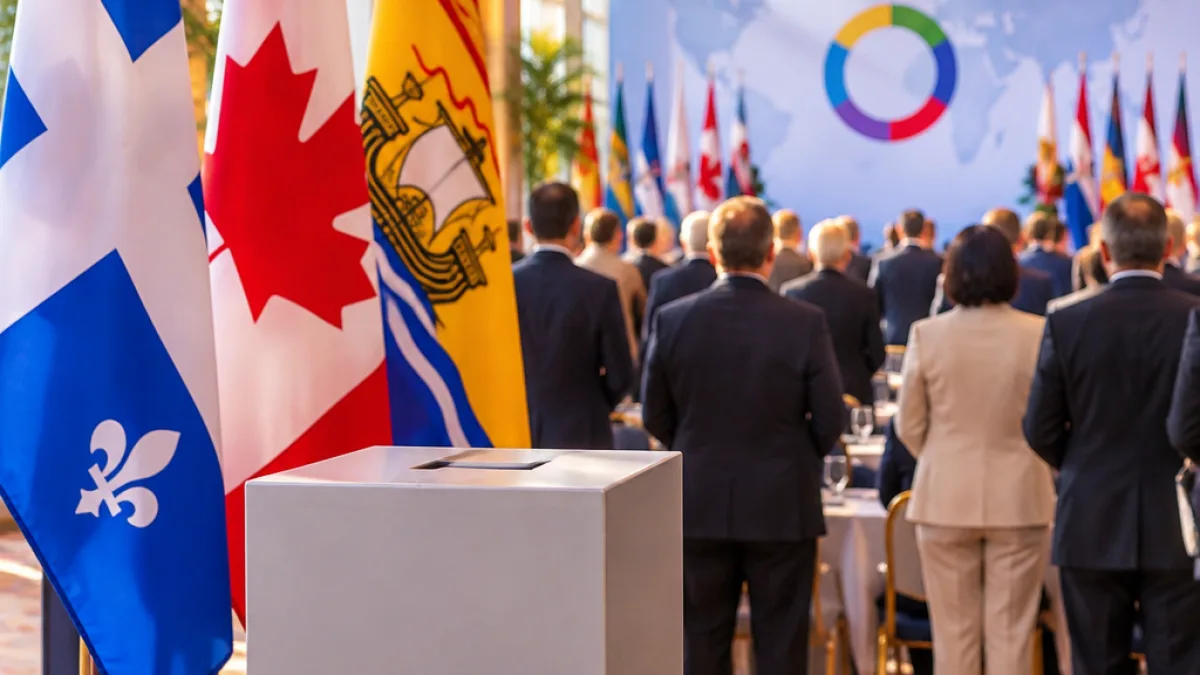
PHNOM PENH — Quebec Premier Paul St-Pierre Plamondon used his first appearance on the international stage to make clear that the province may not vote with Canada in Monday’s election for the secretary general of the International Organization of La Francophonie.
Speaking Saturday at the 20th Francophonie Summit in Cambodia, the premier declined to identify his preferred candidate. But he rejected the idea that Quebec’s position would necessarily be tied to that of Canadian Prime Minister Mark Carney or New Brunswick Premier Susan Holt.
“We are not bound by another player’s vote,” St-Pierre Plamondon said, according to the source.
The wording reflects the sovereigntist government’s effort to present Quebec as an actor with its own international voice. Quebec, Ottawa and Fredericton each have the right to vote in the leadership contest, giving the province a distinct role in a process that otherwise involves member states of the Francophonie.
Four candidates are seeking the post
The vote will determine who serves a four-year term as head of the organization. The incumbent, Louise Mushikiwabo of Rwanda, is seeking a third mandate. She faces three challengers: Juliana Amato Lumumba of the Democratic Republic of the Congo, Dacian Ciolos of Romania and Coumba Bâ of Mauritania.
| Candidate | Country | Position |
|---|---|---|
| Louise Mushikiwabo | Rwanda | Current secretary general, seeking a third term |
| Juliana Amato Lumumba | Democratic Republic of the Congo | Candidate |
| Dacian Ciolos | Romania | Candidate |
| Coumba Bâ | Mauritania | Candidate |
Mushikiwabo met with St-Pierre Plamondon on Saturday and openly sought Quebec’s backing. She said she has “very good relations” with the province. She appeared alongside Caroline St-Hilaire, a Quebec native who serves as her deputy and whose own position is also at stake.
A meeting with Carney carries added weight
The leadership question is expected to arise Sunday, when St-Pierre Plamondon and Carney hold their first in-person meeting. The encounter comes after the Quebec premier made several pointed comments since taking office, including criticism involving the federal budget, immigration and culture.
Despite those differences, St-Pierre Plamondon said he was optimistic about the discussions. He indicated that preparations for an economic update would be part of the agenda, suggesting that the meeting will extend beyond the Francophonie vote and into the broader relationship between Quebec and Ottawa.
Carney, speaking from the Philippines, also expressed confidence that the two leaders could work together. He said he works with Canada’s other premiers as well as leaders internationally and expected them to identify priorities they share.
Quebec’s international role is central to the message
Before his political discussions, St-Pierre Plamondon addressed Quebec entrepreneurs in Phnom Penh. He encouraged them to use the Francophonie as a way to develop commercial opportunities, placing economic outreach alongside the government’s political message.
He also emphasized Quebec’s long-standing participation in the organization. Quebec has been a full member of the Francophonie for more than 50 years, a status the premier invoked as evidence that the province can exercise international influence even while remaining within Canada.
“The organization is an example of how we can exercise our sovereignty at the international level,” St-Pierre Plamondon said.
In that context, the vote is more than a procedural choice for Quebec’s government. It offers a visible opportunity to demonstrate that the province can defend its own political and economic interests in a multilateral setting, while stopping short of declaring which candidate it will support.
Independence remains present, but not formally on the agenda
Quebec’s international relations minister has said the province would not raise the question of independence during the summit. The premier nevertheless acknowledged that his government’s sovereigntist identity has attracted attention from other participating states.
He said conversations in the margins of the summit had included questions about the fact that the government is led by the Parti Québécois. Those exchanges allow the delegation to discuss Quebec’s political direction without making independence the official subject of its meetings.
That distinction is important for the province’s relations with both the Francophonie and Ottawa. Quebec is seeking to assert its autonomy in areas it considers central to its identity, including language, culture and international representation, while the federal government remains a necessary partner on national economic and diplomatic matters.
The decision comes Monday
For now, the premier has kept Quebec’s preference private. The immediate test will come when the organization’s members select a secretary general on Monday. Whether Quebec ultimately votes with Canada and New Brunswick or chooses another path will provide an early indication of how the new government intends to use the province’s place within the Francophonie.
The outcome will also shape the atmosphere of Sunday’s conversation between St-Pierre Plamondon and Carney. Whatever the result, Quebec’s participation in the election has already become a public demonstration of the government’s stated approach: co-operation with Ottawa where interests overlap, but no automatic alignment when the province believes it has a separate position.