With Mpumalanga’s municipal elections days away, the Electoral Commission of South Africa (IEC) has urged voters to complete a final check of their registration information and prepare the correct documents before heading to the polls.
Voting stations across the province will operate from 07:00 to 21:00 on 4 November 2026. Only South African citizens aged 18 and older who are registered to vote will be eligible to cast ballots. Voters must also go to the station where they are registered.
IEC spokesperson Thanduxolo Chembeni said voters should not leave basic preparations until election day. The commission’s advice is aimed at limiting delays at voting stations and helping voters understand what will be required before they receive their ballot papers.
“Check your registration details, confirm your voting station and make sure you have the correct identification document,” Chembeni said.
Documents accepted at the voting station
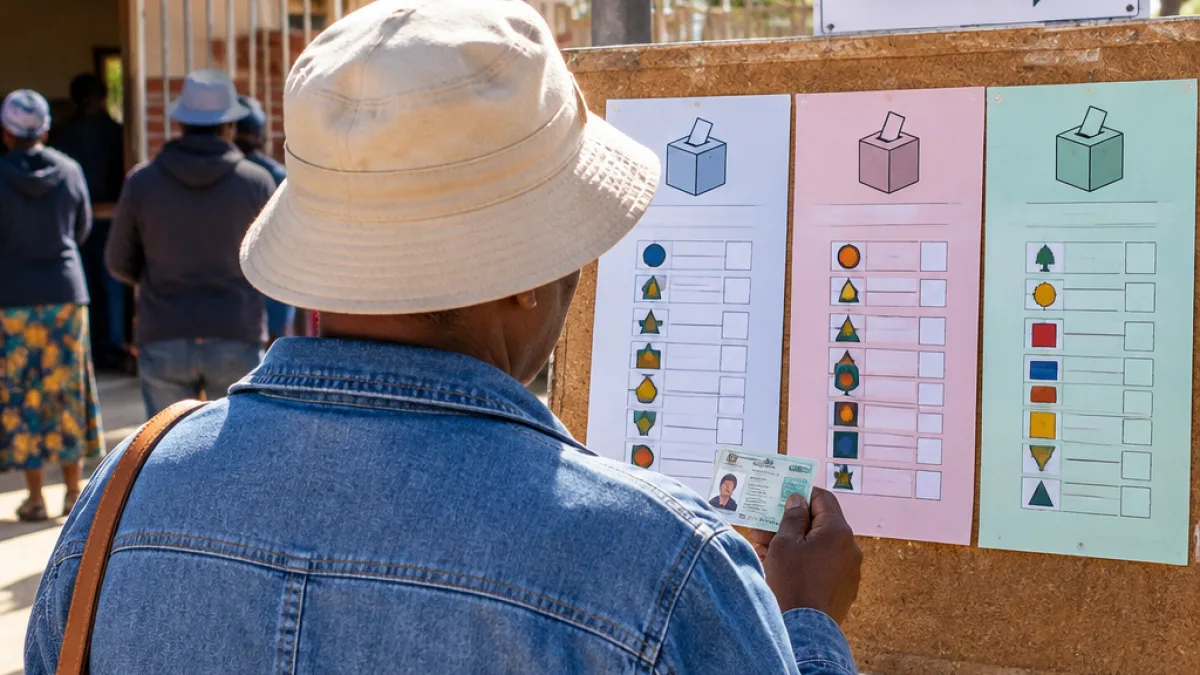
Voters must take one of the identification documents approved for voting. These are a green barcoded identity document book, a smart ID card or a valid Temporary Identification Certificate.
The IEC has provided several ways for voters to confirm their registration information and voting station before election day:
- SMS an identity document number to 32810;
- Send the word “Hi” on WhatsApp to 0600 88 0000; or
- Call the IEC’s toll-free number on 0800 11 8000.
Checking these details in advance is particularly important for voters who may have moved since they last registered or who are uncertain about the station assigned to them. The IEC’s instruction is that voters must cast their ballots at the place where they are registered.
Address details could determine whether ballots are issued
Once voters arrive, a door controller will scan their identification document using a Voter Management Device. A voters’ roll officer will then check the person’s details and mark the name on the roll.
Voters whose residential address is not recorded will be required to provide their current address before they can proceed. Chembeni warned that the address requirement is not a minor administrative step.
“Without an address, voters will not receive ballot papers and will not be able to vote,” Chembeni said.
The process means voters should make sure they know their current residential address and are ready to provide it if the officials identify a gap in their registration record. The source information does not indicate that voters may vote at a different station simply because it is closer to their home or workplace.
Three ballots will be issued
After their details have been checked, voters will have their left thumbnails inked before receiving three stamped ballot papers. Each ballot relates to a different decision in the municipal electoral system, so voters will need to consider three separate choices.
| Ballot | What voters choose |
|---|---|
| White or grey ward ballot | A ward councillor candidate, who may stand for a political party or as an independent |
| Green local council PR ballot | A political party for representation in the local municipal council |
| Yellow district council PR ballot | A political party for representation in the district municipal council |
The ward ballot is used to select the candidate who will represent a particular ward on the local municipal council. The candidate may be linked to a party or may contest independently.
The green proportional representation ballot is different: it is used to select a political party rather than an individual candidate. The result helps determine how many seats each party receives in the local council through proportional representation.
The third ballot, coloured yellow, is also a proportional representation ballot, but applies to the district municipal council. It determines party representation at district level. The IEC has stressed that these are separate decisions and that voters will receive three ballots for the municipal election.
What voters can do before 4 November
Voters can reduce uncertainty by confirming their registration details, checking the location of their assigned voting station and ensuring that their identification document is valid and available. They should also take note of the station’s operating period, which begins at 07:00 and ends at 21:00.
At the station, voters should follow directions from the door controller and voting officials, answer any address-related questions and read each ballot carefully before making a choice. The three papers serve different purposes, and confusing the ward contest with either of the proportional representation contests could affect how a voter records their preferences.
The IEC’s guidance places responsibility on voters to arrive prepared, while station officials will manage the identity checks, voters’ roll verification, address confirmation, marking of voters and issuing of stamped ballots. For Mpumalanga residents, the immediate priority is therefore straightforward: verify the details now, take an accepted identity document and know that municipal voting involves three separate ballots.