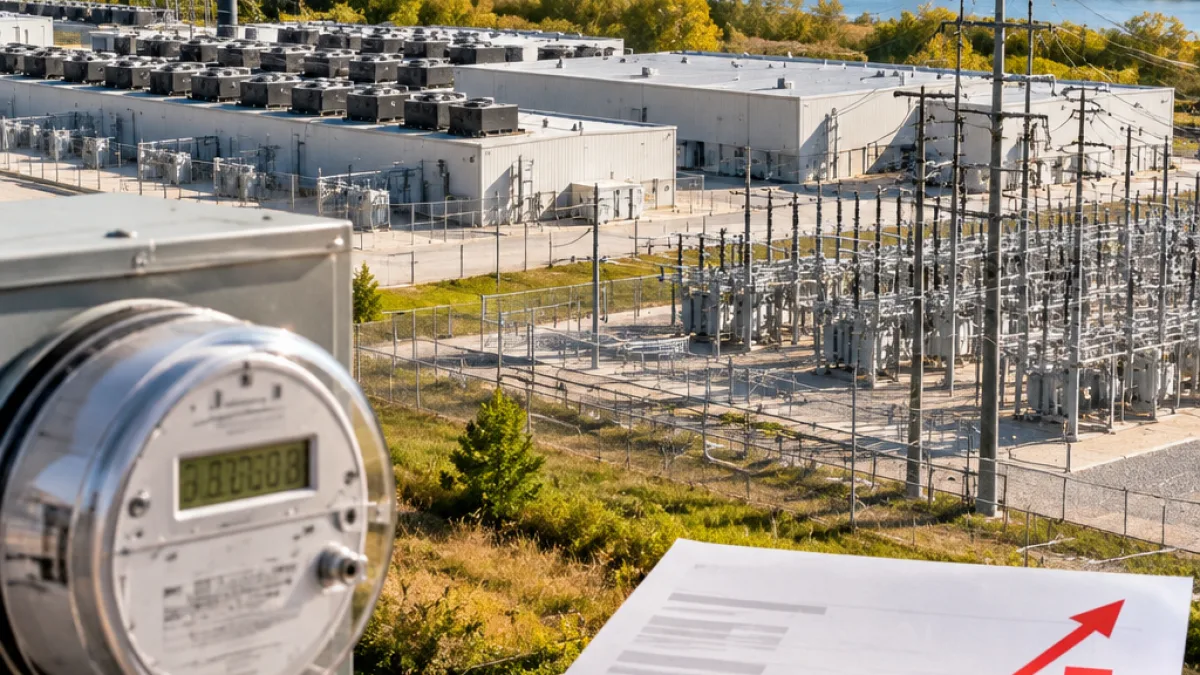
Poll shows resistance to data center expansion
Opposition to data center development is pronounced among North Dakota Democrats and independents, according to the latest North Dakota Poll, adding a significant public-opinion dimension to the state’s debate over artificial intelligence infrastructure and large-scale electricity demand.
The survey found that 55% of independents and 54% of Democrats oppose traditional data centers. Among Republicans, opposition was lower at 32%. The results indicate that support for expanding the facilities is divided not only by geography, but also by political affiliation.
The findings come as North Dakota considers the economic opportunities and infrastructure pressures associated with data centers. Traditional facilities support digital services including messaging, GPS navigation, banking transactions and the storage of records, such as hospital files. Hyperscale facilities are associated with much larger technology operations, and both types are included in the broader statewide discussion about artificial intelligence development.
Electricity costs drive much of the concern
For many respondents, the debate is tied directly to household and business utility bills. Statewide, 60% of Democrats and 57% of independents said data centers would affect electricity rates. Those concerns were especially visible in the Fargo-Cass County region, where opposition among all respondents reached 51%.
| Group or region | Opposition or concern reported |
|---|---|
| Independents | 55% oppose traditional data centers |
| Democrats | 54% oppose traditional data centers |
| Republicans | 32% oppose traditional data centers |
| Fargo-Cass County | 51% oppose data centers |
| Western North Dakota | 44% oppose data centers |
That regional difference suggests local economic conditions and expectations may shape how residents view new facilities. In Fargo-Cass County, opposition was stronger than in western North Dakota, where 44% of respondents opposed data centers. The source material does not identify the specific projects or utility territories behind those views, but the poll places electricity rates at the center of the public response.
Partisan divide extends to regulation
The poll also found sharply different opinions about whether government can manage the sector effectively. Only 19% of Democrats and 35% of independents said the state could effectively regulate data centers. By comparison, 52% of Republicans expressed confidence that the state could do so.
Those numbers point to a dispute over more than development itself. They reflect competing views about the state’s role in overseeing artificial intelligence and data center growth, including whether officials can address possible effects on electricity rates while allowing the industry to expand.
“I think there is a perception that the state's going to be permissive with allowing expansion of data centers, and so from the Republican point of view, that's seen as a good thing because Republicans want more data center expansion,” said John Bitzan, Menard Family.
Bitzan’s comment, included with the poll findings, captures the political contrast reflected in the results: Republican respondents were more supportive of expansion and more likely to believe the state could regulate the industry, while Democrats and independents expressed greater resistance and less confidence in regulation.
Economic promise meets public scrutiny
Data centers are being discussed as part of North Dakota’s economic future, but the poll shows that development cannot be evaluated only through the lens of investment or technology. Residents are also weighing who bears the cost of the infrastructure needed to operate the facilities, particularly when electricity rates are part of the discussion.
The distinction between traditional and hyperscale operations is important for the public debate. Traditional data centers provide the digital services used in daily life, while the poll’s broader focus includes potential artificial intelligence facilities that may operate at a much larger scale. The survey results show opposition to both categories among key groups, according to the source material.
What the results mean for state officials
For policymakers, the findings create a clear political and economic challenge. North Dakota has residents who see data centers as an opportunity for expansion, while other residents are concerned about regulation and potential changes to utility costs. The sharp partisan split means proposals in this area are likely to receive different reactions depending on how they address economic development, oversight and electricity pricing.
- Electricity rates: A majority of Democrats and independents surveyed said data centers would affect rates.
- Regional views: Opposition was strongest among respondents in Fargo-Cass County and lower in western North Dakota.
- Regulation: Republicans expressed substantially more confidence than Democrats or independents in the state’s ability to regulate the sector.
The poll was commissioned by the North Dakota News Cooperative and appears as the fifth and final story in “The Data Divide,” a series examining North Dakotans’ views on artificial intelligence and data center development. Its findings provide a snapshot of public sentiment at a time when the state’s technology ambitions are being measured against concerns about infrastructure and consumer costs.
The central question for North Dakota is no longer simply whether data centers can bring new economic activity. The poll indicates that residents are also asking how expansion would be governed and how its electricity demands would affect communities. Those answers will shape whether data center development is viewed as a statewide opportunity or as a cost that requires tighter limits.