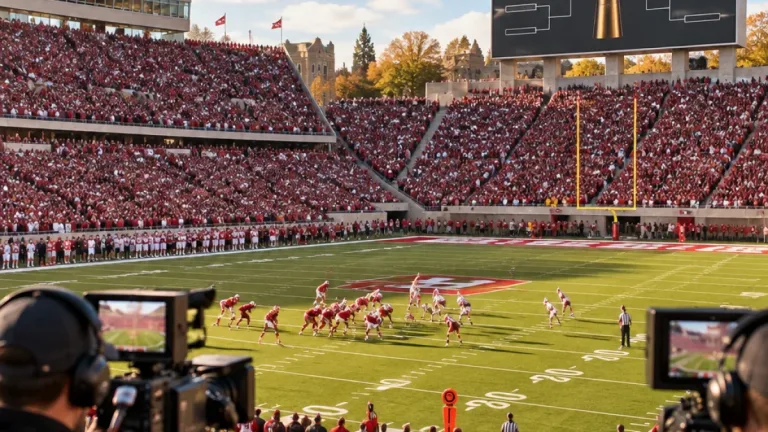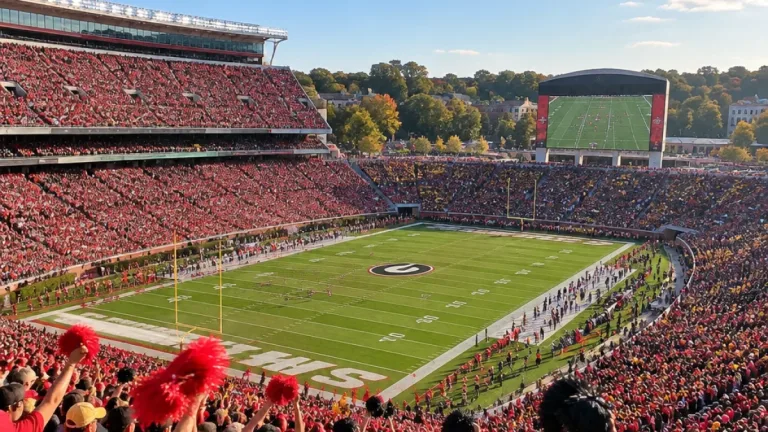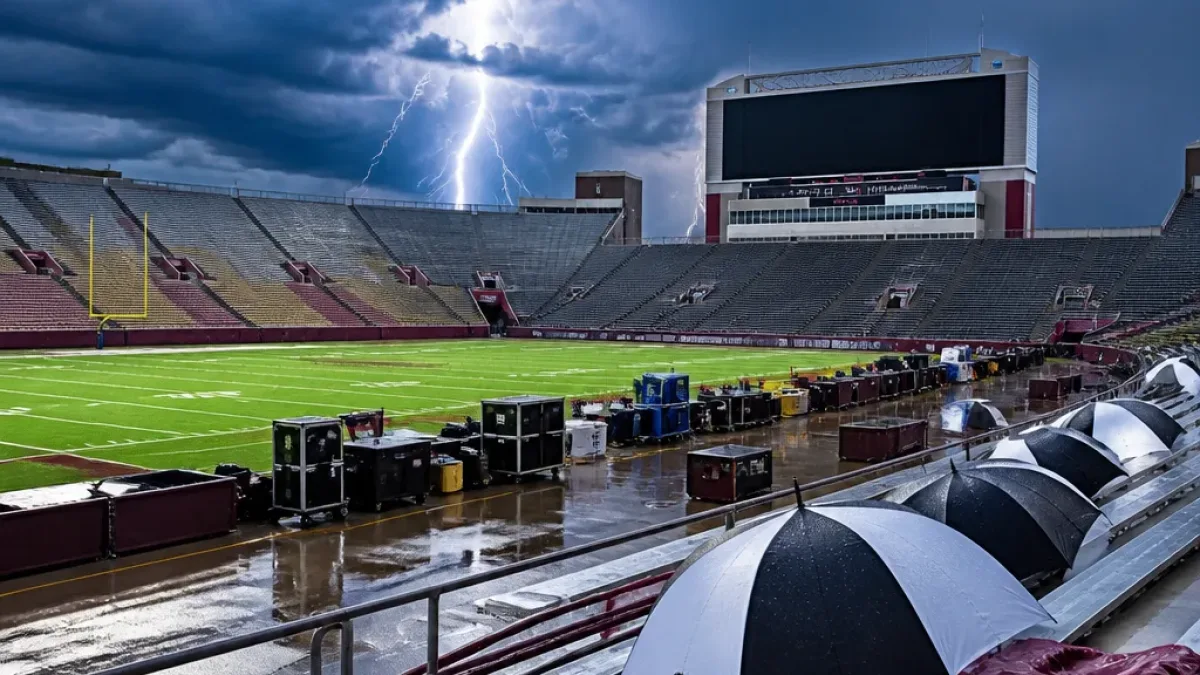
The North Dakota State football team and its Mountain West opponent were forced off the field Saturday night at University Stadium in Albuquerque after lightning was reported near the venue, producing a mandatory weather delay that briefly pushed back kickoff and emptied much of the crowd from the stands.
Delay triggered by nearby lightning strikes
Stadium video boards instructed fans to evacuate when lightning was detected in the area. Officials announced a mandatory 30-minute weather delay after lightning strikes were observed near the stadium at roughly 7:25 p.m. MT, while about half of NDSU’s players were completing pregame warmups.
Although the delay was set at 30 minutes, the game’s scheduled 8 p.m. local kickoff ultimately was postponed by only about 25 minutes, according to accounts from the field. Most of the crowd left the seating bowl for concourses and walkways while stadium staff and team personnel retreated to locker rooms.
League operations coordinated the response
The Mountain West’s deputy commissioner, Bret Gilliland, said he was communicating with the league operations center in Las Vegas about timing and safety decisions. He told media the contest was still projected to begin in the 9:15 p.m. Central window if lightning ceased and teams had time to re-warm.
“The game is still tracking for a 9:15 central time kickoff. There's 10 minutes left in this delay, if no more lightning strikes, teams will need about 20 minutes to warm up.”
Teams and fans adapt, recalling longer delays
NDSU head coach Tim Polasek reminded players of a similar situation last season when lightning created a lengthy interruption during a game at Indiana State. That contest stretched into a multi-hour delay — more than two hours — before NDSU returned to the field and eventually won 38-7. Polasek used that experience to keep the roster focused while the current delay was in effect.
Organizers expected in excess of 30,000 fans for the Mountain West matchup. When the announcement came, a “spattering” of fans remained seated, while the majority moved to covered concourses or exited temporarily. Stadium staff monitored the weather and followed established safety protocols for lightning in and around spectator areas.
- Safety first: Mandatory delays are triggered to protect fans and participants from lightning within a defined radius.
- Warmup time: Leagues typically require time for teams to complete warmups once the all-clear is issued before kickoff.
- Operational coordination: Conference operations centers may assist local officials in timing and resumption decisions.
How the timeline unfolded
| Event | Time (local / MT) |
|---|---|
| Lightning reported; announcement to evacuate | ~7:25 p.m. |
| Mandatory weather delay imposed | 30 minutes ordered |
| Scheduled kickoff | 8 p.m. |
| Game start (approximate) | ~8:25–8:30 p.m. |
Officials said the delay did not become protracted, and teams were able to resume preparations once the lightning threat subsided. Still, the interruption served as a reminder that weather can quickly affect travel schedules, staffing and in-stadium operations, especially when large crowds are involved.
Local impact and what fans should know
For North Dakota State supporters traveling to Mountain West venues, the incident underscores several practical considerations: allow extra travel time for delays, expect security and safety protocols to be strictly enforced, and be prepared for temporary sheltering inside the stadium if lightning or other severe conditions arise.
From an operational standpoint, brief weather interruptions can ripple into later start times and compressed windows for television and radio broadcasts. League officials and home sites coordinate to minimize disruption, but safety remains the overriding priority.
Saturday’s interruption in Albuquerque ended without significant incident. Teams went back to their locker rooms as instructed, officials consulted with the Mountain West center and the contest resumed after the weather cleared sufficiently.
Further updates on game timing, player availability or additional weather-related developments would come from team and conference officials as needed.