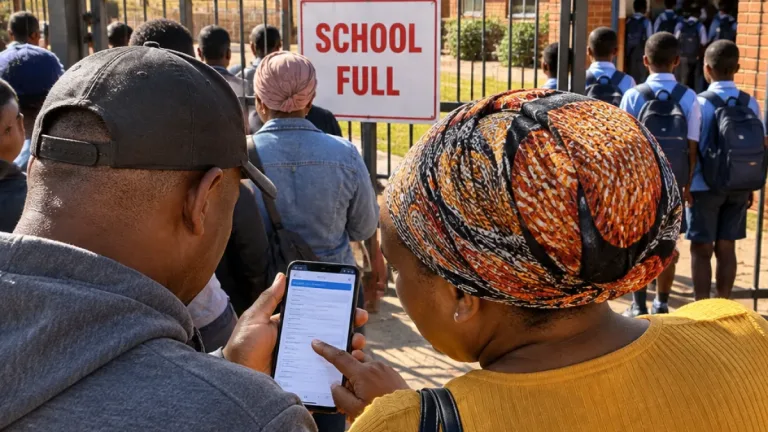
UNICEF has warned that efforts to bring children back into classrooms in three northern Nigerian states are reaching only a small share of those identified as being out of school.
The organisation said approximately 624,000 children had been identified as out of school across Sokoto, Kebbi and Zamfara. Of that number, only about 68,000 had so far been reached through UNICEF-supported re-enrolment interventions.
The figures were presented at a media briefing in Sokoto on Friday to mark World Children’s Day 2026. The briefing focused on the continuing education gap in the three states and the need for a more sustained response from government, communities and other partners.
UNICEF’s Chief of Field Office in Sokoto, Dr Michael Juma, said the difference between the number of children identified and those reached pointed to the scale of the challenge. He called for stronger government commitment, continued investment and community mobilisation to address the barriers keeping children away from school.
Large gap between identification and re-enrolment
The data show that identifying children who are not attending school has not been matched by the same level of progress in getting them back into education. UNICEF’s supported interventions have reached roughly one in nine of the children identified across the three states, leaving the majority outside the programmes recorded at the briefing.
| Measure | Number reported |
|---|---|
| Children identified as out of school | Approximately 624,000 |
| Children reached through re-enrolment support | Approximately 68,000 |
| Children reached through Teaching at the Right Level | Approximately 98,000 |
Juma identified the media as an important partner in advancing children’s rights. He urged journalists to report on progress while also examining the gaps that continue to affect children’s welfare and access to services.
“Journalists are important duty-bearers in advancing children’s rights. We need the media to provide balanced coverage that highlights development achievements while also drawing attention to the gaps that still exist,” Juma said.
Support extends beyond school admission
UNICEF said about 98,000 children across the three states had benefited from the Teaching at the Right Level approach. The programme is intended to strengthen basic literacy and numeracy, indicating that the organisation’s focus is not limited to bringing children into classrooms but also includes improving foundational learning once they are reached.
Other forms of support listed at the briefing included teacher professional development, the provision of learning materials, accelerated basic education, integrated Qur’anic education and alternative learning opportunities. These alternatives include radio-based education and the Nigeria Learning Passport.
The range of interventions reflects the different routes being used to reach children, including those who may not be participating in conventional schooling. However, the figures supplied by UNICEF do not state how many children have benefited from each education programme, how many have completed re-enrolment or how long those reached have remained in school.
Vaccination figures show wider child-health effort
The briefing also covered child-health interventions in the three states. UNICEF reported that approximately 7.8 million children were reached during measles-rubella vaccination campaigns, while more than five million children received polio vaccines in the most recently concluded campaign.
In Kebbi, where malaria vaccination had been introduced, around 148,000 children had received a first dose and 130,000 had received a second dose, according to UNICEF. The difference between the two figures leaves a recorded gap in second-dose coverage, although the briefing did not provide reasons for it or indicate whether further doses were planned.
- Education support reached about 68,000 children through re-enrolment interventions.
- About 98,000 children benefited from Teaching at the Right Level.
- Health campaigns reached millions of children with measles-rubella and polio vaccines.
The report is about Sokoto, Kebbi and Zamfara in Nigeria, despite the broader North West reference supplied with the story. It should therefore not be read as a report on South Africa’s North West province. Its central warning is nevertheless clear: recording the number of children excluded from education is only the first step, and the much larger task is ensuring that support reaches them and results in sustained participation in learning.