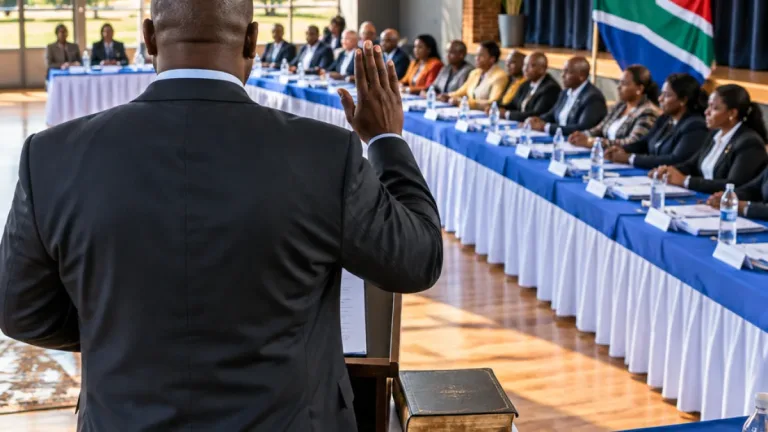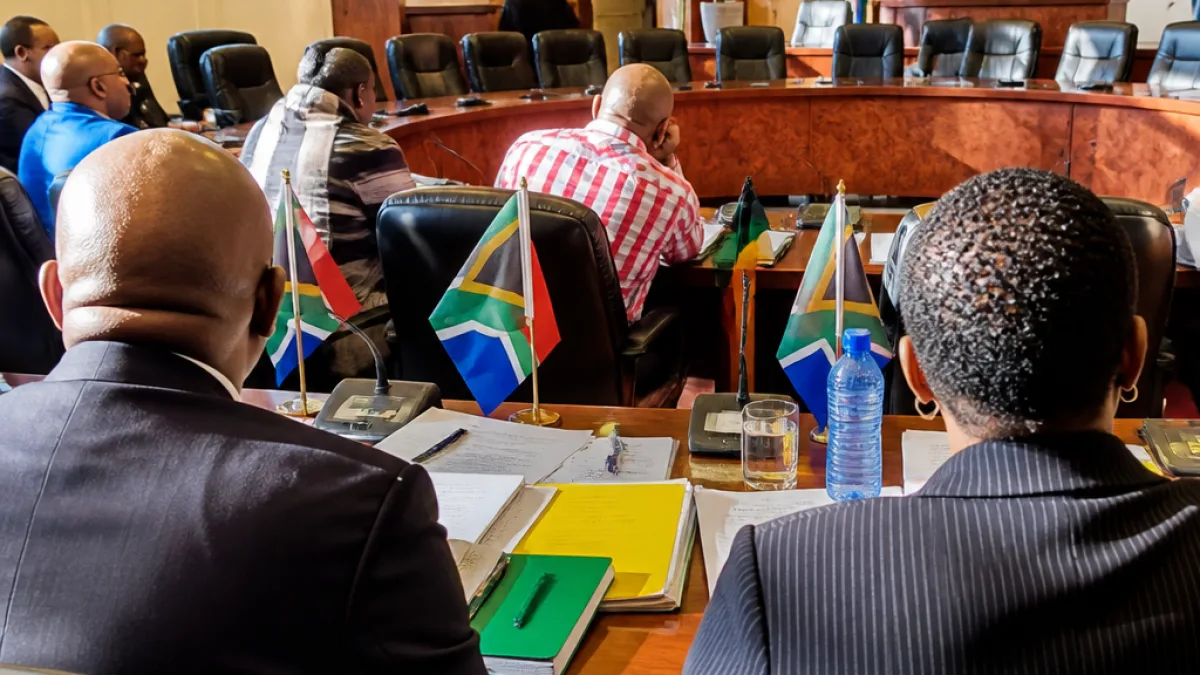
Coalition politics is expected to remain a defining feature of Rustenburg Local Municipality, with the South African Political Association (Sapa) saying multi-party government has been part of the municipality’s political reality for the past decade and is likely to continue after the Local Government Elections.
Sapa is involved in ongoing discussions with eight other political parties about possible cooperation in councils across Rustenburg Municipality and other local municipalities in the Bojanala area. The talks are taking place as parties consider how they will work together after the elections, although the source material does not indicate that a final agreement has been concluded.
Parties weigh post-election cooperation
Sapa leader Sello Moraka said coalitions had become a lasting part of South Africa’s local political landscape. He linked the shift towards coalition government to public dissatisfaction with the concentration of power in a single party, arguing that voters had rejected the way that power had previously been used.
“Coalition politics are the future; we tried to give a party absolute power to run the country and we know what that party did with the power.”
Moraka’s comments place the Rustenburg discussions within a broader debate about how municipalities should be governed when no single party has an outright majority. In practical terms, coalition arrangements can determine which parties support an executive, how council decisions are reached and whether an administration can secure backing for its programme. The details of the negotiations in Rustenburg, including the parties’ policy priorities and the distribution of responsibilities, have not been disclosed.
Transparency emerges as a key issue
African Economic Transformers leader Kekeletso Mafethe said the party would seek transparency in any agreements reached between political parties. Mafethe said coalition partners needed to communicate openly and avoid negotiating arrangements without the knowledge of other parties involved.
“You must be open to each other; don’t discuss anything behind the back of other parties.”
According to Mafethe, disagreements and conflict within coalitions can arise when parties believe that decisions are being made privately or without proper consultation. The comments point to one of the central questions facing the parties negotiating in Rustenburg: whether any agreement will provide clear and publicly understandable rules for cooperation, accountability and resolving disputes.
| Party or group | Position in the discussions |
|---|---|
| Sapa | Participating in talks on cooperation after the elections |
| African Economic Transformers | Emphasising transparency in coalition agreements |
| Eight other parties | Included in the reported discussions over council cooperation |
What remains unresolved
For residents, the immediate significance of the talks lies in what they may mean for the municipality’s ability to form a stable administration and take decisions in council. However, the available information does not identify the full group of participating parties, specify the proposed coalition partners or confirm who may control the municipality’s executive structures.
The negotiations also leave several issues requiring clarity before residents can assess the possible impact on local government. These include the terms of any agreement, the mechanisms for monitoring coalition commitments and how parties would manage disagreements if they arise. Mafethe’s emphasis on openness suggests that the way the talks are conducted will be closely linked to public confidence in any eventual arrangement.
- Coalition government: Sapa says it is likely to remain part of Rustenburg’s political future.
- Negotiations: Sapa and eight other parties are discussing cooperation in Rustenburg and other Bojanala municipalities.
- Accountability: African Economic Transformers says coalition agreements must be transparent and not negotiated secretly.
With post-election discussions continuing, Rustenburg residents will be watching for a formal announcement on which parties intend to work together and what commitments they make to the municipality. Until those details are released, the talks indicate the direction of local politics but do not yet establish the composition or stability of the next council administration.