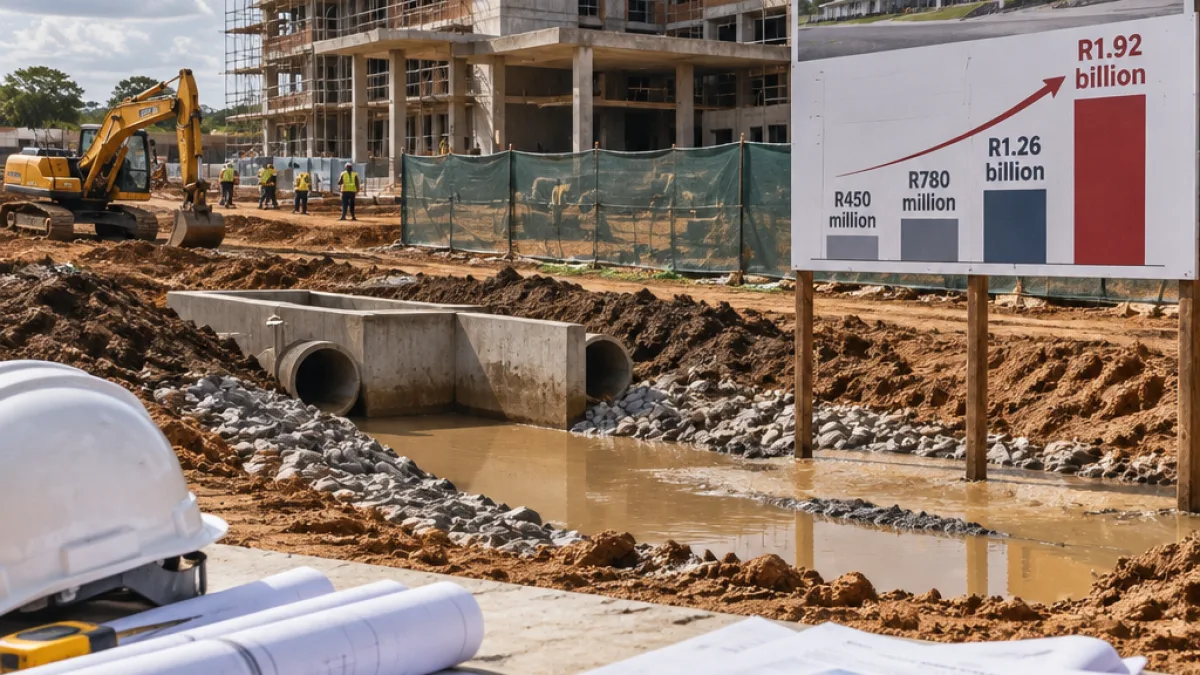
South Africa’s Department of Health has spent R1.82 billion on the Siloam Hospital redevelopment in Limpopo, while the project’s latest budget has reached R1.92 billion, according to figures provided by Health Minister Aaron Motsoaledi in a written response to a Parliamentary question.
The expenditure represents 94.89% of the approved budget. The department’s projected final cost is listed as R1.917 billion, leaving only a narrow margin between the amount already spent and the expected total. The figures place renewed focus on a hospital project whose cost has expanded substantially since it was first announced.
From R250 million announcement to multibillion-rand project
The redevelopment was announced in 2011 by former President Jacob Zuma at an estimated cost of R250 million, with an expected delivery period of three years. That estimate changed after further architectural planning. By 2014, the project’s budget had been revised to R750 million, and construction began in 2017.
Compared with the original announcement, the current allocation is described as a 668% increase. The increase is significant in a province where public infrastructure projects are closely linked to the ability of residents to access essential services closer to home.
| Project measure | Amount or date |
|---|---|
| Initial announced cost | R250 million in 2011 |
| Revised budget after planning | R750 million in 2014 |
| Current approved budget | R1.92 billion |
| Amount spent | R1.82 billion |
| Projected final expenditure | R1.917 billion |
Existing hospital dates back to the 1940s
The new facility is intended to replace the existing Siloam Hospital, which was built in the 1940s. That means the redevelopment is not simply an expansion of a recent building, but a long-running attempt to provide a modern replacement for an ageing public healthcare facility.
For people who rely on state healthcare, the significance of the project lies in whether the completed hospital can provide the planned services safely and effectively. However, the ministerial response does not provide details about the number of patients affected, the hospital’s planned capacity or the services that will be added once the redevelopment is finished.
Construction progress and unresolved works
The response indicates that the Main Hospital has been completed. The Rehabilitation Centre was scheduled for practical completion on 20 October 2026. As that date has passed, the available figures do not establish whether the centre was completed on schedule.
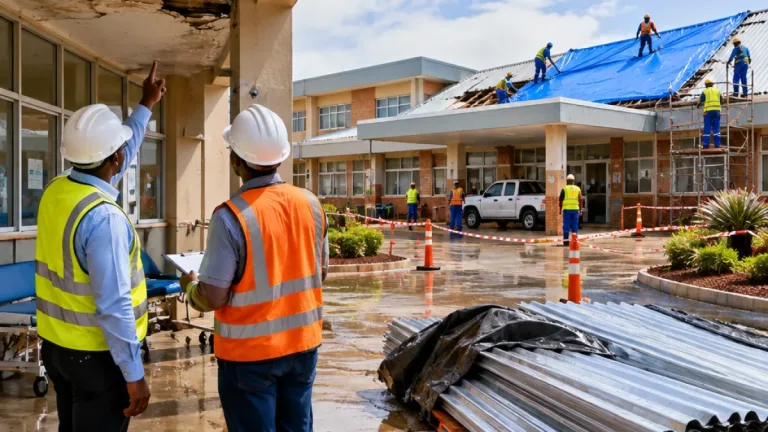
Other work remains affected by administrative and legal obstacles. Clearance permits from government departments and agencies have delayed construction of the stormwater attenuation pond. A court order has also stopped certain ancillary works. These issues matter beyond the construction site because stormwater management is part of the infrastructure required to protect buildings and surrounding areas from water-related damage.
The information provided does not state when the outstanding permits will be issued, when the court order may be resolved or whether either matter will result in further expenditure. It also does not indicate whether the delayed stormwater infrastructure has affected the planned opening or operational readiness of the hospital.
Public money under scrutiny
With almost the entire current budget already spent, any additional work would place pressure on the department to explain how the remaining allocation will be used. The difference between the approved budget and projected final expenditure is approximately R3 million, based on the figures in the ministerial response.
That limited balance makes the status of permits, court-affected work and the Rehabilitation Centre important to the project’s final accounting. It also raises questions about whether all remaining obligations have been captured in the current projection, although the available information does not say that the budget will be exceeded.
- R1.82 billion has been spent on the project.
- The current budget is R1.92 billion, compared with R250 million in 2011.
- Permits and a court order have delayed some associated works.
What residents still need to know
The ministerial answer confirms the scale of spending and identifies the main outstanding obstacles, but it does not provide a confirmed date for the hospital to become fully operational. It also does not clarify whether the existing Siloam Hospital will continue operating until every component of the replacement facility is ready.
For Limpopo communities, the practical measure of the investment will ultimately be the availability of a functioning hospital rather than the amount recorded as spent. Until the remaining construction, permitting and legal issues are resolved, the project’s final delivery position remains uncertain despite the completion of the Main Hospital.