
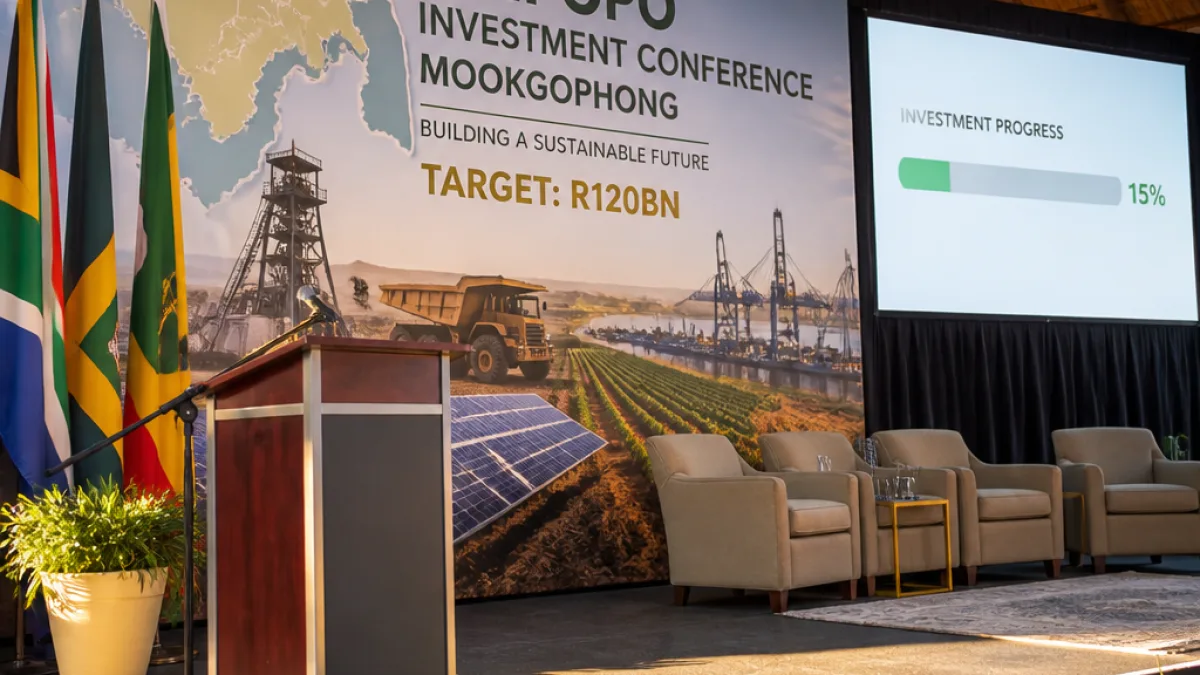
The Fetakgomo‑Tubatse Special Economic Zone (FTSEZ) in Steelpoort has secured an investment pipeline of R52.6 billion, officials said, as national and provincial representatives outlined plans to use the zone to advance mineral beneficiation, manufacturing and renewable energy in Limpopo.
Short‑ and long‑term jobs promise as investment is unveiled
Trade, Industry and Competition Minister Parks Tau presented the investment figures during a ministerial engagement in Steelpoort, where government, industry and traditional leaders met to discuss implementation of the FTSEZ. The development is expected to deliver roughly 8,000 jobs in the short to medium term, with a potential to grow to about 20,000 positions over 10 years if planned projects proceed.
“Few places make the case for beneficiation better than Steelpoort,” Minister Tau said, describing the zone’s May 2026 designation as a turning point for the province’s industrial development.
Limpopo’s MEC for Economic Development, Environment and Tourism, Tshitereke Matibe, confirmed the provincial government’s resolve to accelerate the SEZ by committing R445 million towards infrastructure development aimed at attracting investment and promoting job creation.
“Our vision is to ensure that minerals extracted in Limpopo create greater economic value within our province. We must increasingly move towards processing, manufacturing and producing goods that strengthen domestic supply chains, support industrial competitiveness, and create sustainable employment,” Matibe said.
What the FTSEZ will focus on
Officials framed the FTSEZ as strategically placed in the Steelpoort industrial hub, with an industrial mix intended to retain more value in the province by processing locally mined minerals rather than exporting raw ores. Planned areas of activity include:
- Mineral beneficiation — processing raw minerals into higher‑value products;
- Manufacturing — light and heavy manufacturing linked to local supply chains;
- Renewable energy — to support industrial power needs and lower operational costs;
- Related industrial services — logistics, maintenance and value‑added supplies.
Government officials argued the mix would bolster domestic supply chains, increase export readiness of finished products and create more durable employment than sectors that rely solely on primary extraction.
Context in the national SEZ programme
The FTSEZ is part of South Africa’s broader Special Economic Zones programme, which aims to attract investment and deepen the country’s industrial base. At the national level, officials highlighted strong private sector interest: 141 companies have committed investments across the country’s SEZs totalling more than R548 billion, according to the ministerial presentation.
| Measure | Figure |
|---|---|
| FTSEZ investment pipeline | R52.6 billion |
| Short–medium term jobs | 8,000 |
| Potential jobs over 10 years | 20,000 |
| Provincial infrastructure commitment | R445 million |
| Committed companies nationally to SEZs | 141 |
| National SEZ investment commitments | R548 billion |
Local impact and questions ahead
While the projected numbers point to significant economic opportunities, the translation of pledged investment into completed industrial projects and sustained jobs is not automatic. The FTSEZ’s location within a mineral‑rich corridor makes beneficiation plausible, but that depends on timely infrastructure delivery, skills development, environmental approvals and sustained investor interest.
The provincial funding pledge is aimed at addressing one of those constraints: infrastructure. Officials said the R445 million will be channelled to accelerate roads, utilities and other foundational works that typically unlock private investment. The timeframe and specific projects to be funded were not listed in the ministerial notes released after the engagement.
Community stakeholders and local businesses will watch closely for clear procurement plans and commitments to local hiring. Historically, large projects in mining corridors have delivered mixed outcomes for nearby towns; effective local content and skills programmes determine whether communities gain lasting benefit.
What to watch next
- Publication of a detailed masterplan for the FTSEZ, showing project timelines and infrastructure phasing.
- Procurement and local employment commitments from investors that have signalled interest.
- Environmental approvals and community engagement processes, particularly where mining and processing plants may affect water or land use.
If the FTSEZ manages to convert pledged capital into operational plants, Steelpoort could become a more significant node in Limpopo’s industrial landscape, shifting value from raw exports to processed goods and, if managed inclusively, delivering jobs for surrounding communities.
Reporting from Steelpoort will continue to monitor progress on detailed project agreements, infrastructure roll‑out and the extent to which local suppliers and workers benefit from the FTSEZ plans.