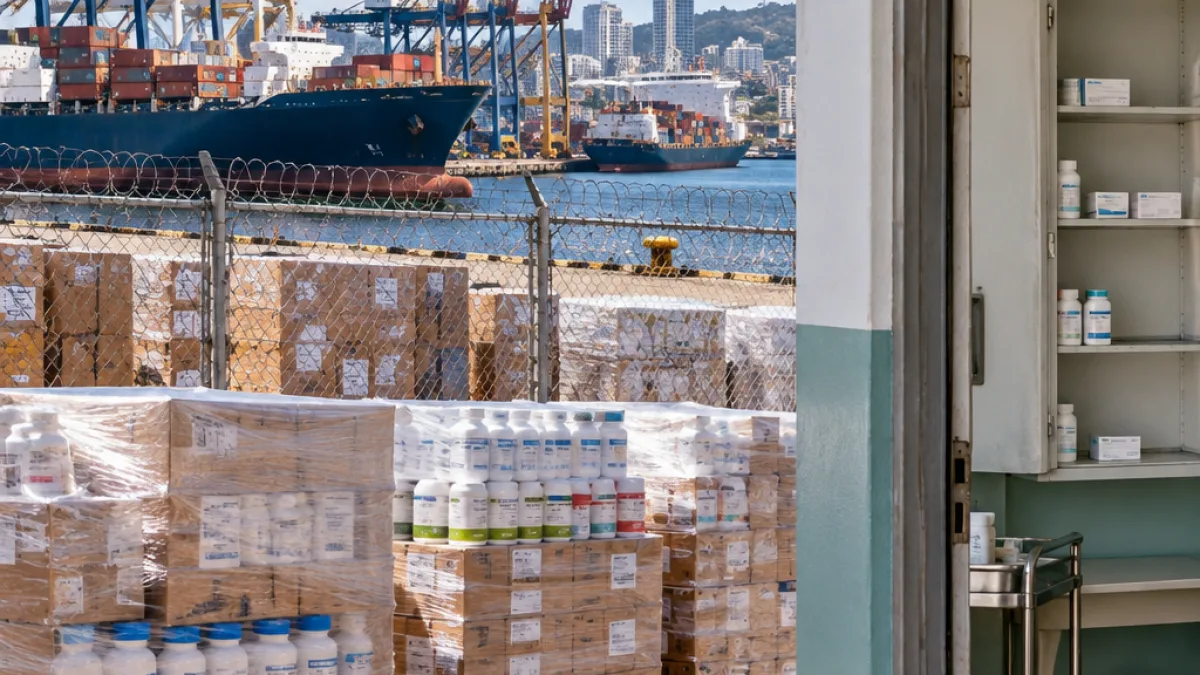
KwaZulu-Natal’s medicine supply chain is facing renewed pressure as consignments of medicines and active pharmaceutical ingredients remain delayed at Durban Port, raising concern that some public healthcare facilities could face deeper shortages.
The number of vessels involved, and the precise contents of their cargoes, still require confirmation. However, Dr Imran Keeka, chairperson of the KwaZulu-Natal Legislature’s Health Portfolio Committee, said reports of almost 30 vessels carrying pharmaceutical-related cargoes being held up were serious enough to warrant urgent attention.
For patients who rely on public clinics and hospitals, the concern is not limited to what is currently sitting inside the harbour. Even after consignments are released, the material must still move through regulatory checks and other administrative stages before it can reach manufacturers and eventually be distributed to healthcare facilities.
“Our concern is that getting these consignments out of the harbour is only the first step,” Keeka said.
Release from the port would not end the delay
Active pharmaceutical ingredients, commonly known as APIs, are used in the manufacture of medicines. According to the concerns raised by Keeka, the cargo would still have to pass through processes involving the South African Health Products Regulatory Authority and Port Health before manufacturers could use it.
That sequence means that a delay at Durban Port could have consequences beyond the harbour itself. Each additional clearance requirement may extend the period before raw materials or finished products become available to the health system. The provincial committee chairperson warned that the movement of the cargo should therefore be treated as part of a wider supply-chain problem rather than as a single transport bottleneck.
| Stage | What still has to happen |
|---|---|
| Port | Delayed consignments must be released from Durban Port. |
| Regulatory clearance | Authorities, including SAHPRA and Port Health, must complete relevant processes. |
| Manufacturing | APIs must reach manufacturers before production can proceed. |
| Distribution | Finished medicines must then reach healthcare facilities and patients. |
Existing shortages already acknowledged
The latest warning comes after the KwaZulu-Natal Department of Health acknowledged minor medicine shortages in a statement issued on 13 November. The department linked the shortages to external pressures that included geopolitical conflicts, interruptions to international trade and limited availability of raw materials and APIs.
The department also outlined measures to manage the situation, but the concerns raised by Keeka suggest that the province remains vulnerable if incoming supplies are not cleared and processed in time. He said stockpiles could offer only temporary protection and that certain medicines might run out before replacement supplies reached healthcare facilities.
The potential timing is another concern. Keeka warned that pharmaceutical manufacturing could slow during the festive season. If delayed port cargoes are followed by reduced production activity, the gap between existing stocks and new supplies could become wider.
Patients could feel the effects first
Medicine shortages can place pressure on patients, health workers and facilities at the same time. People who arrive at a clinic expecting to collect treatment may have to wait for replenishment or face uncertainty about when a particular medicine will be available. Healthcare workers, meanwhile, must manage remaining stocks while trying to maintain treatment for patients with ongoing medical needs.
Keeka said replenishing depleted stocks could take months, even if the consignments were released from the harbour. That warning underlines the difference between clearing a shipment and restoring reliable supply. The material must still be inspected, approved where required, delivered to manufacturers and turned into products that can be distributed through the health system.
- The reported port delays concern medicines and APIs linked to pharmaceutical supply.
- The cargoes still require regulatory and Port Health processes after release.
- Existing stockpiles may provide only limited relief.
- The provincial health committee is seeking clearer information on interventions and timelines.
Calls for clearer information
A further point of concern is the lack of clear communication, according to Keeka. He questioned whether the national departments of Health and Transport had provided enough detail about steps being taken to resolve the delays or when the consignments could reach manufacturers.
Confirmation of the affected vessels and their cargoes will be important in determining the scale of the risk. Not every delayed vessel necessarily carries products destined for KwaZulu-Natal, and the available information does not identify which medicines or APIs are involved. Those details will help provincial officials, facilities and patients understand whether particular treatment categories face an immediate threat.
For now, the warning places Durban’s role as a major entry point for imported pharmaceutical supplies under renewed scrutiny. KwaZulu-Natal’s health system is already managing shortages that the provincial department has attributed partly to international disruptions. Any further delay between the harbour, regulators, manufacturers and clinics could add to that pressure.
The immediate priority, as outlined by the health committee chairperson, is not only to secure the release of the consignments but to ensure that the entire chain is monitored through to production and delivery. Without clear timelines, provincial authorities may struggle to plan for shortages, while patients remain exposed to uncertainty over the medicines available at public healthcare facilities.