Administrative review finds widespread delays in land matters across Prayagraj division
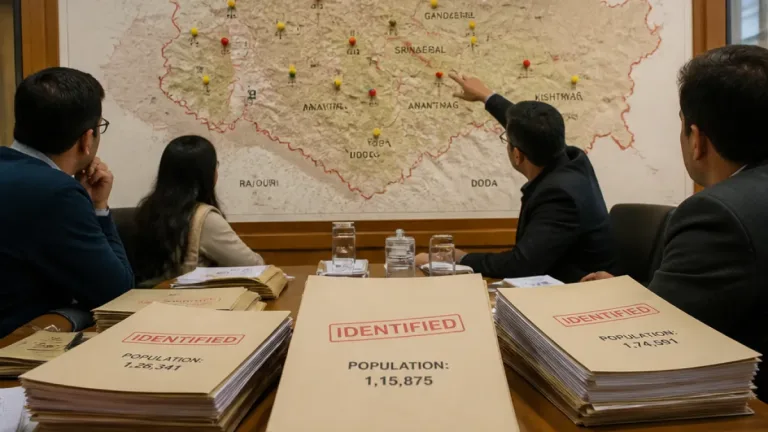
Prayagraj — A stern performance review by the divisional commissioner has placed Prayagraj’s revenue machinery under scrutiny after official records showed that over 1,500 land-dispute cases in the district have remained unresolved beyond the mandatory six-month disposal period.
The review, announced on Monday by Divisional Commissioner Lokesh M, also identified substantial delays in neighbouring districts of Pratapgarh, Kaushambi and Fatehpur. As a result, the commissioner has directed district magistrates to initiate formal disciplinary proceedings against the officers responsible, including assistant district magistrates, sub-divisional magistrates, tehsildars and naib tehsildars, Hindustan Times reported.
Official records presented during the review described performance as “unsatisfactory”, the divisional office said.
The backlog figures outlined in the review are:
| District | Cases pending beyond 6 months |
|---|---|
| Prayagraj | 1,500+ |
| Pratapgarh | 712 |
| Kaushambi | 271 |
| Fatehpur | 245 |
Succession and mutation delays compound grievances
Beyond disputed suits, the review highlighted procedural delays in uncontested succession matters and mutation cases that affect citizens’ ability to obtain clear ownership records and access government services tied to land status.
- Uncontested succession cases — meant to be resolved within seven days — show 230 pending in Prayagraj and 271 in Pratapgarh.
- Mutation cases — to be decided within 90 days — have piled up: 707 pending in Prayagraj, 618 in Pratapgarh, 182 in Kaushambi and 185 in Fatehpur beyond the prescribed period.
Inspections in Kunda and Chail tehsils reportedly revealed lapses in record-keeping for encroachment cases and grievance registers, the review noted. The divisional office further flagged shortcomings in the Integrated Grievance Redressal System (IGRS) performance targets.
Grievance redressal targets unmet
Officials were instructed previously to achieve an 80% satisfaction rate for complaints lodged through IGRS and to contact 90% of complainants. Current performance falls short: Prayagraj records a satisfaction level of 63.92% and a complainant-contact rate of 79.98%. Neighbouring districts show similar deficits — Kaushambi 59.03% satisfaction and 79.08% contact rate, Fatehpur 55.25% satisfaction and 75.02% contact rate, and Pratapgarh 59.19% satisfaction and 75.98% contact rate.
The divisional commissioner described the overall outcome of the review as unsatisfactory and directed immediate corrective action. The order requires district magistrates to initiate departmental proceedings against the officers responsible for managing revenue and land records.
Local impact and administrative consequences
For residents, delays in resolving land disputes and in processing succession and mutation files can stall sale and registration processes, affect eligibility for government schemes tied to land records, and complicate estate settlements. The failure to meet IGRS targets also means complainants face prolonged uncertainty and limited recourse.
Revenue officials now face a formal probe into their handling of cases. The divisional directive aims to clear the accumulated backlog and improve responsiveness, but it also places pressure on tehsil offices to speed up record verification and case disposals without compromising procedural safeguards.
How quickly the administration clears the backlog and restores compliance with statutory timelines will be closely watched by affected families, landowners and legal practitioners in Prayagraj and the adjoining districts.
Hindustan Times provided the primary reporting on the divisional review and the backlog figures.