Exercise focuses on crowd safety
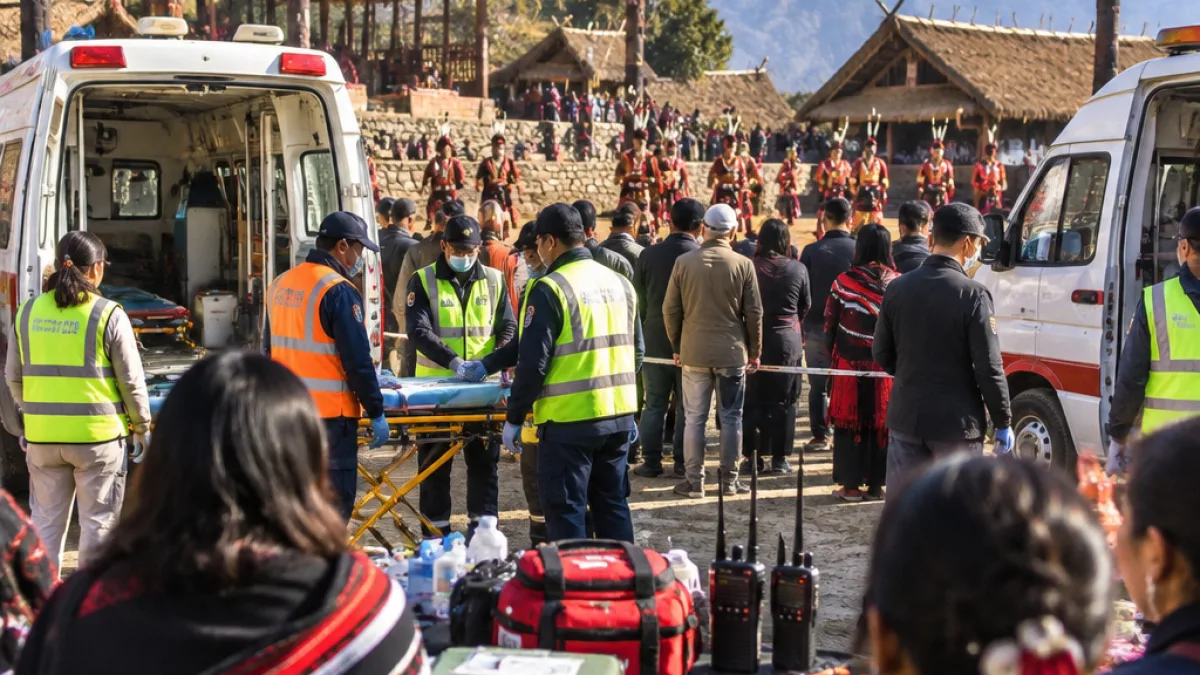
Authorities in Nagaland conducted a multi-agency mass-casualty exercise at the Naga Heritage Village in Kisama on Friday, testing the state’s ability to respond to a sudden emergency before the Hornbill Festival begins. The annual event is scheduled from December 1 to 10 and attracted more than two lakh visitors last year.
The exercise was arranged by the Nagaland State Disaster Management Authority and the Department of Health and Family Welfare. It was designed around a simulated bomb hoax that caused panic and conditions resembling a stampede during a cultural performance. Such programmes at Kisama regularly bring large numbers of people together in a confined venue, making communication, crowd movement and rapid medical attention central to public safety planning.
Dr Nyan Kikon, State Nodal Officer of the Health and Family Welfare Department, said the drill was intended to assess how different agencies work together during a crisis. He said the objective was not to present a flawless response, but to locate weaknesses that could be corrected before the festival attracts visitors from Nagaland, other parts of India and abroad.
“Disasters were unpredictable.”
The simulated casualties were sorted through an emergency triage process. Patients were placed in red, yellow, green and black categories, depending on the seriousness of their condition and the urgency of treatment required. The exercise therefore examined not only the first response at the venue, but also the ability to prioritise casualties and move them through the emergency-care system.
Coordination and evacuation under review
Officials also examined procedures for the safe evacuation of VVIPs in the event of an emergency. The exercise brought agencies onto a common platform through the Incident Response System of the District Disaster Management Authority, with the aim of establishing clear responsibilities and smoother communication when several departments have to act at the same time.
Observers were positioned at different points, including hospitals and the staging area, to monitor the response. Their observations will be compiled into a report. The findings are expected to guide further improvements in the arrangements for the festival, although the source material did not specify a deadline for the report or list any corrective measures already adopted.
| Preparedness area | What was tested |
|---|---|
| Mass-casualty response | Handling of simulated victims after panic and stampede-like conditions |
| Medical triage | Classification into red, yellow, green and black groups |
| Evacuation | Movement of VVIPs during an emergency |
| Inter-agency coordination | Communication through the district Incident Response System |
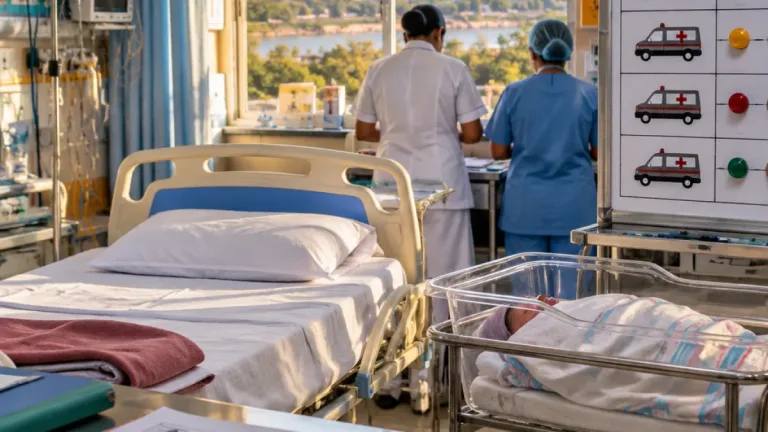
The exercise also placed hospitals within the wider emergency chain. This is significant because a major incident at Kisama would require more than immediate assistance at the festival grounds. Medical teams would need to classify patients, arrange transport and ensure that hospitals receive information about the likely scale and severity of casualties. The presence of observers at healthcare facilities was intended to examine that link.
Dr Leamnyei Konyak, Chief Medical Officer of Kohima, said the participation of several agencies helped distribute responsibility for emergency management. She said the exercise would strengthen the state’s capacity to deal with unforeseen incidents. The remarks underline the importance of joint planning in a setting where disaster management, health services and venue-level operations would have to function simultaneously.
Col Kulwinder of 154 General Hospital, Zakhama, also participated in the exercise. The source material indicates that he described the drill as an opportunity for different services to work through emergency arrangements together, though it does not provide the full details of his assessment.
Festival preparedness gains urgency
The Hornbill Festival is organised by the Nagaland government as a tourism promotion event and is held at the heritage village in Kisama. Its programme of cultural performances draws large audiences, and the expected concentration of visitors makes emergency preparedness a practical concern for organisers, security personnel, medical workers and the public.
The mock drill does not predict that an incident will occur. Instead, it provides authorities with a controlled setting in which to examine how quickly information is shared, how casualties are prioritised and whether agencies understand their respective roles. The report based on the observations will be important in determining what further refinements are required before the festival opens on December 1.
- Visitors should follow instructions from officials and venue personnel during the festival.
- Emergency movement routes and medical response arrangements will be among the areas under review after the exercise.
- Authorities are using the drill to improve coordination rather than treating it as a final measure of preparedness.
With the festival only days away, the exercise has shifted attention from event programming to the systems that protect those attending it. The effectiveness of those systems will depend on timely communication between agencies and the ability to turn lessons from the simulation into practical action at Kisama and the hospitals supporting the venue.