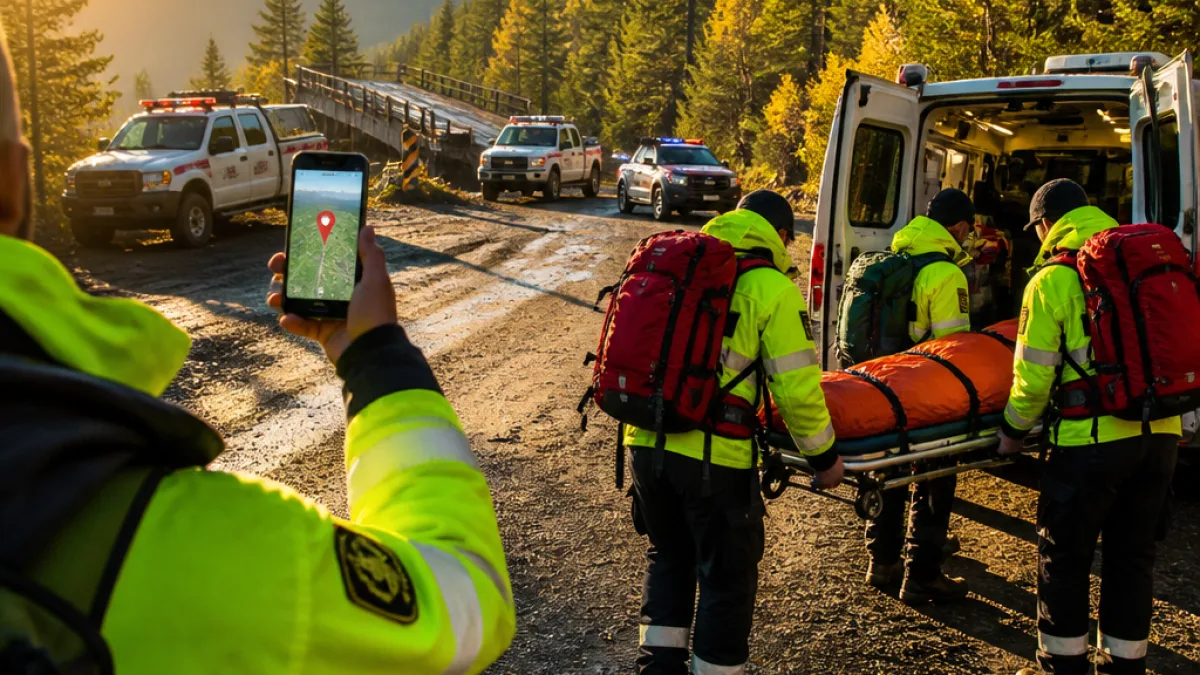
Solo climber rescued from 500-foot ledge in New Hampshire
A climber who became stranded roughly 500 feet above the base of Whitehorse Ledge in the White Mountains was rescued unharmed on Sunday morning after a technical extraction by volunteer specialists and state conservation officers.
New Hampshire Fish and Game conservation officers were alerted shortly after 8 a.m. when 30-year-old William Carron of Portland, Maine, called for help. Carron had been climbing unroped on a route known as the "Sliding Board" and reached a section where he felt it was unsafe to continue either upward or downward, according to officials.
Responders from North Conway Fire and Rescue and the volunteer Mountain Rescue Service (MRS) coordinated the high-angle operation. A team of nine volunteer climbers ascended the cliff, reached the stranded climber, secured him, and fixed ropes for a controlled descent back to the base. The entire party returned safely shortly before 10 a.m. No injuries were reported.
"No injuries were reported."
Who was involved and how the rescue unfolded
- New Hampshire Fish and Game conservation officers coordinated the response.
- North Conway Fire and Rescue provided emergency response on site.
- The Mountain Rescue Service supplied nine volunteer technical rescuers who performed the ascent and rigging.
The Mountain Rescue Service is a volunteer organisation that specialises in technical search-and-rescue operations across New Hampshire. Officials noted that funding for some search-and-rescue activity in the state is supported by sales of the provincial Hike Safe card, and warned that preventable rescues can result in bills running to thousands of dollars for those who do not participate in state funding programs.
| Detail | Information |
|---|---|
| Location | Whitehorse Ledge, near North Conway, New Hampshire |
| Route | "Sliding Board" |
| Height above base | ~500 feet |
| Time of call | Shortly after 8 a.m. |
| Return to ground | Shortly before 10 a.m.; no injuries |
Local context and safety considerations
While this incident occurred in New Hampshire, the circumstances are relevant to climbers and outdoor enthusiasts in the Yukon, where remote, high-angle terrain and rapidly changing conditions create similar hazards. Free-solo climbing — ascending without ropes or protective gear — amplifies risk because an inability to continue can quickly turn into a technical rescue requiring specialised teams and equipment.
Volunteer rescue organisations like MRS depend on trained climbers to perform difficult, high-angle operations; those teams may travel from towns nearby and require time and manpower to rig safety lines and lower a stranded person to the ground. The rescue on Whitehorse Ledge involved a coordinated effort between state conservation officers, local fire and rescue, and volunteer mountaineers — a model found across North American jurisdictions where volunteer technical rescuers supplement paid emergency services.
Officials cited funding mechanisms that support search-and-rescue work. In New Hampshire, purchases of the Hike Safe card help finance operations; the Mountain Rescue Service also accepts donations through the New Hampshire Outdoor Council to cover costs. Authorities reminded the public of safety guidelines and recommended gear lists to reduce avoidable rescues.
For northerners who head into alpine and cliff terrain, this rescue is a reminder that preparedness matters: competent belay partners, protective equipment, route knowledge and conservative decision-making reduce the chance of becoming the subject of a technical rescue.