A local fuel source with limited reach
The Yukon has access to wood products that could be used to produce heat and electricity, but biomass remains a small part of the territory’s energy picture. Forestry advocates say the gap between that potential and actual use is becoming harder to ignore as Yukon continues to rely overwhelmingly on conventional fuels such as oil and propane.
Peter Wright, executive director of the Yukon Wood Products Association, said the territory is missing an opportunity to build a stronger local industry around wood-based energy. He made the comments during the Yukon Forestry Conference in Whitehorse last week, where the use of forest products and the challenges facing the sector were discussed.
“We’re just missing a massive opportunity here,” Wright said.
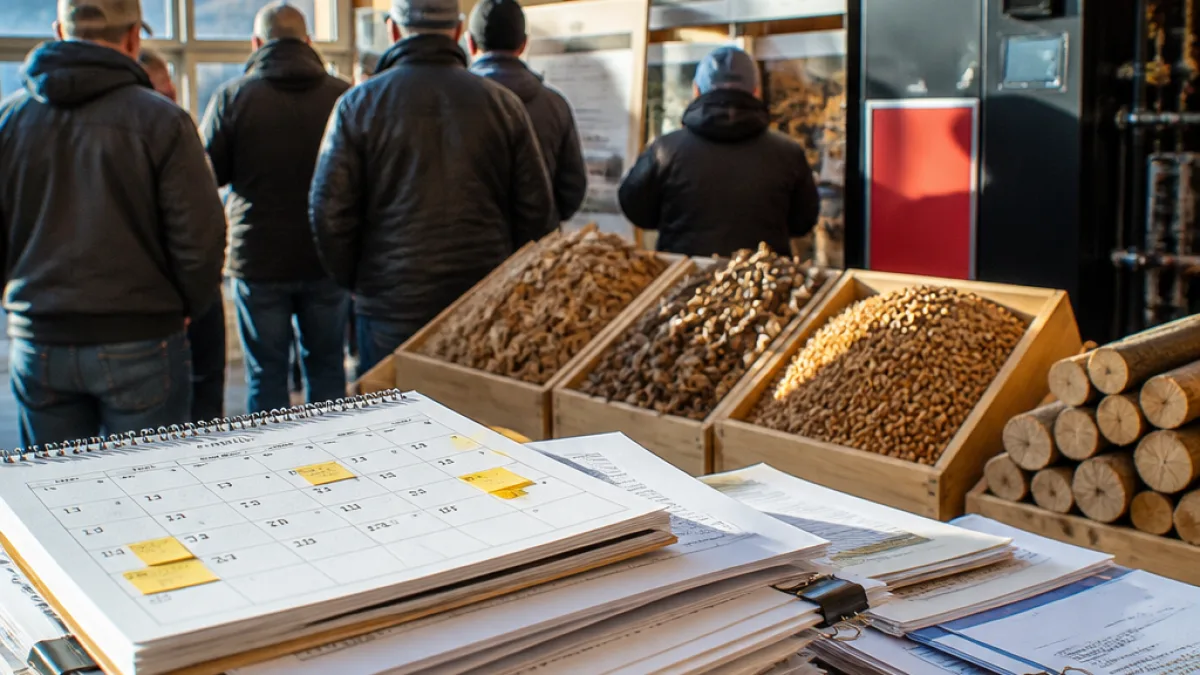
Biomass energy can involve burning wood materials to produce heat or power. In the Yukon context, that may include residual products such as wood chips and pellets, as well as cord wood. The idea is not new, but the source material says it has not gained broad use in Yukon buildings and homes.
Assessments are becoming a bottleneck
The central challenge is not simply whether biomass systems can be installed. Requests for evaluations are increasing in both number and complexity, and one advocate says the process is now taking at least twice as long as it did previously.
That delay matters because projects that depend on environmental or other formal evaluations cannot move ahead on construction and operation alone. As requests accumulate, proponents face a longer period before they know whether a proposed system can proceed. The result, according to the source, is a growing tension between interest in biomass and the time required to assess projects.
The available information does not identify a single evaluation project or provide a territory-wide count of pending requests. It does, however, describe a process facing more work and greater complexity. For communities and operators considering a change in heating systems, that means the path from an idea to an operating facility can be difficult to predict.
Higher operating costs remain a concern
A spokesperson for the Yukon Department of Highways and Public Works said biomass fuel costs more than traditional heating sources. That price difference makes biomass systems more expensive to operate, even where wood products are available.
The cost issue is an important part of the debate. A building owner or public agency weighing a biomass system must look beyond the equipment itself and consider the price of fuel over time. The source does not provide a dollar comparison between biomass, oil or propane, or identify which Yukon facilities are currently using each type of system.
| Issue | What the source reports |
|---|---|
| Potential fuel | Wood chips, pellets and cord wood |
| Current Yukon pattern | Heavy reliance on oil and propane |
| Main obstacle identified | Longer and more complex evaluations |
| Government concern | Biomass costs more than traditional heat sources |
Money that could stay in the territory
For Yukon forestry advocates, the issue extends beyond the choice of fuel. Wright said a delivery can leave the territory with more than an empty truck. If wood-based heating is not developed, he argued, wages, revenue and other economic opportunities connected to producing and supplying the fuel are also lost.
“When that truck leaves empty after it’s dropped off its fuel, all of the employment, all of the revenue, all of the opportunity just left with it,” Wright said.
His argument centres on local capacity: processing material, supplying fuel and maintaining the systems that use it. Those activities would not automatically follow from a decision to adopt biomass, and the source does not quantify the jobs or revenue that could result. But advocates say the possibility of keeping more of that work in Yukon is a reason to examine the option more closely.
The Northwest Territories offers a comparison
David Hatto, acting director of project management with the Northwest Territories Department of Infrastructure, described a more extensive use of biomass next door. He said about 40 per cent of government buildings in the Northwest Territories are powered by biomass.
Hatto said the Northwest Territories has used pellets, a more processed form of wood fuel, and identified cord wood and wood chips as other possible sources. His experience gives Yukon advocates a nearby example of biomass being used across a substantial share of a public-building portfolio, although the source does not compare the two territories’ costs, geography, infrastructure or evaluation systems.
That distinction is important in the North, where fuel supply and transportation can shape the practicality of an energy project. A system may depend not only on the availability of wood, but also on the ability to prepare, move and store its fuel. The source provides no details on Yukon supply volumes, proposed facilities or the specific changes needed to expand biomass use.
A decision balancing time, cost and local benefit
The Yukon debate therefore involves several competing pressures. Advocates see an underused source of heat and power and a chance to strengthen forestry-related employment. Government officials point to higher operating costs. At the same time, evaluation requests are taking longer as their volume and complexity increase.
Those pressures leave the territory facing a practical question: how to assess biomass proposals carefully while giving proponents enough certainty to plan. The source does not indicate that a new policy or deadline has been announced. For now, the case for biomass remains an argument about potential, local economic value and the ability of Yukon’s approval processes to keep pace with it.
For communities and building operators watching the discussion, the next useful information will be concrete: which projects are under evaluation, how long reviews are taking, what biomass fuel would cost in each case and whether the systems would be financially workable over their full operating lives. Until those details are available, biomass remains a promising but limited part of Yukon’s energy conversation.