The Narcotics Control Bureau has dismantled an inter-State network supplying pharmaceutical drugs from Delhi to the Kashmir Valley, arresting four people and recovering a large quantity of controlled and prescription medicines, the agency said. The operation has so far resulted in the seizure of more than seven kg of codeine-based cough syrup and over five lakh tablets, capsules and bottles containing substances including tramadol hydrochloride, alprazolam, nitrazepam and codeine.
The investigation was carried out jointly by the NCB’s Jammu and Delhi zonal units. Its focus is on tracing how codeine-based cough syrup was diverted from the lawful pharmaceutical supply chain and identifying the people involved in moving it to consumers and intermediaries in the Kashmir Valley. The agency has not disclosed the identities of the four accused in the material available.
Bus interception opened the investigation
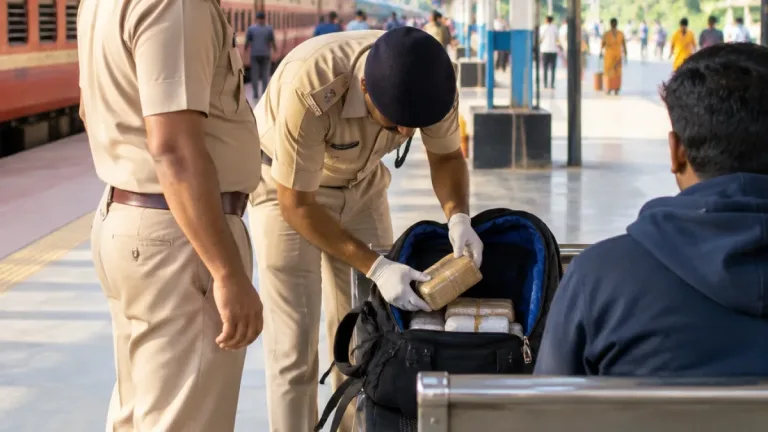
Acting on specific intelligence, the NCB’s Jammu unit stopped a passenger bus bound for Srinagar near the Mada Toll Plaza in Chenani, Udhampur district, in the early hours of November 16. Officers recovered approximately seven kg of codeine-based cough syrup from a resident of Bhaderwah in Doda, Jammu and Kashmir.
A case was registered under the Narcotic Drugs and Psychotropic Substances Act following the interception. The seizure provided investigators with a lead into the wider supply arrangement rather than being treated as an isolated movement of pharmaceutical preparations.
| Item | Details |
|---|---|
| Codeine-based cough syrup | Over seven kg recovered during the operation |
| Other pharmaceutical preparations | More than five lakh tablets, capsules and bottles |
| Substances identified | Tramadol hydrochloride, alprazolam, nitrazepam and codeine |
| Arrests | Four accused persons so far |
Investigators followed links to the Valley and Delhi
Follow-up action in the Kashmir Valley led to the arrest of the suspected principal recipient, a resident of Anantnag. Investigators then pursued the supply links towards Delhi, where the two NCB units apprehended people allegedly connected with the distribution operation.
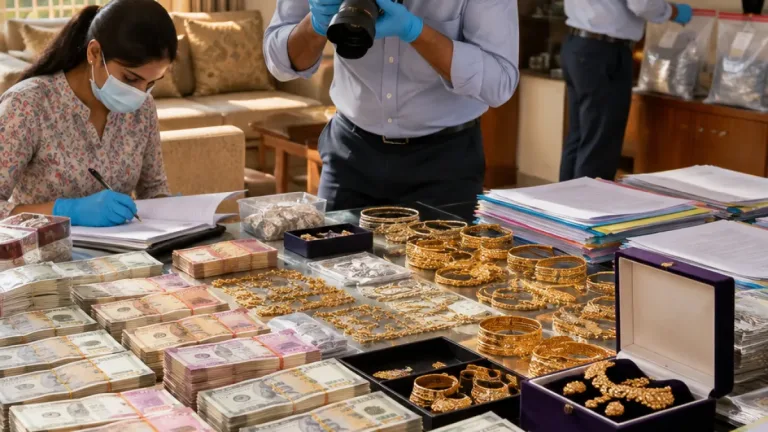
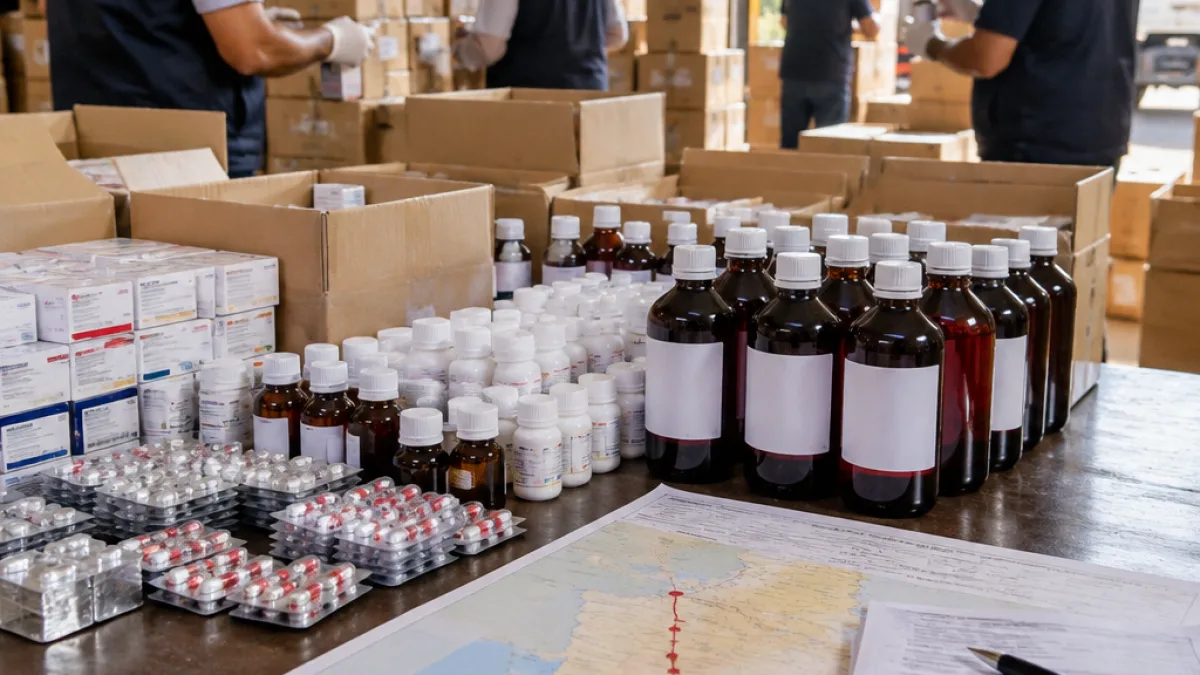
On November 18, the agency seized 356 bottles of codeine-based cough syrup in Delhi. The same investigation also led officers to a clandestine godown functioning from rented premises in Shahdara. Searches conducted on November 18 and 19 resulted in the recovery of more than five lakh tablets, capsules and bottles of pharmaceutical preparations.
“The NCB is tracing the seized CBCS through the supply chain.”
The agency’s stated objective is to establish where the medicines were diverted and how they moved after leaving the legitimate distribution system. That line of inquiry places attention on the point at which regulated pharmaceutical products allegedly entered an illicit channel, as well as on the network that arranged their storage and movement.
Delhi premises under scrutiny
The discovery of the Shahdara storage facility gives the investigation a specific Delhi node. The premises were rented, according to the agency’s account, and searches there produced preparations containing several substances that are subject to strict controls because of their pharmaceutical and psychoactive properties. The seizure included products containing tramadol hydrochloride, alprazolam, nitrazepam and codeine.
The case therefore extends beyond the recovery of a single category of cough syrup. The NCB is examining a broader stock of pharmaceutical preparations and the supply arrangements linking Delhi with Jammu and Kashmir. The agency’s action also indicates that the seizure at Chenani was used to map the network’s upstream and downstream connections.
Probe to establish diversion route
The NCB said the operation follows its network-centric enforcement approach under its Vision Document on Narcotics Control. In practical terms, the investigation is directed not only at the person carrying the consignment but also at the source, recipients, storage locations and distribution channels associated with the alleged diversion.
- The initial recovery was made from a Srinagar-bound bus near Chenani on November 16.
- The suspected principal recipient was arrested in the Kashmir Valley.
- Delhi searches led to the recovery of 356 bottles and a larger stock from a Shahdara godown.
- Four accused persons have been arrested so far, while the supply-chain inquiry continues.
The NCB’s next task will be to connect the recovered medicines, the accused persons and the premises into a complete evidentiary chain. The available account does not state the final destination of all the seized preparations, the commercial entities from which they originated or whether further arrests are expected.
For Delhi, the case highlights the city’s alleged role as a source and staging point in a supply route extending to the Kashmir Valley. The agency’s seizures in Shahdara and the arrests linked to the supply operation are now central to determining how pharmaceutical products were obtained, stored and moved. Further details are likely to emerge as investigators examine the records and links behind the stock recovered during the joint operation.