Pollution spikes as weather favours accumulation; controls to start November 1
Delhi recorded a sharp deterioration in air quality in the second half of October, with live readings showing the city’s Air Quality Index (AQI) around 224 on October 19, signalling very poor to severe pollution on commonly used scales, according to a report by Jagranjosh. Earlier, the AQI reached 216 at 10:31 am on October 17 on AQI.in, categorised as Unhealthy.
Weather forecasts and air‑quality models indicate the conditions that allowed pollution to rise may persist. The India Meteorological Department (IMD) predicted mainly clear skies with no rainfall expected through October 23, a pattern that reduces pollutant dispersion. The Indian Institute of Tropical Meteorology (IITM) forecast suggested air quality could remain in the poor category for six continuous days, the Jagranjosh report said.
"Delhi’s air quality has degraded sharply, with pollution slated to remain a concern over the next few days," Jagranjosh reported.
In response, Delhi's Winter Action Plan for 2026–27 will be implemented from November 1, bringing a package of restrictions and enforcement measures intended to reduce emissions during the winter months when atmospheric conditions tend to trap pollutants.
Key measures in the Winter Action Plan
- Ban on dust‑generating demolition and outdoor construction activities until January 31.
- Complete ban on construction and demolition from December 10 to January 20.
- Entry restrictions for non‑Delhi petrol and diesel vehicles that do not comply with BS‑VI emission norms, with exceptions for CNG and electric vehicles.
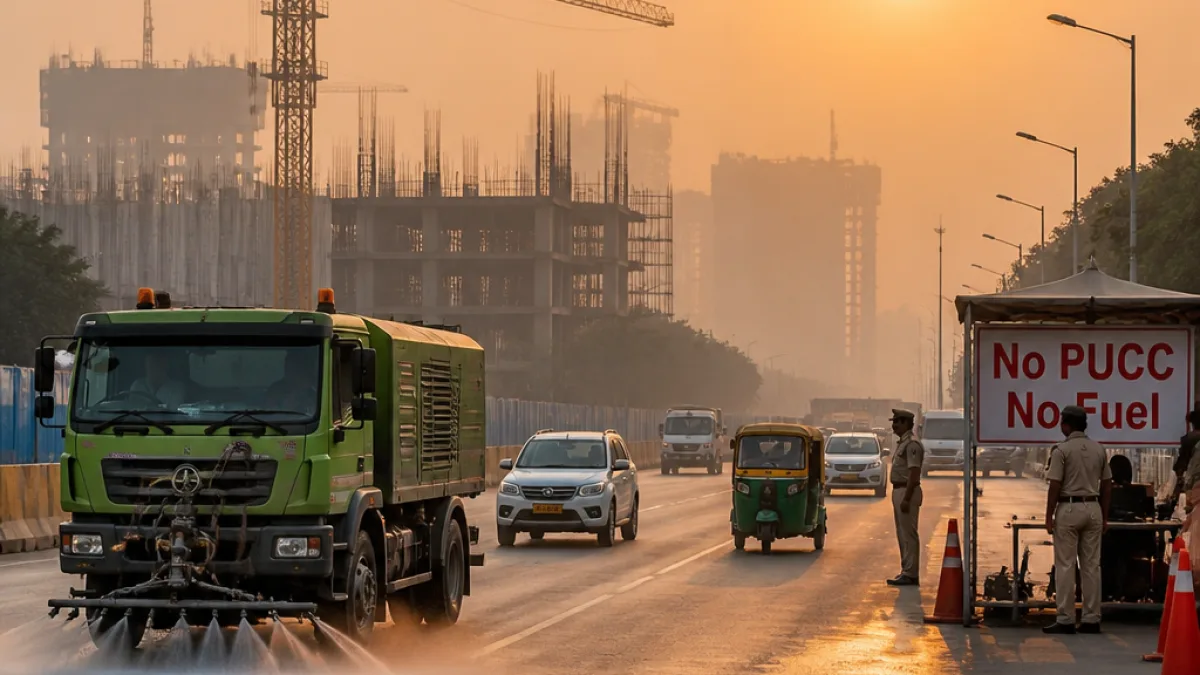
- ‘No PUCC, No Fuel’ campaign to prevent fuelling of vehicles without valid pollution under control certificates.
- Intensified mechanised road sweeping, water sprinkling and road redevelopment work to control dust.
- Advisories for offices to permit 50% work from home and doubling of parking charges at government facilities to discourage private vehicle use.
- Enhanced monitoring of industrial emissions and incentives to increase public-transport utilisation.
Officials framed the plan as a set of targeted, time‑bound measures to curb typical winter sources of pollution — vehicular emissions, dust from construction and road surfaces, and industrial discharges. The measures combine regulatory bans with enforcement drives, public‑awareness campaigns and administrative steps to reduce travel demand.
Recent readings and short‑term outlook
| Date | Reported AQI | Category (reported) |
|---|---|---|
| October 17 (10:31 am) | 216 | Unhealthy |
| October 19 | 224 | Very Poor / Severe (platform dependent) |
Analysts and forecasting agencies emphasise that without significant rain or a sustained change in wind direction, pollutant concentrations are likely to build up. The IMD’s prediction of clear skies through October 23 reduces the likelihood of natural cleansing via precipitation in the immediate term.
Implementation of the Winter Action Plan is scheduled to begin on November 1, giving a short window for authorities to prepare enforcement logistics, coordinate with municipal agencies for mechanised cleaning, and finalise restrictions on construction and vehicle entry. The plan’s mix of supply‑side controls (construction bans, industrial monitoring) and demand‑management measures (work‑from‑home advisories, higher parking fees) reflects a multi‑pronged approach that Delhi administrations have used in previous winters.
Residents and institutions are being advised to monitor official air‑quality updates from authorised platforms and to follow public‑health guidance for vulnerable groups — including children, the elderly and those with respiratory illnesses — during days of poor air quality. The near‑term forecast and the announced plan together signal that families and employers may need to prepare for stricter controls on outdoor activities and transport choices as winter approaches.