Hyderabad is preparing for a potential daily water shortfall of nearly 50 million gallons in the months ahead, with the Hyderabad Metropolitan Water Supply and Sewerage Board (HMWSSB) advancing its summer response and seeking a 20 per cent reduction in consumption across the city.
The board is working on an eight-month drinking water management plan that will remain in force until June 2027. The proposed measures are centred on controlling wastage, encouraging conservation and reserving treated fresh water for drinking and essential domestic requirements as supplies from the Singur reservoir weaken and groundwater levels decline.
Singur inflows set to fall
Hyderabad currently receives around 550 MGD of water. HMWSSB Managing Director K. Ashok Reddy said inflows from Singur were expected to fall by approximately 90 MGD within the next 50 days. Water brought from the Godavari through Mission Bhagiratha is expected to compensate for between 40 MGD and 50 MGD of that reduction, leaving the city with a likely deficit of close to 50 MGD.
“The situation had forced the board to implement its summer action plan ahead of schedule.”
The expected reduction is being assessed against the city’s present supply position rather than as an immediate shutdown or curtailment announced for all consumers. The board’s approach is to stretch available water through the lean period by addressing avoidable use and ensuring that supplies from the Krishna and Godavari systems continue without interruption.
Groundwater decline adds pressure
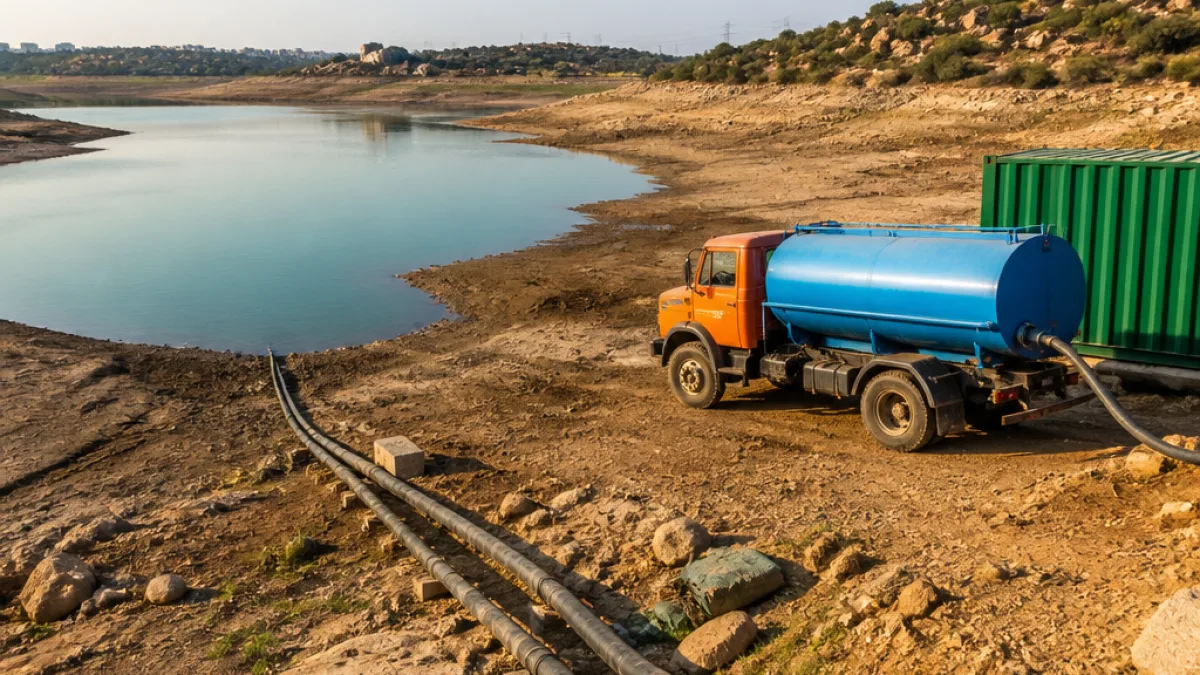
The water position is also being affected by a rapid fall in groundwater levels across the Core Urban Region (CURE). The decline is pushing up demand for water tankers, adding another pressure point for areas that depend on groundwater or require supplementary supplies. The board’s plan therefore combines management of bulk sources with measures aimed at reducing demand within the city’s distribution network and among consumers.
| Element | Position outlined |
|---|---|
| Current city supply | About 550 MGD |
| Expected Singur decline | About 90 MGD in 50 days |
| Godavari support | 40–50 MGD |
| Likely remaining gap | Nearly 50 MGD |
| Management plan | Until June 2027 |
From November 1, the HMWSSB will supply treated sewage water for construction, gardening and other activities that do not require drinking-quality water. The move is intended to prevent potable water from being used for non-potable purposes. It places the immediate emphasis on separating uses wherever an alternative treated source is available, while keeping fresh water available for drinking and essential household needs.
Conservation measures ahead of summer
The board’s stated priorities for the coming period are:
- reducing overall consumption by 20 per cent;
- curbing wastage in the city’s water-use system;
- expanding the use of treated sewage water for construction and gardening; and
- maintaining supplies from the Krishna and Godavari systems.
By bringing forward the summer action plan, the water utility is attempting to respond before the projected decline in Singur supplies fully translates into pressure on the city’s daily availability. The eight-month schedule also places the focus on sustained management rather than a short-term intervention. With groundwater falling and tanker demand rising, the effectiveness of the plan will depend on limiting non-essential use and ensuring that the alternate treated-water arrangements are used for the purposes identified by the board.
For Hyderabad residents, the immediate message from the HMWSSB is that conservation will be required well before the peak summer months. The board has said arrangements are in place to keep Krishna and Godavari supplies flowing, but the projected gap from the Singur decline means the city will have to manage its available water more carefully through June 2027.