Specialised unit to focus solely on complex investigations
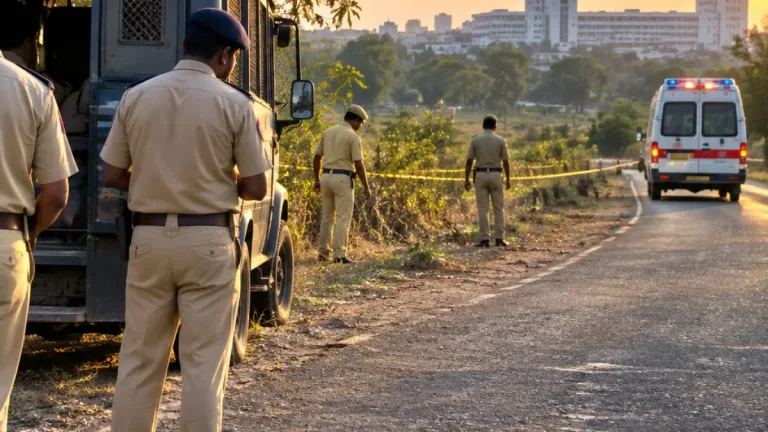
The Hyderabad City Police on Tuesday launched a pilot Zonal Investigation Branch to probe complex and serious criminal cases registered across police stations, the force said in a press release reported by PTI. The move is billed as a significant reform aimed at separating investigative work from routine law-and-order responsibilities borne by station staff.
Police stations in the commissionerate currently shoulder both crowd management, bandobust and day-to-day law-and-order duties alongside crime investigation. The release said these competing responsibilities often prevent station teams from dedicating uninterrupted time to deep and sustained investigations at the field level.
The new branch was inaugurated by Hyderabad Police Commissioner V C Sajjanar at the Golconda Zone Deputy Commissioner of Police office premises. It will operate as a pilot project within the Golconda zone, with the aim of strengthening investigative processes and reducing the workload on local stations, the statement added.
- Objective: Separate law-and-order duties from crime investigation and ensure focused inquiries into grave cases.
- Coordination: The team will work with Health, the Forensic Science Laboratory (FSL) and the prosecution to gather scientific evidence and prepare charge sheets.
- Monitoring: The branch will support the existing Investigation Monitoring Cell by overseeing zonal-level probes.
Staffing, functions and expected outcomes
The specialised unit comprises a compact team assigned exclusively to serious investigations. The press release detailed the composition and key responsibilities.
| Post | Count | Primary role |
|---|---|---|
| Detective Inspector | 2 | Lead investigations and case supervision |
| Sub-Inspector | 1 | Field investigation and evidence collection |
| Head Constable | 1 | Operational support and coordination |
| Constable | 10 | Field duties and outreach |
According to the release, the team will focus on thorough, uninterrupted investigations, coordinating with government departments such as Health and the Forensic Science Laboratory, and liaising with prosecutors to ensure charge sheets are prepared meticulously and within stipulated timeframes.
“Right from case registration to filing charge sheet in court, the team will focus entirely on case resolution,” said Commissioner V C Sajjanar, as quoted in the release.
Authorities expect the branch to strengthen forensic and scientific inputs in probes and make case presentation in court more robust. By taking up complex and grave investigations, the unit is intended to free up station staff to concentrate on law-and-order duties and local policing needs.
Context and potential impact for Hyderabad
The pilot comes against a backdrop of growing public scrutiny of investigative quality in high-profile cases and the operational challenges faced by station-level teams juggling multiple responsibilities. Separating investigative functions into a zonal specialised unit is presented as a way to institutionalise continuity and expertise in probing serious crimes.
Practical effects to watch for include faster submission of charge sheets, improved coordination with forensic agencies and fewer disruptions to investigations caused by routine bandobust demands. The branch will also feed into the Investigation Monitoring Cell, which the commissionerate had set up earlier to oversee grave-case probes across the city.
The press release did not specify a time frame for evaluating the pilot or plans for scaling the model to other zones. It also did not provide details about budgetary allocations, training of the new team or performance benchmarks. Monitoring by the commissionerate and periodic public updates will be key to assessing whether the pilot translates into measurable improvements in investigative outcomes.
If successful, the model could be replicated across other zones, altering the operational balance between investigation units and station staff in Hyderabad and potentially setting a precedent for commissionerates elsewhere.