Lakshadweep has been included among the Indian destinations highlighted after the country was named Travel + Leisure’s Destination of the Year for 2027, placing the archipelago’s coral reefs, lagoons and island landscapes before a wider travel audience.
The recognition comes in a travel list designed to take visitors beyond the familiar Golden Triangle of Delhi, Agra and Jaipur. Alongside destinations such as Nagaland, Meghalaya and Madhya Pradesh, Lakshadweep is presented as an island holiday shaped by translucent waters, soft beaches and marine activities. For the islands, the attention is significant because the appeal described in the list rests largely on a living natural environment rather than on built attractions.
Travel + Leisure editor-in-chief Jacqui Gifford described India as a country that “seeps into your skin” while announcing the recognition. The phrase was used in the wider context of India’s varied landscapes, heritage, wildlife and cultural experiences, but Lakshadweep’s inclusion gives the archipelago a distinct place in that national picture: a destination identified through its relationship with the sea.
“seeps into your skin”
An island destination built around the sea
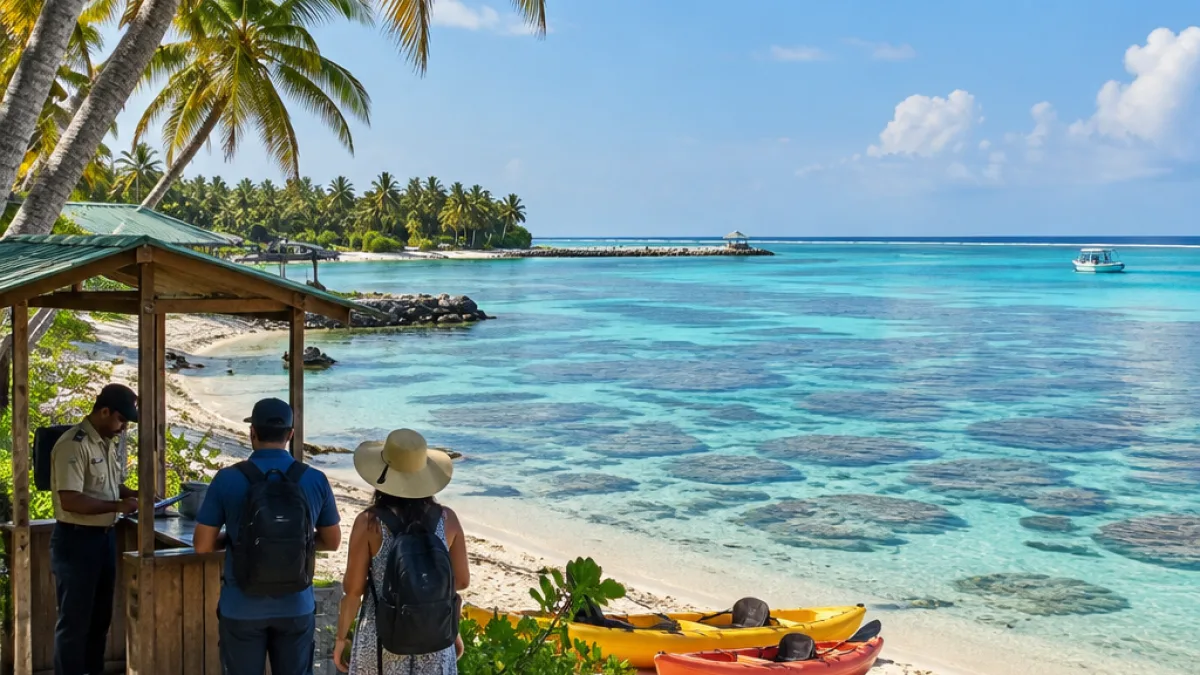
The archipelago consists of 36 islands off India’s southwestern coast. Its travel identity is tied to coral reefs, lagoons, palm-lined stretches and changing shades of blue in the surrounding waters. The description presents the islands as a place where a visitor may choose between entering the water and simply spending time beside it, an approach that contrasts with fast-paced sightseeing itineraries on the mainland.
Among the islands named for visitors are Agatti, Bangaram and Kavaratti. Each is included in the travel feature as part of the wider Lakshadweep experience, subject to entry permits and visitor access. That qualification is important. A trip to the islands cannot be planned only around a wish list of beaches and activities; prospective visitors must also account for the archipelago’s access requirements before finalising their journey.
| Feature | Details highlighted |
|---|---|
| Location | Archipelago off India’s southwestern coast |
| Natural setting | Coral reefs, lagoons, beaches and marine landscapes |
| Islands named | Agatti, Bangaram and Kavaratti |
| Visitor requirement | Entry permits and confirmation of visitor access |
Activities below and above the water
The travel material lists scuba diving, kayaking, snorkelling and glass-bottom boat rides as ways to experience the islands. These activities offer different levels of contact with the marine environment. Diving and snorkelling take visitors directly into the underwater world, while glass-bottom boats provide a view of marine life and reef areas without requiring participants to enter the water.
That range of experiences also points to the need for careful visitor behaviour. The principal attraction described for Lakshadweep is its reef-and-lagoon setting, meaning that the environmental condition of those spaces is closely linked to the quality of the visitor experience. The travel spotlight may increase curiosity, but the same attention makes responsible use of beaches, boats and reef areas especially important.
Planning remains essential
The requirement for an entry permit is one of the clearest practical details in the travel listing. It advises travellers to plan in advance and notes that access to individual islands is subject to the applicable permissions. Visitors considering Agatti, Bangaram or Kavaratti therefore need to verify access arrangements before committing to an itinerary.
- Check the entry-permit requirement before making travel plans.
- Confirm whether the preferred island is open to visitor access.
- Plan marine activities around the available visitor arrangements.
- Treat coral reefs, lagoons and beaches as sensitive natural spaces.
For island communities, a destination profile of this kind can bring both opportunity and responsibility. The feature does not provide visitor numbers, revenue estimates or details of local tourism operators, so the immediate scale of any future increase cannot be assessed from the available information. What is clear is that the archipelago is being marketed internationally through its natural character, making the protection of that character central to any sustainable tourism conversation.
A wider national spotlight
The 2027 recognition covers a broad range of Indian experiences, from the Hornbill Festival in Nagaland to the caves of Meghalaya and tiger safaris in Madhya Pradesh’s Panna National Park. Lakshadweep’s place in that group gives the islands visibility alongside destinations known for cultural festivals, geology and wildlife. Its distinct contribution is the combination of reef, lagoon and island-based travel.
For visitors, the message is straightforward: Lakshadweep offers more than a conventional beach break, but it is not an unplanned destination. Its attractions are spread across islands and linked to conditions of entry and access. For the communities and ecosystems that sustain its appeal, the growing spotlight should be matched by care for the marine landscapes that have brought the archipelago into the 2027 travel conversation.