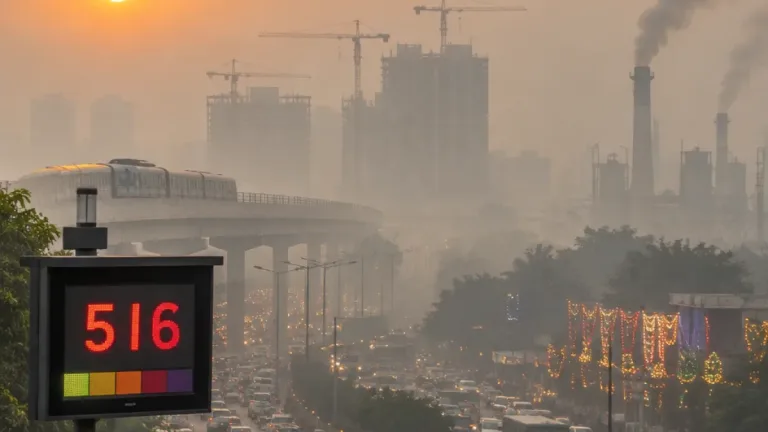
Loni’s pollution crisis is no longer being framed as a brief post-Diwali episode. A report published on November 12 has described the city’s air as a year-round public health emergency, pointing to illegal kilns, dust and toxic waste as continuing sources of exposure. It has also placed Loni’s air quality in a stark comparison with Delhi, describing the city as the world’s most polluted.
Pollution beyond the festival season
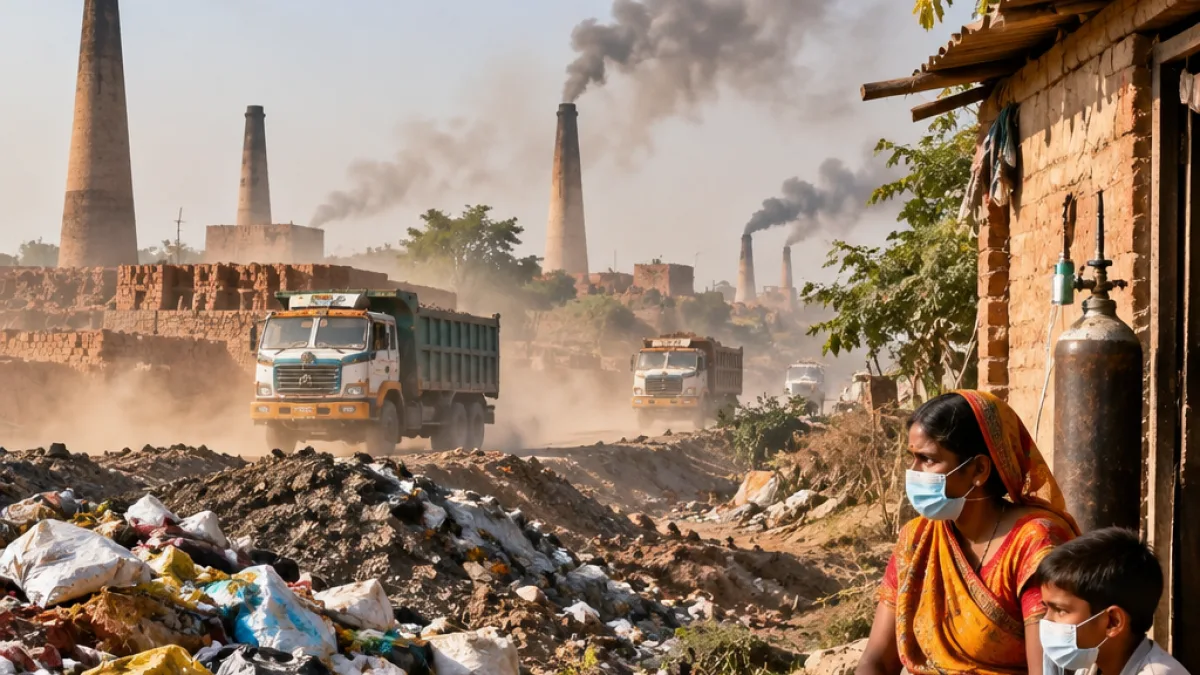
The report’s central warning is that the air crisis cannot be explained only by fireworks or a seasonal spike in pollution. While Diwali is mentioned as part of the wider discussion, the account focuses on pollution sources that remain present beyond the festival period. Illegal kilns, road and construction dust, and toxic waste are identified as the principal pressures affecting the air in Loni.
That distinction is significant for a city where residents face exposure across the year rather than during a limited period. The report describes soot as a visible and persistent feature of the crisis, presenting the issue as one that reaches into daily life. Its account portrays breathing in Loni not as an occasional discomfort but as a routine challenge linked to several forms of pollution operating at the same time.
Health concerns highlighted in the report
The report connects the pollution burden with severe health concerns, including cancer and the use of oxygen cylinders. The supplied account does not provide case numbers, hospital records or a breakdown of medical conditions, but the references underline the seriousness of the health risks being raised. They also show why air pollution in Loni is a concern extending beyond visibility, odour or temporary irritation.
The health dimension gives the issue a direct human consequence. When polluted air is discussed alongside oxygen support and cancer, the debate moves from environmental conditions to the ability of people to live and work safely in the city. The report’s description suggests that the consequences are being experienced as an ongoing burden, rather than as a short-lived emergency linked only to a particular weather or festival window.
Sources identified as continuing pressures
The report identifies three broad contributors to Loni’s air crisis. Together, they indicate that the problem involves industrial activity, airborne dust and waste management. It does not provide a separate assessment of the contribution made by each source, nor does the supplied material include specific pollution readings or details of enforcement action.
- Illegal kilns: identified as a continuing source of emissions.
- Dust: cited as another major factor in the city’s air pollution.
- Toxic waste: described as part of the wider, year-round contamination problem.
- Soot and health risks: linked in the report to the daily experience of polluted air.
A challenge that demands sustained attention
The account places Loni’s situation in a broader regional conversation about air pollution, but its focus remains firmly on the city’s own conditions. The comparison with Delhi is used to underline the scale of the problem; the report specifically describes Loni as worse than the national capital in pollution terms. That claim is presented as the report’s assessment, while the supplied material does not include the underlying monitoring data or methodology.
For Loni, the message is clear: tackling pollution only around Diwali would not address the full crisis described. Any meaningful response would have to consider the sources named in the report throughout the year, including illegal kilns, dust and toxic waste. The account also makes the health implications central, drawing attention to the need for the pollution debate to be measured not only in air-quality terms but also through its reported impact on people’s lives.
As the city confronts this account of its air, the most pressing issue is the gap between a seasonal response and a sustained one. The report presents Loni’s pollution as an everyday condition requiring continuing scrutiny. Its warning is that every breath remains part of the story long after the festival smoke has cleared.