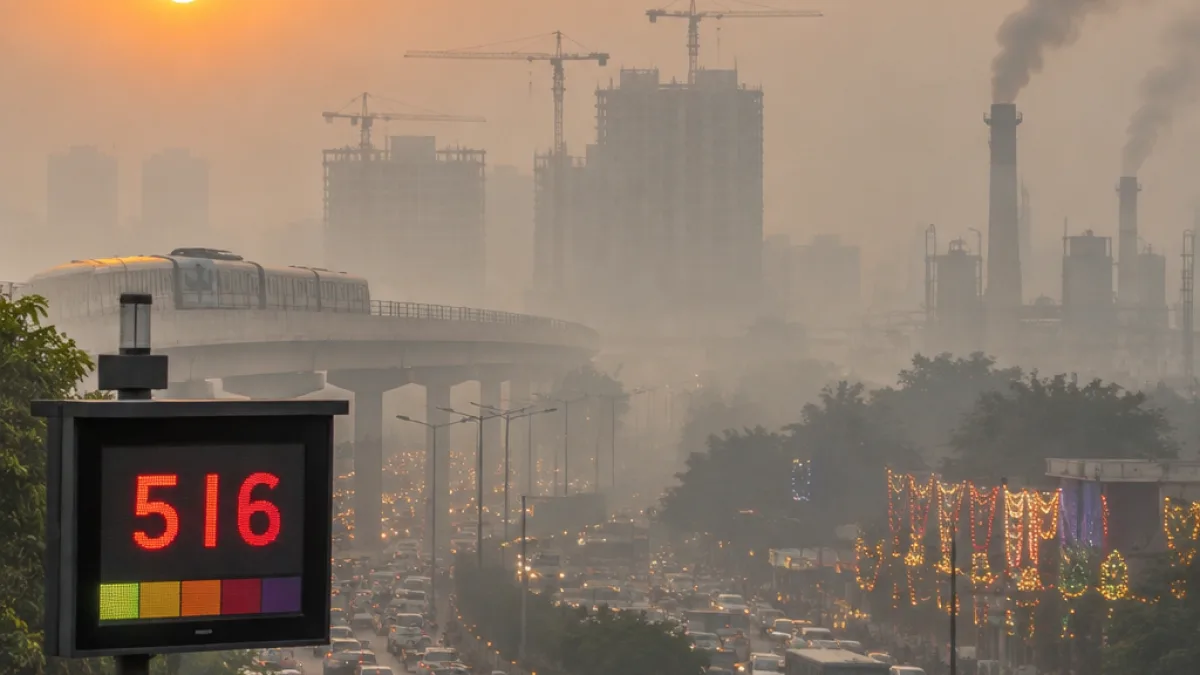
Ghaziabad woke under a dense layer of smog on Tuesday as the city’s Air Quality Index reached 516, moving well above Delhi’s reading and highlighting the severe pollution burden building across the National Capital Region ahead of Diwali. The figure, recorded at 8.31 am on November 3, was the highest reading reported for Ghaziabad in the preceding 24 hours, according to AQI.in data.
Delhi’s AQI stood at 456 at the same time. Both readings indicated extremely polluted air, but the higher level in Ghaziabad drew particular attention because the city is often affected by the same regional weather and pollution conditions as the national capital. The figures also underline how air quality can vary sharply between neighbouring urban centres despite their close geographical links.
Ghaziabad records the sharper spike
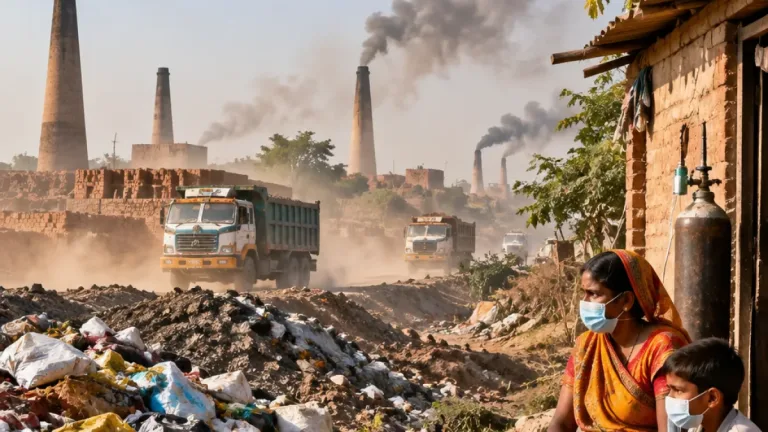
The latest numbers place Ghaziabad at the centre of the NCR’s worsening air-quality episode. The city’s industrial areas, busy roads and continuing construction activity have been identified as factors that can add to its local pollution load. Vehicle emissions, industrial activity, road dust, construction and waste burning are among the sources associated with the pollution being experienced in the region.
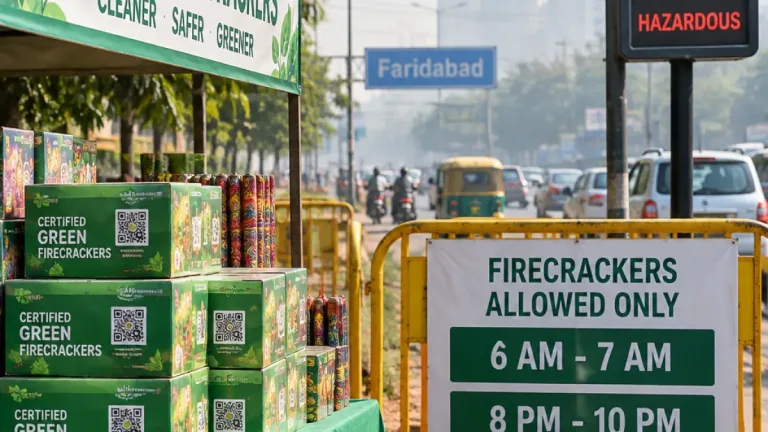
The deterioration comes only days before Diwali, when existing pollution pressures become a major concern across the NCR. The available report does not attribute Tuesday’s reading to one isolated source. Instead, it describes the spike as the result of several contributors operating together, with pollutants moving across administrative boundaries rather than remaining confined to one city.
Multiple sources behind NCR pollution
The Commission for Air Quality Management has repeatedly identified a broad set of contributors to pollution across Delhi-NCR. These include transport, industrial emissions, dust and the burning of biomass. In Ghaziabad, the combination of dense traffic, industrial clusters and construction-related dust can intensify the local concentration when atmospheric conditions allow pollutants to accumulate.
- Ghaziabad: AQI 516 at 8.31 am on November 3.
- Delhi: AQI 456 at the same time.
- Period: The spike was recorded ahead of Diwali, amid deteriorating air quality across the NCR.
| City | AQI reading | Time |
|---|---|---|
| Ghaziabad | 516 | 8.31 am |
| Delhi | 456 | 8.31 am |
Pollution crosses city boundaries
The contrast between the two readings is significant for Ghaziabad, where commuters and other road users were moving through conditions described as heavily smog-laden. The report noted that air quality in the city appeared to be carrying a heavier burden than in Delhi at the time of measurement, even though both places were facing the same wider NCR pollution episode.
The readings also point to the difficulty of treating the problem as one limited to a single municipal area. Traffic, industries, dust and burning activities contribute at different locations, while the resulting pollutants can travel across city and state boundaries. This regional character is one reason the air-quality situation in Ghaziabad cannot be viewed separately from developments in Delhi and the rest of the NCR.
For residents, Tuesday’s reading marked a particularly serious point in the season’s deterioration. With Diwali approaching, the AQI crossing 500 has placed Ghaziabad ahead of Delhi in the latest comparison and renewed focus on the city’s combined burden of traffic, industrial activity, construction dust and waste burning. The data provides a snapshot of conditions at one time, but it also reflects the wider deterioration recorded across the region in recent days.