TORONTO — Ontario is preparing to give its cannabis regulator stronger tools to confront illegal storefronts, a move legal retailers say is overdue as illicit operators continue to occupy a substantial share of the provincial market.
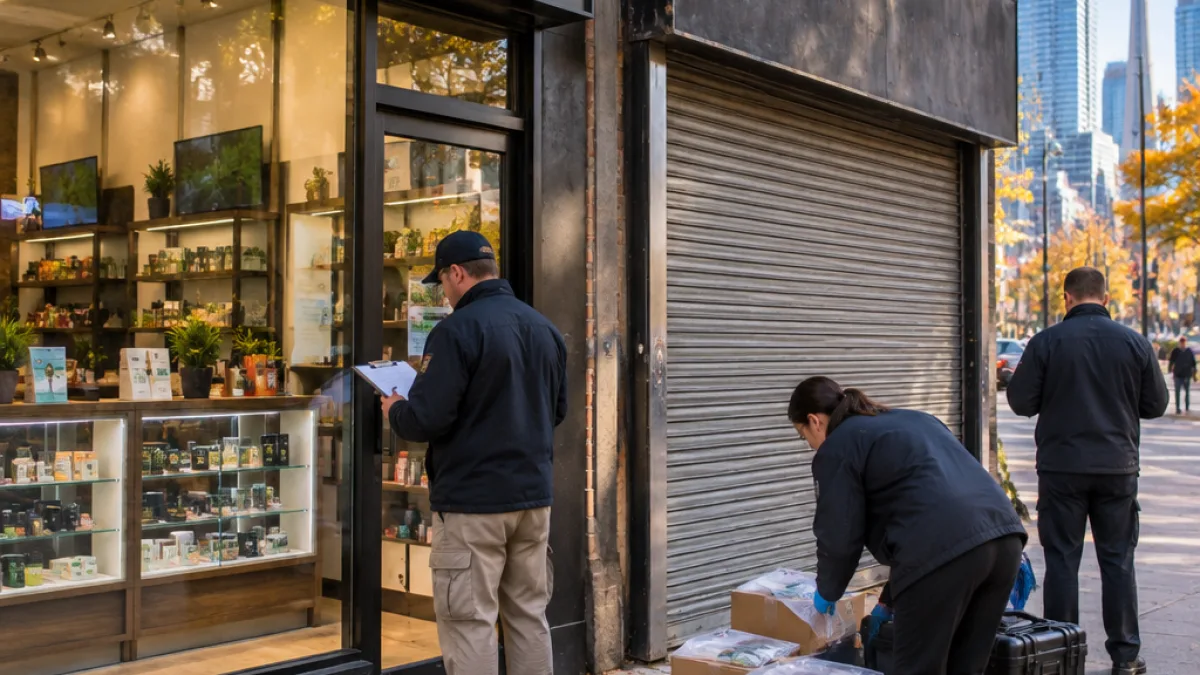
The measures announced by the province on Oct. 19 would authorize the Alcohol and Gaming Commission of Ontario to inspect businesses suspected of selling cannabis unlawfully, take possession of contraband and impose financial penalties once the proposed changes are approved. The government has not yet brought those powers into effect, according to the information available.
The announcement is being watched closely in Toronto, where independent operators say illegal shops have remained a persistent concern. The proposed approach would place more responsibility with the province’s cannabis regulator, rather than leaving enforcement to a series of agencies with different mandates.
Illegal retailers remain a significant part of the market
Figures from Ontario’s Ministry of the Attorney General estimate that illegal retailers still account for about 30 per cent of the province’s cannabis retail landscape. That assessment comes nearly nine years after cannabis legalization, underscoring how difficult it has been to displace unlicensed sellers.
| Measure | Details |
|---|---|
| Estimated legal retailers | About 1,800 across Ontario |
| Estimated illegal share | About 30 per cent of the retail landscape |
| Proposed regulator | Alcohol and Gaming Commission of Ontario |
| Earlier enforcement funding | $31 million over three years |
Paul Macchiusi, who owns Minerva Cannabis near Bathurst and Dupont streets in Toronto, said the proposed shift could make enforcement more direct. For legal operators, he said, the difficulty has often been knowing which public body can respond when an illicit store opens.
“I’m just happy that we’re moving from reactive to proactive.”
Macchiusi said enforcement appeared to move between governments and agencies when legal retailers sought assistance. His description points to a practical problem for store owners: even when an operator believes a nearby business is acting outside the legal system, identifying the appropriate authority has not always produced a quick resolution.
Earlier efforts faced funding and safety concerns
Toronto’s previous municipal enforcement system changed in January 2025. City bylaw officers stopped enforcing measures aimed at closing illicit dispensaries after officials cited a lack of funding and concerns about the risks involved in dealing with criminal activity connected to some storefronts.
Carleton Grant, Toronto’s licensing department head, outlined those concerns during a budget committee meeting last year. The change meant the city’s bylaw enforcement structure was no longer carrying out that work, leaving a gap in a problem that legal retailers say affects their businesses and the credibility of the regulated market.
Ontario had already committed resources to a separate enforcement effort. In 2024, the province approved legislation providing $31 million over three years to an Ontario Provincial Police-led unit called the Provincial Joint Forces Cannabis Enforcement Team.
The team was created to target illegal cannabis production, sales and distribution. The proposed AGCO powers would add another component to that broader response by allowing the regulator to inspect suspected illegal retail locations, seize unauthorized products and issue monetary penalties, subject to approval of the changes.
Legal businesses want enforcement that reaches storefronts
Ontario’s estimated 1,800 legal retailers operate within a regulated system, while illegal stores do not face the same licensing requirements. The source material does not specify the size of the financial impact on individual businesses, but legal operators say the continued presence of unlicensed storefronts leaves them competing against sellers outside the provincial framework.
The province’s announcement also comes as the legal cannabis industry moves toward its eighth year. At the same time, the ministry estimate cited in the report places legalization nearly nine years in the past, reflecting the continuing debate over how long it should take for the regulated market to become dominant.
- The proposed inspections would target storefronts suspected of illegal cannabis sales.
- The regulator could seize unauthorized products if the measures are approved.
- Financial penalties would become another enforcement option.
- Toronto previously stopped using municipal bylaw officers for this work because of funding and safety concerns.
For residents, the proposed rules would not by themselves establish that any particular Toronto storefront is operating illegally. They would instead expand the enforcement authority available to the provincial regulator. The government’s measures remain proposed, and the source does not provide a timeline for approval or implementation.
The central test will be whether the new powers can produce a more consistent response when illegal retailers open or continue operating. Legal shop owners are welcoming the possibility of a single regulator with clearer authority, but the continuing estimate that nearly one-third of the retail landscape is illicit shows the scale of the work still ahead.