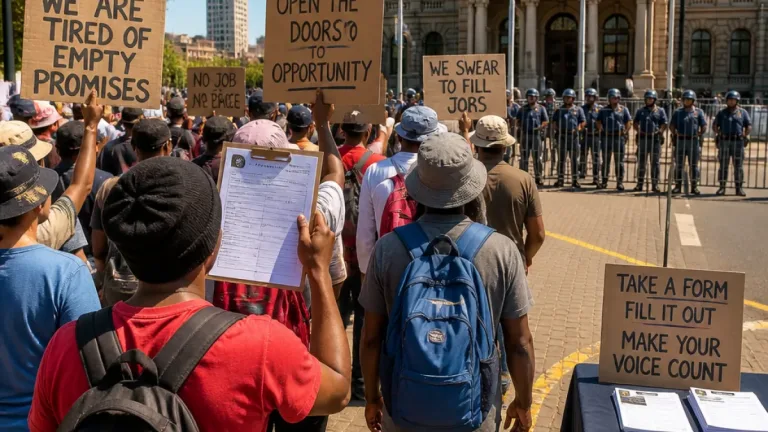
The United States Supreme Court has agreed to hear a challenge to admissions policies at four selective middle schools in Montgomery County, Maryland, after a group of parents argued the district's system disadvantages Asian-American applicants while benefiting Black and Latino students. The court said on 20 October 2026 it would examine whether the parents have presented sufficient evidence of discrimination for the lawsuit to proceed.
What the case is about
The litigation, brought by the Association for Education Fairness, targets a selection process adopted by the Montgomery County school district in the 2021–2022 school year amid the COVID-19 pandemic. The system first screens students for academic potential and then uses a lottery to allocate places for enriched instruction at four academically rigorous "magnet" schools or at local schools.
Challengers say the screening stage makes it harder for Asian-American students to reach the lottery pool because those students are concentrated in "high-performing, low-poverty elementary schools", which affects how they are benchmarked for entry.
"Under the applicant pool benchmark, the government can"
The exact end of that sentence was not included in the material provided, but the fragment appears in court filings summarising arguments about how applicants are compared within income bands and applicant pools.
Legal questions and lower courts
Lower courts previously dismissed the parents' challenge on the basis that Asian-American students were not underrepresented at the specialised-curriculum schools relative to the pool of applicants. The Supreme Court will now consider whether that dismissal was correct and, more broadly, what evidence is necessary to show discrimination in a race-conscious or otherwise complex admissions framework.
The court's review could determine whether the case is revived and debated on its merits. If the Supreme Court rules in favour of the Association for Education Fairness, the litigation may proceed to address whether the district's screening and lottery system runs afoul of federal anti-discrimination law or constitutional protections.
Timeline and potential consequences
The Supreme Court is expected to hear oral arguments in the coming months and to issue a ruling by June. The timing means any final decision could arrive before the next academic admissions cycle for affected schools, potentially prompting districts nationwide to reassess selection methods that combine screening and lotteries.
| Event | Date / period |
|---|---|
| Montgomery County selection process introduced | 2021–2022 school year |
| Supreme Court agreed to hear case | 20 October 2026 |
| Decision expected by | June (following term) |
Implications for admissions policy debate
At stake is how school systems design admissions policies intended to identify academic potential while promoting access and diversity. The Montgomery County process pairs screening with a lottery intended to equalise chances across different communities; plaintiffs argue the screening element nonetheless skews opportunity away from certain groups.
A ruling for the parents could narrow the permissible scope of race-conscious or complex benchmarking methods in admissions. Conversely, a ruling against them would leave greater latitude for districts to combine screening and randomised allocation, provided underrepresentation is not demonstrably established.
- Key actors: Association for Education Fairness; Montgomery County Public Schools; United States Supreme Court.
- Core policy tools questioned: screening for academic potential, applicant-pool benchmarking, lottery allocation.
- Potential impact: legal precedent affecting admissions design across US districts and informing international debate on equity in selection.
For South African education readers, the case underscores tensions common to many systems: how to balance merit, fairness and diversity when allocating limited places in sought-after programmes. While the legal framework differs between the United States and South Africa, the practical policy questions about measurement, comparators and unintended consequences of reforms are directly comparable.