Gold Fields’ South Deep mine has formalised partnerships with industry and education institutions to close the gap between skills training and employment in the West Rand, the company said.
Multi‑stakeholder drive to improve employability
The mine signed memoranda of understanding (MoUs) with Sibanye‑Stillwater, AngloGold Ashanti, Mienara, Phahama School of Specialisation and Westcol Technical and Vocational Education and Training College (WTVETC) to support a collaborative programme, Siyakha Sonke, which the company describes as part of Gold Fields’ legacy portfolio of long‑term social investments.
The initiative is being piloted on the West Rand, where mining continues to be a significant employer and youth unemployment remains a pressing challenge. According to Gold Fields, the programme aims to align efforts across industry, education and other stakeholders to create a scalable model that improves pathways to employment and strengthens resilience in local economies beyond the life of mining.
Focus areas and partners
The initial agreements bring together mining companies, an education institution and growth sectors such as renewable energy and manufacturing to prepare learners and workers for changing labour market needs. Gold Fields said additional partnerships are being explored.
- Purpose: Close the gap between skills development and available jobs.
- Scope: Align mining, technical and vocational training with opportunities in growth sectors.
- Pilot area: West Rand, Gauteng.
The company framed Siyakha Sonke — which translates as “we are building together” — as a response to technological change, automation and the need for transferable, future‑ready skills.
“The resources we mine are not infinite, and technology is advancing rapidly. We need to close the gap between the skills required today and those needed tomorrow by developing capabilities that are future‑ready and transferable across mining and other growth industries,” Gold Fields said.
What the MoUs mean for TVET and schools
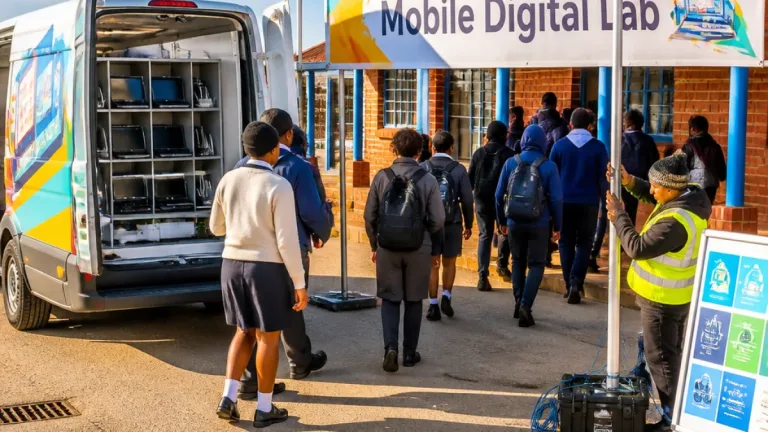
By bringing a TVET college and a specialist school into formal agreements with mining companies, the initiative aims to create clearer routes from classroom and college training into industry employment. The involvement of Westcol TVETC and Phahama School of Specialisation suggests an emphasis on both technical skills and specialised school‑level preparation, although Gold Fields did not specify exact programmes or the number of learners to be enrolled under the pilot.
The model emphasises collaboration rather than unilateral company training: by coordinating across multiple employers and education providers, Siyakha Sonke seeks to produce curricula and training that are responsive to labour demand across several sectors, not only mining.
Policy and employment implications
Aligning industry needs with the capabilities of TVET colleges is a long‑standing policy priority for the national and provincial education authorities. If the pilot results in demonstrable placement rates and employer uptake, it could serve as a template for public‑private co‑operation in other mining regions and sectors affected by technological disruption.
Key considerations for the initiative’s success will include the depth of employer commitment to absorb graduates, the quality and accreditation of training, and mechanisms to measure outcomes such as learner completion and job placement. The agreements also raise questions about scalability and the role of government in supporting or regulating multi‑stakeholder skills initiatives.
| Partner | Role indicated |
|---|---|
| Gold Fields’ South Deep | Lead, funder and programme catalyst |
| Sibanye‑Stillwater, AngloGold Ashanti, Mienara | Industry partners; potential employers |
| Westcol TVETC | Technical and vocational training provider |
| Phahama School of Specialisation | School‑level specialised education partner |
Gold Fields described Siyakha Sonke as part of its group legacy programmes, which the company says are designed to create sustainable opportunities and lasting benefits for host communities beyond the life of mining.
How effectively the pilot tackles youth unemployment on the West Rand will depend on implementation details and whether the initiative can sustain collaboration between employers and educators, deliver accredited, labour‑market‑aligned training and ensure pathways into stable work across mining and adjacent growth sectors.