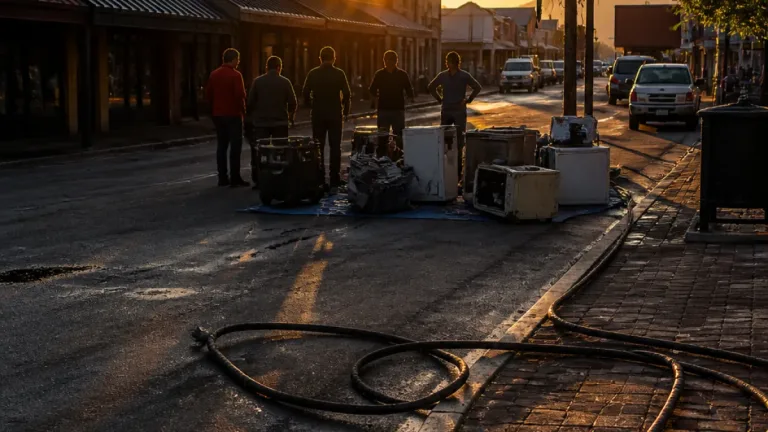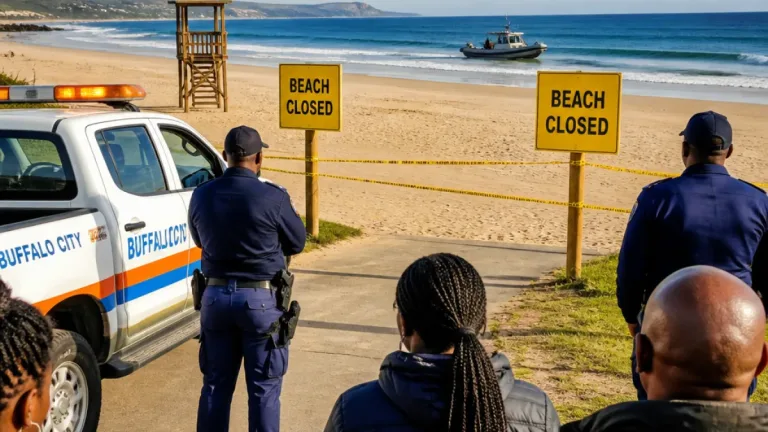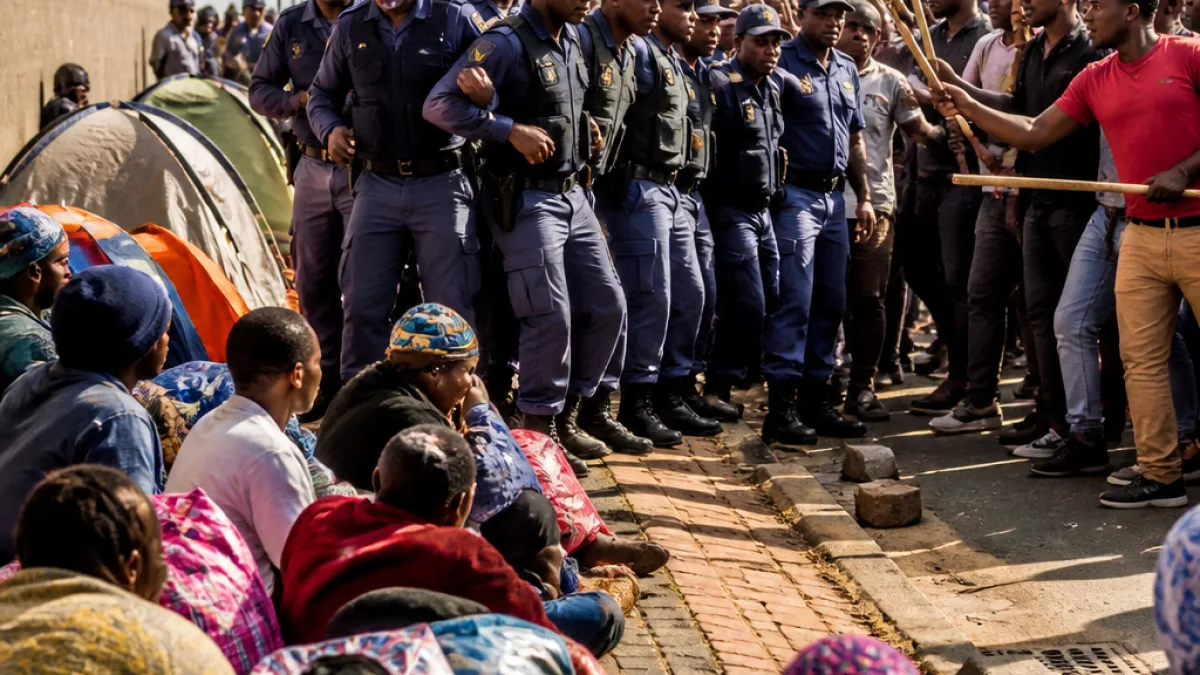
A man thought to be a foreign national was beaten to death by a crowd of about 50 people in Durban, provincial police said, prompting a murder investigation as anti‑migrant protests continue to spread.
Police open murder probe as motive remains unclear
Provincial police described the attack as a targeted assault that began when two men approached the victim by the roadside before a much larger group joined in. The victim, believed to be in his late 30s or early 40s, was declared dead at the scene, according to reporting by the BBC.
Provincial police spokesperson Robert Netshiunda told the BBC they would not speculate about the motive while the investigation is under way and that further verified information would be released when available.
“We cannot speculate on the motive for the killing… more information will be shared once verified,” Robert Netshiunda was quoted as saying to the BBC.
Incident occurs amid wider anti‑migrant unrest
The Durban killing comes against the backdrop of sustained demonstrations targeting undocumented foreign nationals across several South African cities this year. Earlier incidents reported in 2026 included arson attacks on shops and vehicles in Durban and in Soweto, near Johannesburg.
Authorities have sought to manage the unrest while also acknowledging pressure to reform immigration enforcement. The national government has said it has deported or repatriated tens of thousands of foreign nationals since launching an intensified crackdown earlier in the year, the BBC reported.
Political and diplomatic fallout
The protests and related violence have strained relations with other African states. Several countries, including Zimbabwe, Nigeria and Ghana, moved to repatriate citizens amid concerns for their safety. Nigeria accused South African authorities of bearing responsibility for the deaths of two of its nationals during earlier unrest. Ghana confirmed that one of its citizens, identified in reporting as Bashiru Isak, was fatally shot in Cape Town during demonstrations, an event that sparked a diplomatic dispute.
One of the groups linked to the protests, March and March, had set a deadline for undocumented migrants to leave the country earlier this year. A leader associated with the movement, Jacinta Ngobese‑Zuma, denied the group was driven by xenophobia, saying their stance reflected frustration at long‑standing issues with migration, according to the BBC.
“We can't be living with these people for so many years and now when we say it is too much, it is enough,” Jacinta Ngobese‑Zuma was quoted as saying in the BBC report.
What is known: quick facts
- Location: Durban, KwaZulu‑Natal.
- Victim: Unidentified male, believed to be in his late 30s or early 40s.
- Alleged assailants: Initial assault by two men, followed by a crowd of about 50.
- Police response: Murder investigation opened; spokesperson said motive remains unverified.
- Context: Ongoing anti‑migrant protests and government deportation drive.
| Event | Detail |
|---|---|
| Attack | Victim assaulted by roadside, then joined by a larger group; pronounced dead at scene |
| Investigation | Murder probe opened by provincial police |
| Broader context | Part of a series of anti‑migrant protests across the country in 2026 |
Consequences and questions for authorities
The killing will intensify scrutiny of policing, crowd control and the government’s approach to migration policy. Key questions for authorities include whether organisers or instigators of the attack can be identified, whether arrests will be made, and how the state will protect vulnerable foreign nationals while upholding the rule of law.
Diplomatic relations with affected countries may also require renewed attention if more citizens of other states are harmed or feel unsafe in South Africa. Previous deaths during similar unrest led to formal complaints and rapid repatriations by affected countries.
Provincial police said they will provide verified updates as the investigation progresses. The government and civil society face renewed pressure to contain violence, clarify immigration procedures and prevent further loss of life.