Holiday convenience can widen payment exposure
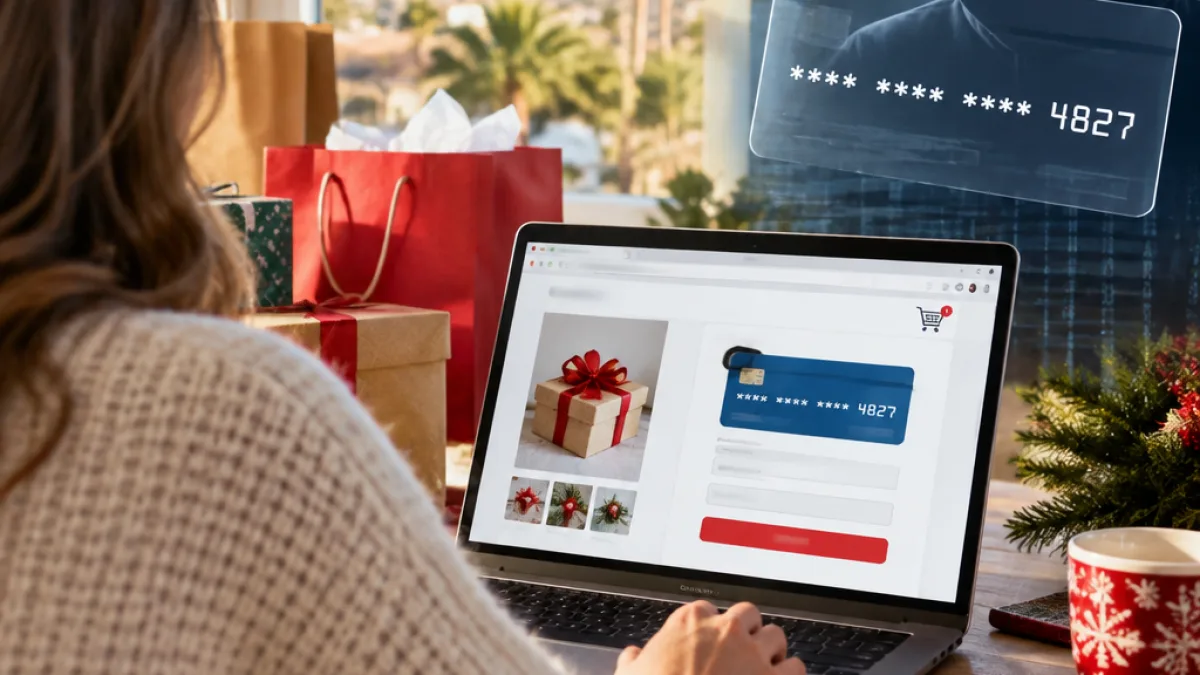
For Santa Clarita Valley residents shopping online this holiday season, the checkout screen may be only the visible part of a larger security risk. Every purchase can place a card number, expiration date and security code in the hands of a merchant, including businesses a shopper may use only once. If that retailer is breached, renews a service without the customer’s expectation or submits a charge for more than anticipated, the original payment card may be the one left to absorb the consequences.
The concern is not limited to unfamiliar websites. Late last month, security research firm Sansec reported that a card skimmer had been concealed in a checkout script used by multiple online stores. The malicious code collected payment information while shoppers paid, without giving them a clear way to know their details had been captured. That example illustrates a broader problem for consumers: A purchase can appear routine while the software processing it introduces another point of exposure.
How a virtual card changes the risk
A virtual card is an online-only card number with its own expiration date and security code. The guide provided to shoppers describes Quackr’s virtual card as a prepaid Mastercard displayed through a dashboard during checkout. Rather than placing a primary bank-card number into a merchant’s system, a customer loads a separate card with the amount needed for a transaction. The available balance then limits what that card can be charged for.
That distinction matters when a shopper is dealing with an unfamiliar store, a marketplace, a ticket website or an overseas merchant. If the site later suffers a breach, the exposed payment information would be connected to the prepaid virtual card rather than the customer’s main bank card. The virtual card can be frozen, and the primary card number was not used for that purchase. The arrangement does not eliminate the need to evaluate a merchant, but it can narrow the financial impact of a problem at one retailer.
- Separate number: The virtual card has its own number, expiration date and security code.
- Controlled balance: A shopper loads only what the purchase requires.
- Manual controls: Cards can be frozen, loaded or unloaded by the user.
- Dedicated use: Cards can be named for a particular expense or created for one phone wallet, including Apple Pay or Google Pay.
Limits and safeguards shoppers should understand
The service described in the guide allows users to keep up to five cards and label them according to what they pay for. It also automatically freezes a card after a payment is declined for exceeding its balance or after three declines at the same merchant. Quackr sends an email when that occurs. Those controls can help a customer identify an attempted charge, but they also mean shoppers must monitor balances, understand decline rules and respond to account notices.
| Feature | Purpose |
|---|---|
| Prepaid balance | Limits the amount available to a merchant |
| Freeze function | Stops further use of the virtual card |
| Separate card details | Keeps the primary card number out of that checkout |
| Decline alerts | Notifies the user when specified payment limits are reached |
For Santa Clarita shoppers, the practical lesson is to treat each online checkout as a decision about information sharing, not merely a transaction. A virtual card may be most useful for one-time purchases, free trials, unfamiliar shops and other payments where a customer does not want to expose a primary card number. It is still important to review charges, recognize recurring-payment terms and keep track of which card is connected to which purchase. The guide presents virtual cards as one way to reduce the reach of a breach, not as a replacement for careful shopping or account monitoring.
The holiday season brings more online transactions and, with them, more opportunities for payment details to be copied or misused. Keeping a primary card number out of as many merchant systems as possible can make a single compromised checkout less disruptive. For local consumers weighing convenience against control, the key policy question is straightforward: How much access should any one seller have to the payment account used for everyday expenses?