A broad entry point for local runners
The 2026 Santa Clarita Marathon placed accessibility at the center of a community race that offered participants four ways to compete: a full marathon, half marathon, 10K and 5K. The event was held Nov. 15 around the Santa Clarita Heritage Park area, bringing together runners with different levels of experience for a single organized race day.
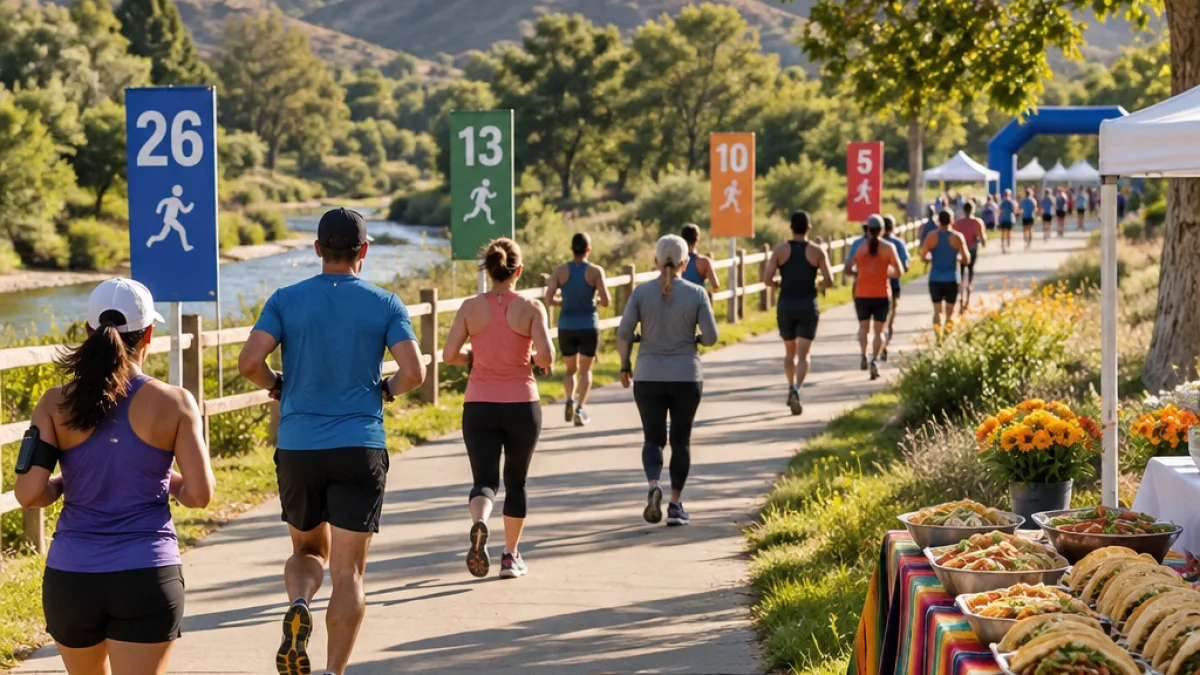
The range of distances gave the event a structure that could accommodate both experienced athletes and people approaching organized road racing for the first time. The full marathon covered 26.2 miles, while the half marathon measured 13.1 miles. Shorter 10K and 5K options provided alternatives for participants who wanted a less demanding distance while still taking part in the event.
Scheduling separated the race starts
Races began in staggered waves during the morning. The full marathon started at 7 a.m., followed by the half marathon at 7:15 a.m., the 10K at 7:30 a.m. and the 5K at 7:45 a.m. That sequence created a clear progression for the four events and allowed participants to begin according to the distance they had selected.
| Event | Distance | Start time |
|---|---|---|
| Full marathon | 26.2 miles | 7 a.m. |
| Half marathon | 13.1 miles | 7:15 a.m. |
| 10K | 10K | 7:30 a.m. |
| 5K | 5K | 7:45 a.m. |
Time limits lowered the barrier to entry
A defining feature was the full marathon’s seven-hour completion limit. The event also offered an early-start option at 6 a.m. for participants who needed additional time. Those provisions were especially relevant to beginners and people walking the course, according to the event description, because they allowed participants to approach the longest distance without the same time pressure faced by faster runners.
The course was described as relatively flat, although it included gentle hill sections. That combination served two different purposes: the flatter portions offered a manageable setting for less experienced entrants, while the hills gave seasoned runners additional terrain as they pursued personal records. The design therefore positioned the race as both an introductory event and a competitive opportunity, rather than limiting it to one type of participant.
A route separated from vehicle traffic
The course followed the Santa Clarita bike path, allowing runners to move along the route without dealing with vehicle traffic. For a public athletic event, that feature is more than a convenience. It shaped the experience for participants by placing the race on a path intended for nonmotorized travel and helped distinguish the event from a traditional street-based road race.
The event’s finish-line experience included finisher medals, technical T-shirts and souvenir bags for participants. A street taco post-race celebration was also held at the finish area. Those details gave the race a community-event character beyond the timed distances, while the use of Heritage Park and the bike-path system tied the competition to Santa Clarita’s local public spaces.
- Four race distances were available, from a 5K to the full 26.2-mile course.
- The full marathon allowed seven hours for completion, with a 6 a.m. early-start option.
- The route used the Santa Clarita bike path rather than a course affected by vehicle traffic.
The marathon’s format illustrates how event design can determine who feels able to participate. By combining multiple distances, a long completion window, an early-start choice and a traffic-free route, organizers created room for beginners, walkers and experienced runners within the same Santa Clarita event. The 2026 race thus functioned not only as an athletic competition, but also as a locally situated public gathering built around access to the city’s recreational infrastructure.