Construction starts on major local transit link ahead of 2028 games
Inglewood officials marked the start of work Monday on the initial phase of the Inglewood Transit Connector, a $261 million effort to stitch the city’s core, Metro K Line rail service and the Sports and Entertainment District into a more walkable, transit-first network.
The roughly 1.6-mile project targets the corridor between the K Line, the Downtown/Market Street commercial area and the blocks that include SoFi Stadium. Municipal leaders and developers say the first phase will focus on streetscape improvements and new access points to bus services while laying the groundwork for a later automated people mover.
"The 1.6-mile project includes three mobility hubs for improved access to buses and a series of streetscape beautifications."
Concord-based Swinerton is the primary construction contractor and Plenary Americas will provide significant financing and program oversight. The lead designer on the phase is Houston-based Walter P Moore and Associates Inc.
Timeline, scope and the Olympic timeline
City officials expect phase one construction to wrap up in the spring of 2028 — a timetable that aligns with Inglewood’s role as a host city for the Summer Olympic and Paralympic Games that year. SoFi Stadium is slated to host the Opening Ceremony and aquatic events, and several other venues in the immediate area will stage competition, increasing demands on local transit infrastructure.
| Element | Detail |
|---|---|
| Project cost (Phase 1) | $261 million |
| Length | 1.6 miles |
| Key contractors | Swinerton; Plenary Americas; Walter P Moore |
| Expected completion | Spring 2028 |
Officials say phase two will introduce an automated people mover to provide higher-capacity, rapid connections between transit nodes and event venues. That later stage will build on the mobility hubs and improved pedestrian corridors established in phase one.
What residents and businesses should expect
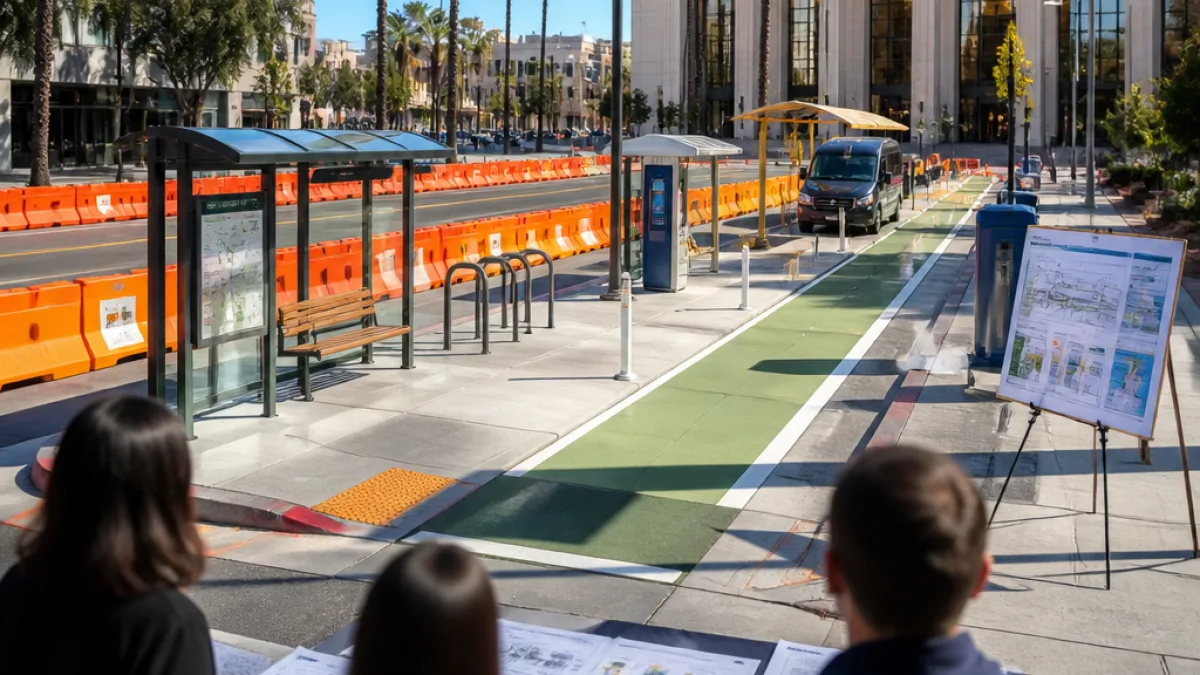
The initial phase emphasizes multimodal access rather than aerial guideway construction, meaning early work will be concentrated at street level: curb adjustments, bus stop consolidations, pedestrian safety upgrades, landscaping and amenities meant to make walking and transfers more attractive.
- Mobility hubs: Three new hubs will centralize bus and shuttle connections.
- Streetscape improvements: New sidewalks, lighting and landscaping to support retail and commuter foot traffic.
- Preparation for people mover: Phase one will include site work and infrastructure needed for automated transit in phase two.
For residents who already rely on the Metro K Line or local bus routes, the project promises shorter transfer times and safer walking routes. For downtown merchants and the Market Street corridor, the improvements are positioned to increase pedestrian traffic and support local commerce, particularly on event days when demand surges around SoFi Stadium.
Financing and regional implications
Plenary Americas’ role in financing brings private-sector project management and oversight to the city-led initiative, a model increasingly used for complex urban infrastructure projects. The arrangement aims to accelerate delivery and coordinate funding, though such public-private structures can raise questions about long-term maintenance responsibilities, access rules and prioritization of routes.
As Inglewood prepares for a concentrated period of international visitors during the 2028 Games, transportation upgrades are being scrutinized for resilience and operations under peak loads. The Transit Connector’s phased approach gives city planners time to refine operations, integrate real-time mobility management and coordinate with Metro and regional transit partners.
Completion of the first phase would leave the city positioned with improved surface connections ahead of the larger automated system envisioned in phase two. For daily commuters, event attendees and local businesses, the project represents a tangible push to reduce reliance on car travel and make Inglewood’s compact downtown and sports districts easier to access by transit.
The project’s progress will be followed closely by residents, business owners and regional planners as construction proceeds and design work for the automated people mover advances.