Retail proposal replaces housing plan
A small retail development beside Gleniffer High School in Paisley has been approved by Renfrewshire Council, subject to conditions, after an earlier proposal for four houses on the site was abandoned.
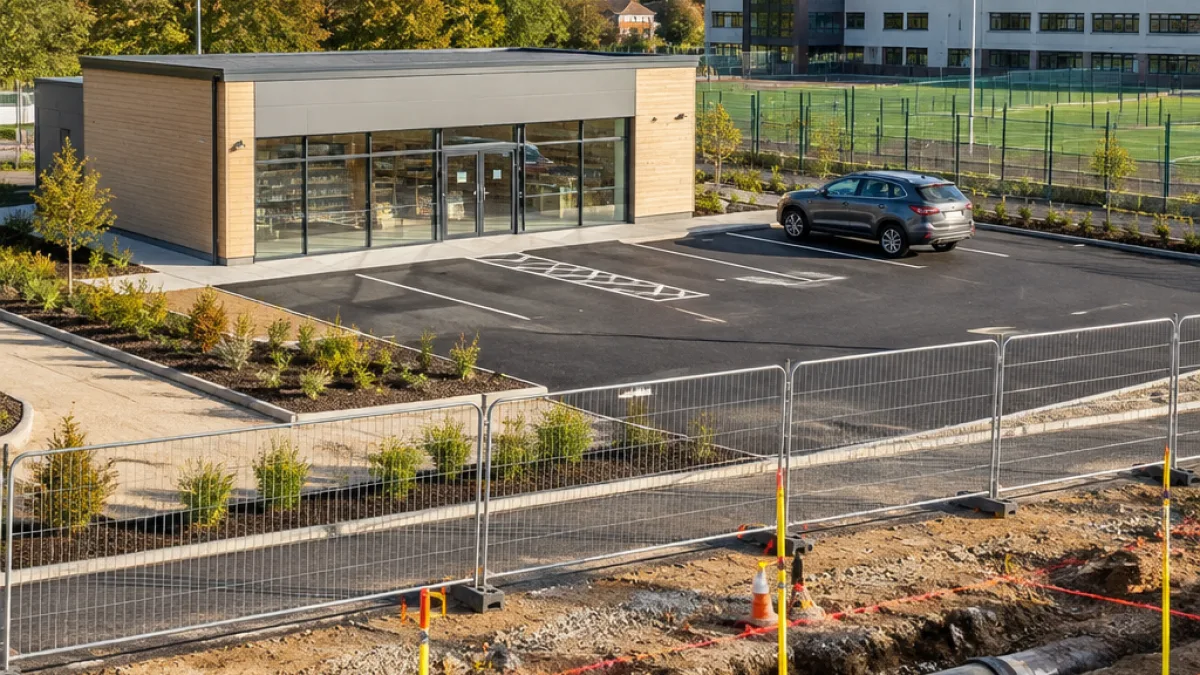
The scheme is planned for land on Amochrie Road, next to the secondary school, and is expected to include a single commercial unit with parking. The application documents indicate that the premises could be used as a food shop, although the source material does not identify a confirmed operator. Suggestions referenced in the planning statement include a smaller Co-op or Tesco-format store.
The decision changes the proposed use of a constrained parcel of land. Permission had previously been granted, also subject to conditions, for four dwellings. However, the development agent, Framed Estates, told the council that the housing proposal was no longer financially or practically workable because of a large Scottish Water pipe crossing the site.
Infrastructure constraint at centre of decision
Planning material submitted with the new application says the pipe requires a five-metre clearance. Foundations cannot be excavated and installed within that zone without significant engineering measures intended to protect the pipe and the surrounding area.
“This renders the southern half of the site unbuildable.”
Framed Estates said moving the homes away from the pipe would not be possible given the limited size of the land. It also argued that the engineering work needed to make the residential scheme possible would be prohibitively expensive, making the original permission unviable.
| Element | Position set out in the application |
|---|---|
| Location | Land beside Gleniffer High School, Amochrie Road |
| Earlier proposal | Four houses |
| Approved principle | One small-scale retail unit with parking |
| Key constraint | Scottish Water pipe requiring five metres of clearance |
Potential local convenience use
The agent’s planning statement said the surrounding neighbourhood is largely residential and claimed a modest shop would be more appropriate for the site. It presented the proposal as a way to provide food and everyday items within walking distance, including what it described as healthier choices for nearby residents and pupils.
The council’s report of handling also recorded that the proposed unit was intended to offer pupils the opportunity to buy lunches and snacks. That reference forms part of the planning case for the development; the available information does not confirm the eventual shop, its opening date, or the final range of goods.
For residents, the approval means the site will no longer be pursued for the four-home scheme previously permitted. Instead, any future construction will be shaped by the approved retail use and the conditions attached to the council’s decision. Those conditions are not set out in the available source material.
Next stage for the site
The council’s decision clears the planning stage for the proposed commercial development, but it does not establish when building work will begin or when a retailer might occupy the unit. The application records describe the project as small scale, with parking included, while the identity of any operator remains undecided in the information available.
The case illustrates how underground infrastructure can affect the choices available for land in an established Paisley neighbourhood. A site once considered suitable for four homes has instead been approved for a local retail use after the cost and physical implications of working near the Scottish Water pipe were judged to make residential development impractical.