The funeral of Paul Ferris, a prominent and divisive figure in Glasgow's criminal history, took place on the outskirts of the city at Daldowie Crematorium on Monday. Ferris, who died earlier this month at the age of 62 following a short illness, was given a ceremony that reflected both his notoriety and later attempts to reshape his public image.
Ceremony and tributes
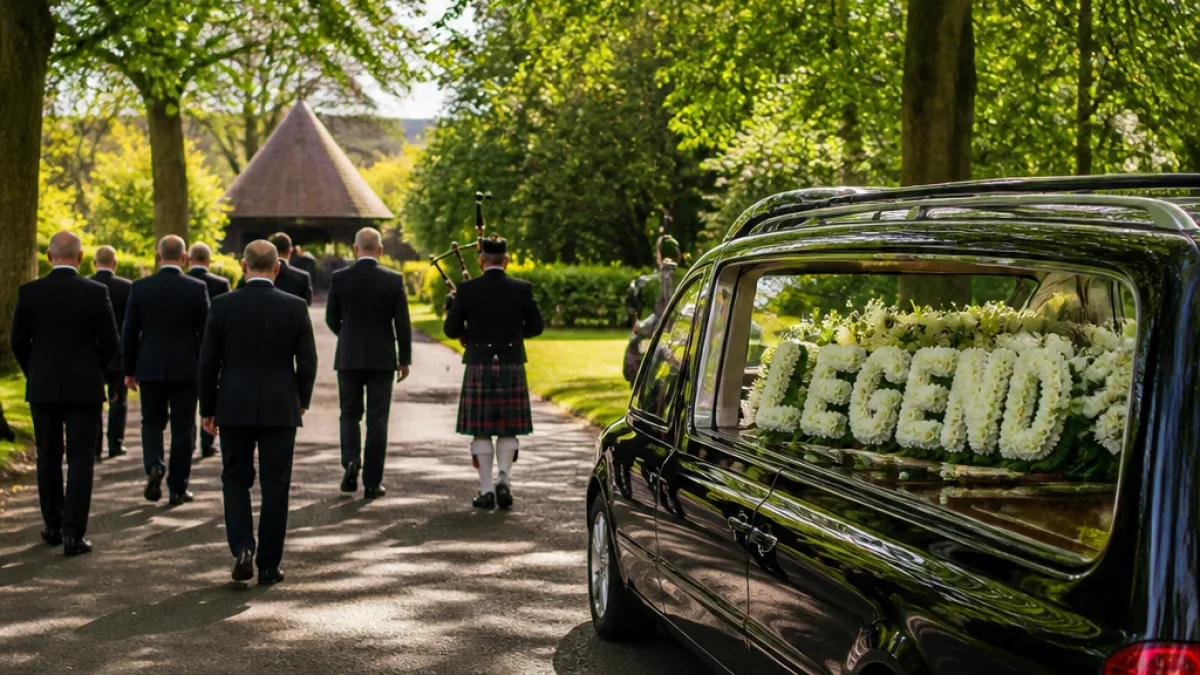
A piper led the cortege into the crematorium grounds and mourners heard a selection of songs including I Won’t Back Down by Tom Petty and the Heartbreakers and Brothers in Arms by Dire Straits. A floral tribute displayed on the back of the hearse read "Legend Ferris", underlining the mix of admiration and controversy surrounding him.
Ferris rose to public prominence after being arrested in connection with the killing of Arthur "Fat Boy" Thompson Jnr in August 1991. He was subsequently tried and cleared of that murder in 1992 in what at the time became the longest-running murder trial in Scottish legal history. The case and its wider circumstances remain a significant chapter in Glasgow’s organised crime story.
Legal history and later life
After the trial, Ferris's life remained bound up with the city's criminal milieu. In 1998 he was convicted and sentenced to seven years in prison for gun-running. The source material notes that Ferris insisted he had turned his back on crime following his release.
He later pursued a public-facing life as an author, publishing three books. His first, The Ferris Conspiracy, was released in 2001 and his life was dramatised in the 2013 film The Wee Man, in which the role of Ferris was played by actor Martin Compston. These works kept the story of Glasgow's gangland in the public eye, shaping wider perceptions of the city's criminal past.
Unresolved killings and community impact
Ferris's arrest followed a string of violent events in the early 1990s. Two of his associates, Joe "Bananas" Hanlon and Bobby Glover, died before they could stand trial, and both were found shot dead in a car on the route of Thompson Jnr's funeral. Those murders, together with Thompson Jnr's killing, remain unsolved.
The events of that period left a lasting imprint on communities in areas such as Provanmill and beyond. The period of gang violence and the high-profile legal processes that followed drew sustained media attention and public concern, highlighting tensions between organised crime, policing and criminal justice in Glasgow.
- Age at death: 62
- Cleared of murder: 1992 (longest-running murder trial in Scotland at the time)
- Prison sentence: seven years in 1998 for gun-running
- Books and film: first book published 2001; life adapted as a film in 2013
"Ferris was cleared of killing the son of crime boss Arthur Thompson in 1992."
| Event | Year / Detail |
|---|---|
| Cleared of Thompson Jnr's murder | 1992 — longest-running murder trial in Scotland at the time |
| Imprisoned for gun-running | 1998 — seven-year sentence |
| First book published | 2001 — The Ferris Conspiracy |
| Film adaptation | 2013 — The Wee Man (Martin Compston as Ferris) |
| Funeral | 2026 — Daldowie Crematorium, procession led by piper |
For many Glaswegians the Ferris story is emblematic of a turbulent era marked by both violent crime and highly public legal battles. His public rehabilitation as an author and the cinematic retelling of his life complicated the city's narrative about its own past, prompting debate about how such figures are remembered.
While the funeral provided an occasion for those who knew or admired him to pay their respects, the lingering unresolved killings connected to that era remain a matter of ongoing public and law-enforcement interest. As the city reflects on the life and legacy of Paul Ferris, those unanswered questions continue to shape conversations about safety, justice and memory in Glasgow.