Gandhinagar, October 23: The governments of Gujarat and Scotland signed a series of Memorandums of Understanding (MoUs) in Gandhinagar on October 23 to deepen cooperation in renewable energy, sports, trade and education, officials reported. The accords were exchanged in the presence of Gujarat Chief Minister Bhupendra Patel and Scotland’s First Minister John Swinney.
Agreements aimed at broad strategic partnership
According to official reports, the MoUs are intended to strengthen economic and cultural relations, enhance people‑to‑people connections and promote sustainable and inclusive economic development between the two governments. The agreements seek to identify areas of mutual interest and facilitate practical cooperation including knowledge sharing, innovation collaboration and trade and investment promotion.
Officials described the arrangements as a strategic partnership that will leverage Gujarat’s industrial and coastal strengths alongside Scotland’s expertise in renewable energy and sports event management.
Key focus areas
- Renewable and clean energy: Cooperation to explore opportunities in wind power and other clean energy technologies.
- Sports collaboration: Exchanges to support sports infrastructure and event management, with an eye to Gujarat hosting the 2030 Commonwealth Games.
- Trade and investment: Measures to enhance two‑way commerce and attract investment linked to innovation and entrepreneurship.
- Education and research: Partnerships between academic institutions for knowledge and expertise exchange.
The exchanges are expected to provide Gujarat access to Scotland’s experience in hosting large international sporting events and developing fitness culture, while Scotland may draw on Gujarat’s industrial base and coastal renewable potential.
"The MoUs will promote sustainable and inclusive economic development and encourage collaboration in innovation and prosperity," officials said.
Context: Commonwealth Games and climate cooperation
Gujarat is scheduled to host the 2030 Commonwealth Games, and the MoUs were framed in part to allow Gujarat to benefit from Scotland’s recent experience in hosting multisport events. Sources said the agreements could facilitate knowledge transfer on infrastructure planning, logistics and community engagement associated with large sporting events.
Renewable energy collaboration was emphasised as a priority given Gujarat’s extensive coastline and Scotland’s established expertise in wind and marine energy technologies. Officials indicated the MoUs will create platforms for joint research, pilot projects and capacity building in sectors linked to climate resilience.
Signatories and meeting
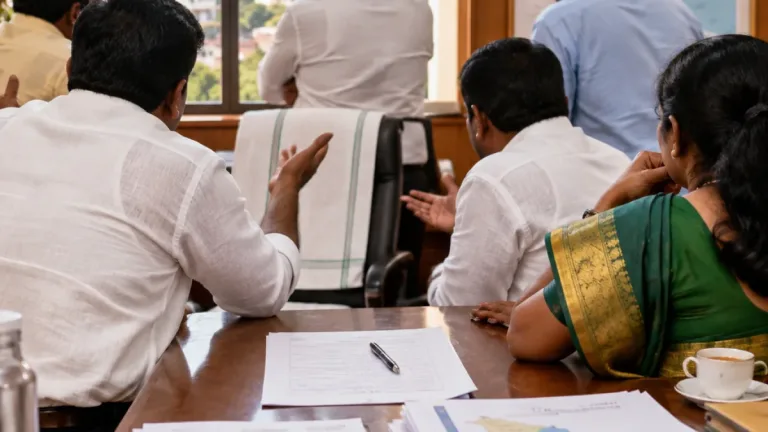
The MoUs were exchanged during a courtesy meeting in Gandhinagar between Chief Minister Bhupendra Patel and First Minister John Swinney, who was leading a Scottish delegation visiting Gujarat. Both leaders exchanged copies of the agreements as a formal affirmation of intent to pursue the listed areas of cooperation.
| Aspect | Primary focus |
|---|---|
| Energy | Wind power, clean energy collaboration |
| Sports | Event management, fitness culture, Commonwealth Games support |
| Education & Research | Academic partnerships, knowledge exchange |
| Trade & Investment | Business links, investment facilitation |
Local impact and next steps
Officials said the MoUs are non‑binding frameworks to guide future collaborative projects; practical initiatives, pilot programmes and detailed project agreements will follow through specialised agencies and institutions. If translated into concrete projects, the partnership could prompt joint research initiatives, student and faculty exchanges, and targeted investment in renewable projects along Gujarat’s coast.
For Gujarat’s industry and workforce, the agreements present potential opportunities for skill development, technology transfer and new workstreams in clean energy and sports infrastructure. For communities tied to coastal livelihoods, renewable projects under the partnership could mean opportunities as well as the need for careful planning to balance development and local interests.
Officials are expected to announce follow‑up actions and working groups to operationalise the MoUs. Stakeholders in government, academia and business in both regions will be tasked with identifying specific projects and timelines.
The signing in Gandhinagar underscores Gujarat’s continuing push to attract international partnerships across technology, sport and sustainability as the state prepares for a major global sporting event and scales up its renewable energy agenda.