Religious leaders raise objection
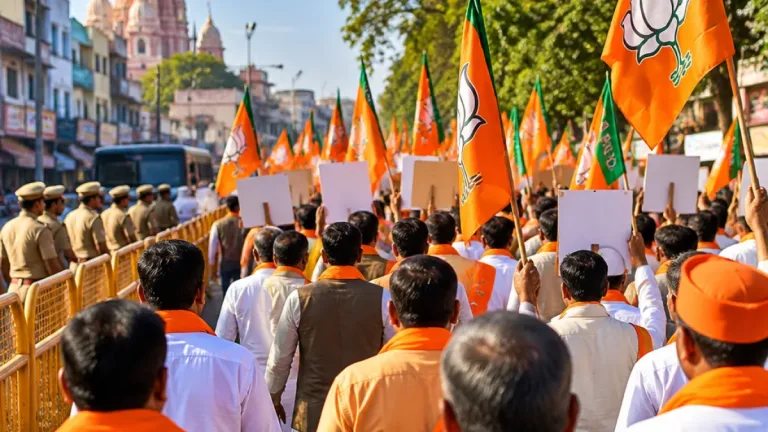
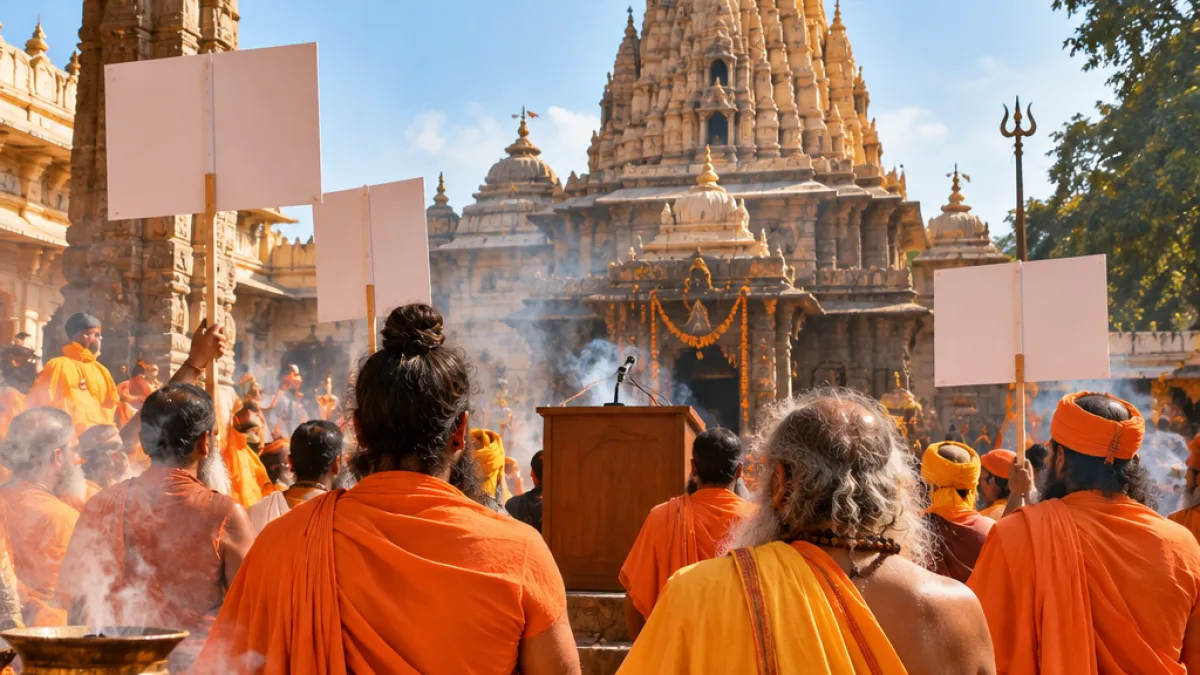
Ujjain has witnessed opposition to remarks attributed to Bageshwar Dham seer Dhirendra Krishna Shastri concerning Lord Ram and Lord Krishna. Priests of the Mahakaleshwar temple, Juna Akhara Mahamandaleshwar Swami Shaileshanand Giri and Sadhvi Harshanand Giri have expressed displeasure over the comments and demanded that the Centre enact a stringent law against blasphemy.
The disagreement has centred on the propriety of discussing the forms and divine acts of Hindu deities from a religious pulpit. The seers said that language used on religious and political platforms must retain dignity, particularly when the subject involves figures worshipped by large sections of society. Their reaction has brought the issue into focus in Ujjain, a major pilgrimage centre where debates over the public conduct of religious figures often carry wider social and political consequences.
| Person | Position identified in the report | Stand taken |
|---|---|---|
| Pandit Mahesh Sharma | Priest, Mahakaleshwar temple | Opposed the remarks and sought a strict law |
| Swami Shaileshanand Giri | Mahamandaleshwar, Juna Akhara | Questioned repeated remarks followed by apologies |
| Sadhvi Harshanand Giri | Religious figure | Expressed opposition to the comments |
Demand for legal action
Mahakaleshwar temple priest Pandit Mahesh Sharma said nobody had the right to make comments on the Lord. He described Lord Krishna as Leeladhar and maintained that it was improper to draw distinctions between Lord Ram and Lord Krishna, whom he identified as incarnations of Lord Vishnu. Sharma also said that religious narratives by those who mocked the gods or Sanatan Dharma should be boycotted.
“No one has the right to comment on the Lord,” Pandit Mahesh Sharma said.
Sharma’s principal demand was for a strong national law dealing with allegedly objectionable statements against religious faith. According to the report, he argued that such a law would enable action against people making offensive remarks about religious beliefs. He also objected to comments attributed to Shastri regarding Lord Krishna’s form and the flute associated with the deity.
Concerns over public language
Swami Shaileshanand Giri said the standard of language on both religious and political platforms was weakening. In his view, a person’s choice of words reflected his thinking and character. He said Lord Ram and Lord Krishna were one, a position he said was also reflected in religious scriptures, and argued that storytellers and preachers should not compare the forms of the two deities.
Giri further alleged that Shastri had made similar comments in the past and later apologised. He questioned the practice of making remarks, followed by an apology, and said that repeatedly adopting such a course was not appropriate. His statement placed the focus not only on the disputed comments but also on accountability in public religious discourse, where large audiences can amplify controversial formulations.
Political dimension of the dispute
The Juna Akhara seer also advised political parties and leaders against using religious narratives for electoral advantage. The report records his objection to the alleged use of religious platforms and language in a manner connected with political benefit. This brings a political dimension to a controversy that began with remarks about Hindu deities but has now expanded into a discussion about responsibility, public speech and the limits of religious commentary.
The reported reactions do not by themselves establish whether any legal action has been initiated against Shastri or whether a formal legislative proposal has been moved. They do, however, show that the demand for a blasphemy law has been raised publicly by influential religious figures in Ujjain. The immediate issue before political authorities is therefore whether such demands will lead to a structured debate on the proposed law, its scope and safeguards, rather than remain limited to statements of protest.
- Religious leaders in Ujjain criticised remarks attributed to Dhirendra Krishna Shastri.
- The Mahakaleshwar temple priest and Juna Akhara Mahamandaleshwar called for a stringent law against blasphemy.
- The dispute has also raised concerns about language, repeated apologies and the use of religion for political benefit.