Field review across three blocks
Amritsar Deputy Commissioner Dalwinderjit Singh visited eight villages in the district to assess preparations for managing paddy straw and to review the steps being taken to prevent its burning after harvest. The inspection covered villages in the Chogawan, Harsha Chhina and Ajnala blocks, bringing field-level residue management and the safety of stored straw into focus.
During the visit, the Deputy Commissioner went to Lopoke, Sarangra, Bhilowali, Kakkar, Chamiyari, Kuralian, Thoba and Kukkrawala. He inspected agricultural fields and met farmers to examine how both in-situ and ex-situ methods were being implemented. The review was centred on whether paddy residue was being incorporated into the soil or collected and moved for further management rather than set alight.
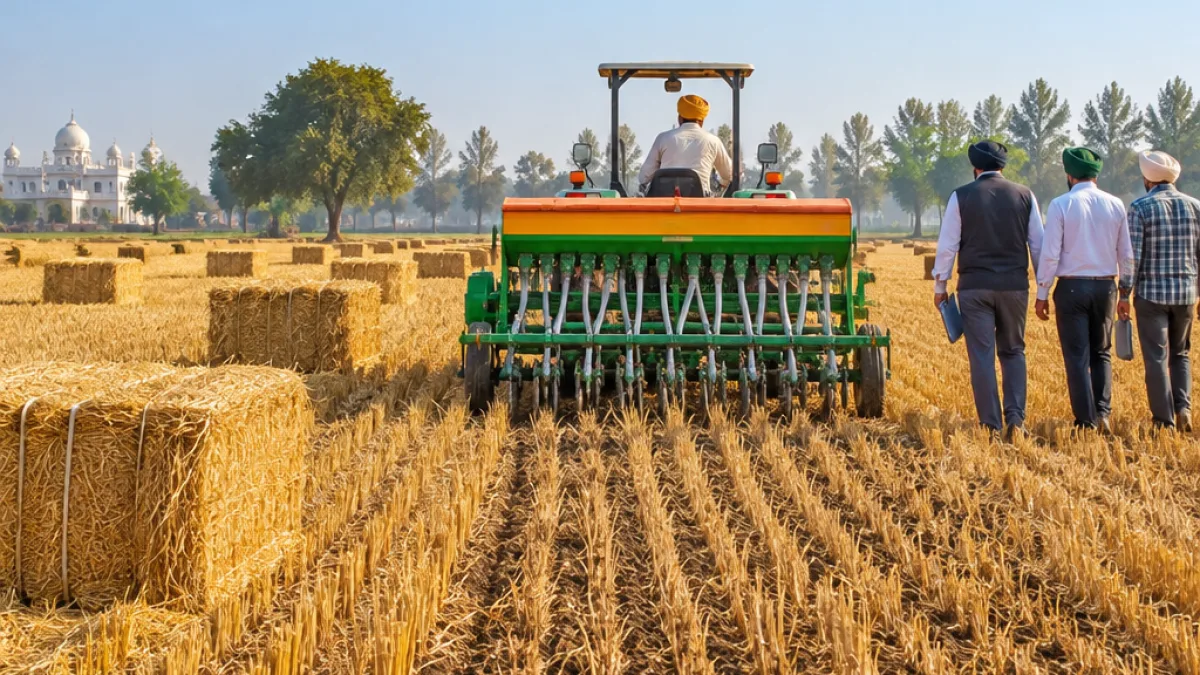
Super seeder used for wheat sowing
At Thoba, Singh visited the fields of farmer Hari Singh and acknowledged his adoption of scientific straw-management practices. The Deputy Commissioner also examined wheat sowing carried out with a super seeder, a method that places paddy residue into the soil during the sowing operation. The field visit provided a direct view of how crop residue was being handled alongside the next agricultural cycle.
The inspection also covered straw collected with the help of balers. Singh reviewed the storage arrangements for the residue and visited sites established by baler owners. The presence of these storage points indicates the role of collection and safe holding in the ex-situ approach, particularly where straw is removed from fields instead of being incorporated during sowing.
| Area reviewed | Measure examined |
|---|---|
| Eight villages | Field-level straw-management arrangements |
| Thoba | Super-seeder wheat sowing and farmer practice |
| Storage sites | Residue collected by baler owners |
Appeal to farmers and baler owners
While interacting with farmers and baler owners, the Deputy Commissioner urged them to avoid burning paddy straw after harvesting. The administration's position, as conveyed during the inspection, was that open burning damages soil fertility, worsens environmental quality and creates risks for human health. The focus on both fields and storage sites reflects the need to address residue at more than one stage: collection, transport or storage, and sowing.
For farmers, the practical choices reviewed during the visit included leaving the residue in the field for incorporation through a super seeder or having it gathered by balers for storage. The administration also examined whether collected straw was being kept at designated sites and whether those locations required support to remain safe. These arrangements are significant because a residue-management plan depends not only on machinery in the field but also on what happens to straw after it is collected.
Support and safety of collected residue
Singh said the government was committed to ensuring the safety of the straw-storage sites and extending the necessary assistance for proper management of the collected residue. The statement places responsibility on the administration to support the chain beyond the harvesting operation, while farmers and baler owners have been asked to continue with non-burning practices.
The Amritsar district inspection therefore linked individual farm decisions with a wider public concern. Hari Singh's field at Thoba offered one example of residue being managed alongside wheat sowing, while the visits to baler-operated storage locations showed the importance of organised collection. The review across the three blocks was aimed at assessing how these arrangements were functioning on the ground and at reinforcing the message that paddy straw should not be burned.
- Eight villages in Chogawan, Harsha Chhina and Ajnala blocks were inspected.
- Farmers were urged to adopt in-situ and ex-situ straw-management methods.
- Storage sites run by baler owners were reviewed for safety and support requirements.