Construction supplies meant for urgently needed homes in Nunavut are being left outside for extended periods, according to territorial and municipal leaders who warn that the practice can deepen housing delays and increase the risk that materials will be ruined before work begins.
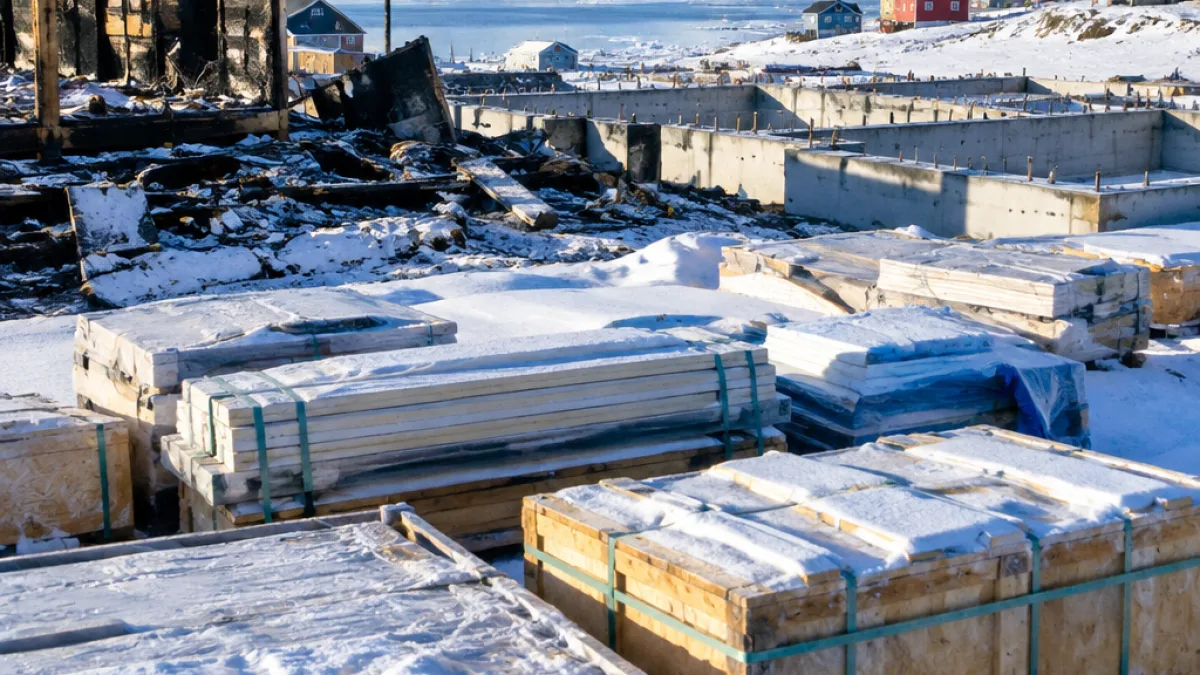
The concern became especially visible in Naujaat in August, when crates of housing materials caught fire after sitting unattended outdoors for about two years. The blaze delayed construction of eight public-housing units, turning a problem of storage and scheduling into a further setback for residents waiting for homes.
For leaders in other communities, the Naujaat fire is also a warning about what can happen when building supplies remain in open areas through multiple seasons. Pangnirtung MLA Johnny Mike said his community has housing materials stored near the harbour that have been there since 2024. He said the supplies face not only the possibility of fire, but also the continuing effects of wind, moisture and cold.
“These are the kind of risks we see when they are just lying around in a very open area,” Mike said.
Mike’s concern is that materials can lose their value before they are incorporated into a building. He said prolonged exposure could leave some supplies mouldy by the time construction starts, even if no fire occurs. In a territory where supplies must be shipped to remote communities and building projects already face difficult logistics, damage at the storage stage can mean additional delays before a home is completed.
Materials can deteriorate before construction begins
Marla Limousin, executive director of the Nunavut Association of Municipalities, said the situation is not limited to one community. She described materials being left to deteriorate in communities across the territory, including insulation kept in plastic packaging and untreated wood stored outdoors.
“You've got insulation in plastic packaging, you've got bare wood in a lot of cases,” Limousin said.
Those examples point to a basic vulnerability in the construction process: supplies can arrive in a community, but still remain far from becoming a home. Until a project moves forward, the materials must be protected from hazards that are particularly difficult to manage in northern communities, where open storage can expose them to severe weather and other risks.
Mike said construction should begin as soon as materials reach a community, rather than allowing them to remain outside during long Arctic winters. That approach would reduce the length of time supplies are exposed and could help prevent a shipment from becoming unusable before workers have the opportunity to use it.
A housing delay becomes a community concern
The impact is not simply financial. When a fire or weather damage postpones a housing project, people who might have moved into those units must continue waiting. In Naujaat, the reported delay affected eight planned public-housing homes. The event also raised questions for leaders elsewhere about whether similar storage conditions exist in their communities.
For local governments, the issue places the practical realities of construction alongside the broader demand for housing. Supplies must be delivered, stored and assembled in sequence. If one stage is interrupted, the delay can carry through the rest of the project. A shipment that sits for years also represents work that has been started but not completed, leaving communities with materials on the ground rather than finished homes.
| Community or organization | Issue identified |
|---|---|
| Naujaat | A fire involving materials delayed eight public-housing units |
| Pangnirtung | Housing supplies have been near the harbour since 2024 |
| Nunavut Association of Municipalities | Reports that materials are left to deteriorate across the territory |
Leaders call for faster movement from delivery to construction
The concerns raised by Mike and Limousin point to several priorities for preventing further losses:
- Begin construction soon after housing materials arrive.
- Limit the time supplies spend in open-air storage.
- Protect insulation, wood and other materials from weather and fire risks.
- Address storage conditions before another project is delayed.
The source material does not identify a territory-wide change to the way supplies are stored or provide a timeline for replacing the materials lost in Naujaat. It does, however, show why the issue matters to communities beyond the site of the fire. Leaders are watching the condition of materials already delivered and are concerned that the same pattern could create new delays elsewhere.
For Nunavut communities facing serious housing needs, the difference between a shipment arriving and a home being completed is significant. Construction materials left outdoors for years can become another obstacle in a process already shaped by long shipping routes, short building seasons and challenging conditions. The message from local leaders is direct: materials intended for homes need to move into construction before they are damaged, lost or made unsafe to use.