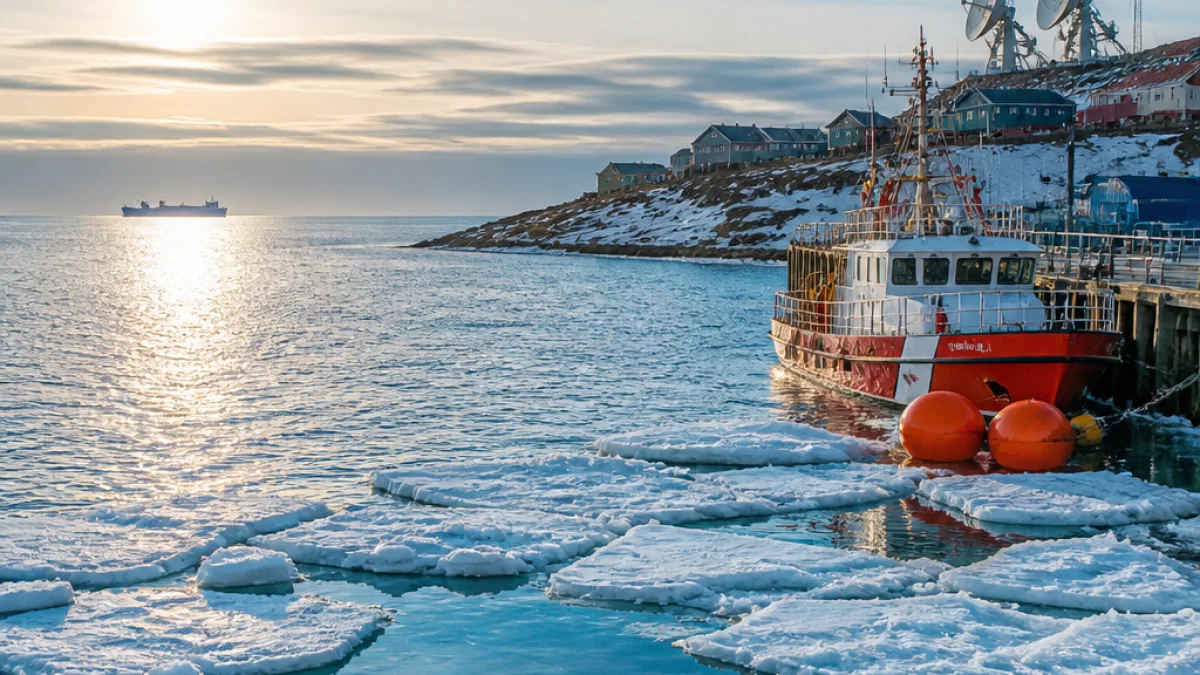
Global developments and thinning sea ice have combined to make Russia’s northern shipping corridor significantly busier this year, according to international reporting. Officials and residents in Nunavut say the trend bears watching because increased transit through Arctic waters carries practical and ecological implications for Inuit communities.
What changed in 2026
Reporting indicates that Russia’s oil exports conducted along the Northern Sea Route in 2026 have already surpassed last year’s total by nearly 50 per cent. Analysts attribute the increase to a mix of factors, including disruptions to other major trade routes and more navigable conditions in parts of the Arctic as sea ice continues to decline in extent and thickness.
Why Nunavut should pay attention
While much of the traffic reported is concentrated along Russia’s northern coastline and through international Arctic waters, the broader phenomenon of increased trans-Arctic shipping affects the entire circumpolar region. For Nunavut, the immediate concerns fall into several categories:
- Environmental risk: More tanker and cargo traffic raises the odds of spills or other contamination events that could affect marine mammals, fish and traditional hunting areas relied on by Inuit communities.
- Search and rescue and safety: Higher traffic volumes demand greater capacity for maritime response in harsh and remote conditions. Local search-and-rescue resources and coordination with federal agencies will be critical.
- Sovereignty and governance: Increased international use of Arctic routes renews discussion about who manages and enforces rules in these waters, and how Inuit rights and interests are recognised.
Voices from the North
Residents of Nunavut have long noted changes to sea ice patterns and the timing of seasonal travel. Those shifts are part of the context in which international shipping lanes are evolving.
Practical implications for coastal communities
Local hunters, fishers and hamlet councils may see direct effects from altered marine traffic. Even if large-volume routes do not pass immediately adjacent to Nunavut’s shorelines, secondary effects — from altered migration patterns of marine species to heightened risk of pollution — can manifest across wide areas of the territory.
| Metric | Relative change 2025 → 2026 |
|---|---|
| Reported oil exports via Northern Sea Route | ~+50% (year-over-year) |
What governments and agencies are likely to consider
Territorial and federal agencies responsible for Arctic safety, environmental protection and Indigenous relations are expected to track shipping trends closely. Potential responses include strengthening marine monitoring, investing in spill-response capability, and coordinating with Inuit organisations to ensure traditional knowledge informs planning.
- Monitoring: Enhanced satellite and coastal observation to detect and track vessels and environmental changes.
- Capacity building: Support for on-the-ground and regional search-and-rescue resources and spill-response teams.
- Engagement: Inclusion of Inuit organisations in planning and decision-making on Arctic marine governance.
For Nunavut residents, those policy choices will be measured against year-round realities: the reliance on marine mammals and fish for food, seasonal travel patterns, and limited local infrastructure to respond to emergencies at sea.
As trans-Arctic routes gain prominence, communities across the North are watching how international trade dynamics and a warming ocean intersect. The increase in activity along the Northern Sea Route is a reminder that decisions made far from these shores can have tangible consequences for life and livelihoods in Nunavut.
Reporting on this developing trend will continue as federal, territorial and Indigenous authorities release updates on shipping patterns, environmental monitoring and preparedness initiatives.