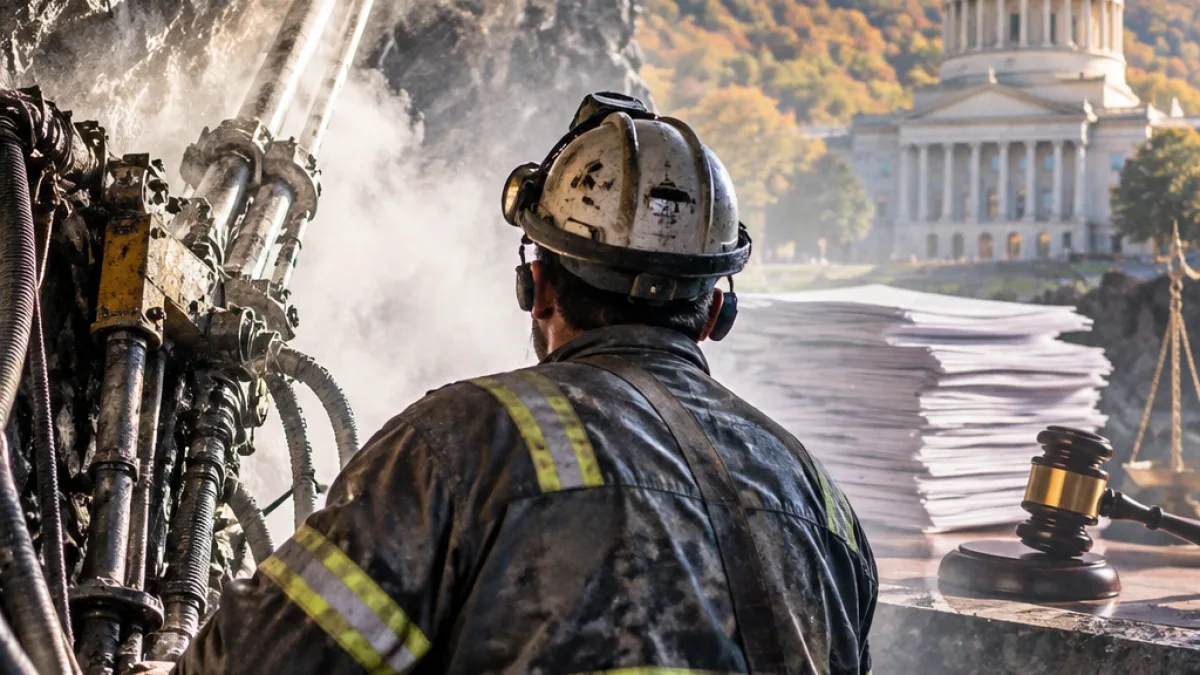
CHARLESTON — A group of West Virginia miners and the United Mine Workers of America are asking the state’s highest court to intervene in a dispute over protections from silica dust in coal mines, putting workplace health and state mine-safety oversight before the judiciary.
The union and 52 miners filed an emergency petition with the West Virginia Supreme Court on Oct. 29. Their request calls for the court to require the state Board of Coal Mine Health and Safety to adopt regulations limiting the amount of silica dust produced in mining operations.
The filing places pressure on a state board responsible for coal-mine health and safety. The source material does not identify a response from the board, provide a hearing date or say whether the Supreme Court has taken action on the petition. For now, the case is a request for judicial intervention, not an announcement that a new dust standard is already in effect.
A workplace hazard at the center of the case
Silica dust is associated with mining and other heavy-industry work, and the dispute reflects a continuing concern over the conditions miners face underground. The petition is focused specifically on the amount of silica dust generated in coal mines and whether West Virginia’s regulatory system should impose a limit.
For miners, the issue is not an abstract regulatory question. Dust is part of the working environment in an industry where employees spend their shifts around rock, coal and heavy equipment. A rule establishing a ceiling for silica exposure would affect how mine operators and workers approach that environment, although the filing’s requested standard and its proposed enforcement details were not provided in the source material.
- Petitioners: The United Mine Workers of America and 52 miners.
- Respondent: The West Virginia Board of Coal Mine Health and Safety.
- Requested action: A court order requiring regulations that limit silica dust in coal mines.
- Filing date: Oct. 29, 2026.
What the court filing seeks
An emergency petition asks a court to act on an accelerated basis, though the available information does not explain the specific emergency relief sought beyond requiring the board to pass silica-dust limits. The Supreme Court’s involvement would make the case a test of how state mine-safety regulation is handled when workers and their union contend that action is needed.
The petition also highlights the different roles of regulators and courts. The board is the state body named in the case, while the Supreme Court is being asked to compel regulatory action. Whether the justices grant the request, seek additional information or decline to intervene has not been reported.
| Issue | Information available |
|---|---|
| Who filed | UMWA and 52 miners |
| Where | West Virginia Supreme Court |
| When | Oct. 29, 2026 |
| What they want | Limits on silica dust from coal mining |
Why the dispute matters in coal country
Coal mining has shaped West Virginia’s communities, workplaces and family histories for generations. That history is visible in the source material’s reference to the mining section of Pursglove in Scotts Run, where an explosion at the Pursglove No. 2 Mine on July 9, 1942, killed 20 men. The historical reminder underscores how questions of mine safety remain tied to the lives of communities built around the industry.
Today’s silica-dust case concerns a different kind of danger than a mine explosion. The petition centers on exposure produced during mining and on whether a statewide rule should set a limit. The source does not allege a particular incident, identify an individual mine or describe the medical circumstances of any of the 52 miners.
That absence of detail does not diminish the significance of the filing for workers who depend on mine-safety rules. A regulatory standard can shape expectations for employers, protections for employees and the role of state officials in monitoring potentially dangerous conditions. The case could therefore matter beyond the people named in the petition, depending on what the court and the board do next.
The next steps remain unsettled
No ruling was included in the report, and no outcome can yet be assumed. The Supreme Court must determine how to handle the emergency petition before the requested requirement could take effect. The board’s position, the court’s schedule and the language of any proposed regulation were not available in the source material.
For West Virginia’s mining communities, the case brings a familiar question into a new legal setting: how much responsibility should fall on workers to endure hazardous conditions, and how much should be enforced through public rules? The miners and their union are asking the state’s highest court to answer at least part of that question by directing the safety board to set a limit on silica dust.
Until the court acts, the existing regulatory situation remains unchanged based on the information available. The petition’s filing, however, ensures that silica-dust protections will be debated not only inside the state’s mine-safety system but also in a public legal proceeding before West Virginia’s Supreme Court.