
A damaged ballot does not necessarily end a Tennessee voter’s chance to be counted. A coffee stain, a tear or another accident can make a ballot difficult for a voting machine to read, but state election officials have a procedure for dealing with that problem. The process is especially important for absentee voters, whose ballots cannot simply be exchanged at a polling place.
The remedy is known as ballot duplication. Election workers transfer the selections from a damaged ballot to a clean ballot card so the vote can be processed. The goal is not to reinterpret what the voter meant, but to preserve choices that are already visible on the original document.
What happens when a ballot cannot be read
In Tennessee, voters casting ballots in person can recreate them immediately if an accident occurs while they are voting. Absentee ballots present a different challenge because they are submitted away from the polling place and may arrive with marks, stains or physical damage that prevents a counting machine from reading them.
Alan Farley, administrator of the Rutherford County Election Commission, confirmed that Tennessee has a procedure for producing a readable replacement when an absentee ballot card is affected by marks or stains. The replacement is not an informal fix by a single worker. It is handled through a structured review intended to keep the voter’s selections intact.
“There is a process to recreate the ballot card that is not readable due to marks or stains on the absentee ballot card.”
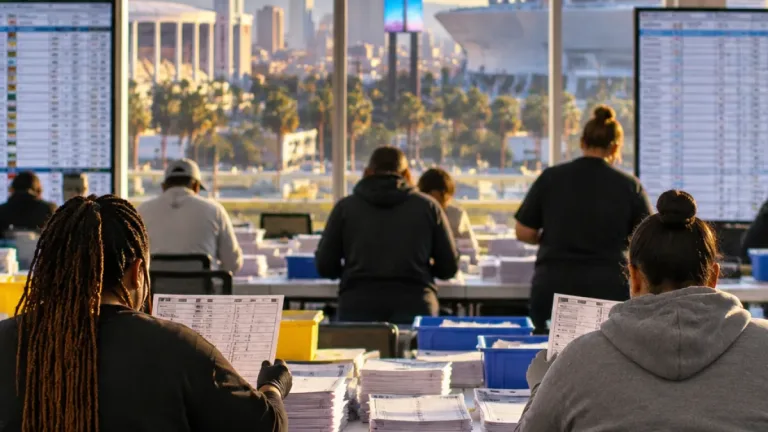
The procedure relies on representatives from opposing political parties. Rusty Isbell, administrator of the Lewis County Election Commission, said one representative from each party marks the new ballot by duplicating the selections found on the original.
“One person from each party will mark a new ballot duplicating the voters' selections.”
A bipartisan check follows the recreation
The work does not end when the replacement ballot is marked. Two additional board members, also representing both parties, review the recreated ballot to make sure it matches the voter’s choices on the damaged card. State law requires the duplication to be carried out by a board composed of members of opposing parties.
Election officials may also oversee the process alongside a counting board member. That review includes comparing the original ballot with the newly created one. The arrangement creates multiple points at which an error could be identified before the replacement is counted.
| Stage | Purpose |
|---|---|
| Identify the damaged ballot | Determine whether the card can be read by the counting equipment. |
| Recreate the selections | Transfer the voter’s marked choices to a clean ballot card. |
| Conduct a bipartisan review | Check that the replacement reflects the original ballot. |
| Keep both records together | Preserve documentation for later review or an audit. |
Keeping the original and the duplicate together is another part of the safeguard. Isbell said the paired records make it easier to verify what happened if the election is audited. In practical terms, the replacement ballot is not meant to erase the damaged one; it is linked to it so the chain of review remains visible.
Officials cannot guess at voter intent
The central limit on the process is that election workers are not supposed to decide what a voter might have intended. If the marks on a damaged ballot clearly show a selection, that choice can be reproduced. If the damage makes the voter’s intent unclear, officials cannot fill in the gap based on their own judgment.
That distinction matters because duplication is a mechanical and administrative remedy, not a second opportunity for election workers to choose among candidates or options. The National Conference of State Legislatures says officials must not guess at a voter’s intent when recreating a ballot. When the selections cannot be determined, a ballot may be spoiled and excluded from the count.
For voters, the lesson is straightforward: damage should be reported rather than quietly assumed to invalidate a ballot. In-person voters can recreate a ballot at the voting location if an accident happens during voting. For absentee ballots, election administrators use the bipartisan process when the voter’s selections remain identifiable but the physical card cannot be read.
- Minor damage can interfere with counting equipment, even when the voter’s choices remain visible.
- Absentee ballot duplication is performed by representatives of opposing parties.
- The original and replacement are retained together so the work can be checked during an audit.
- Unclear voter intent cannot be guessed at; a badly damaged ballot may not be counted.
The procedure places the responsibility on election boards to preserve a voter’s clearly expressed choices while maintaining a record that can be reviewed later. In a process often reduced to the simple image of a ballot passing through a machine, the damaged-ballot rules show the human safeguards operating behind the count: bipartisan handling, separate review and documentation connecting the readable replacement to the original.